«Весна священная» Moves Outdoors: A Historic Performance at Nikolay Roerich's Izvara Estate
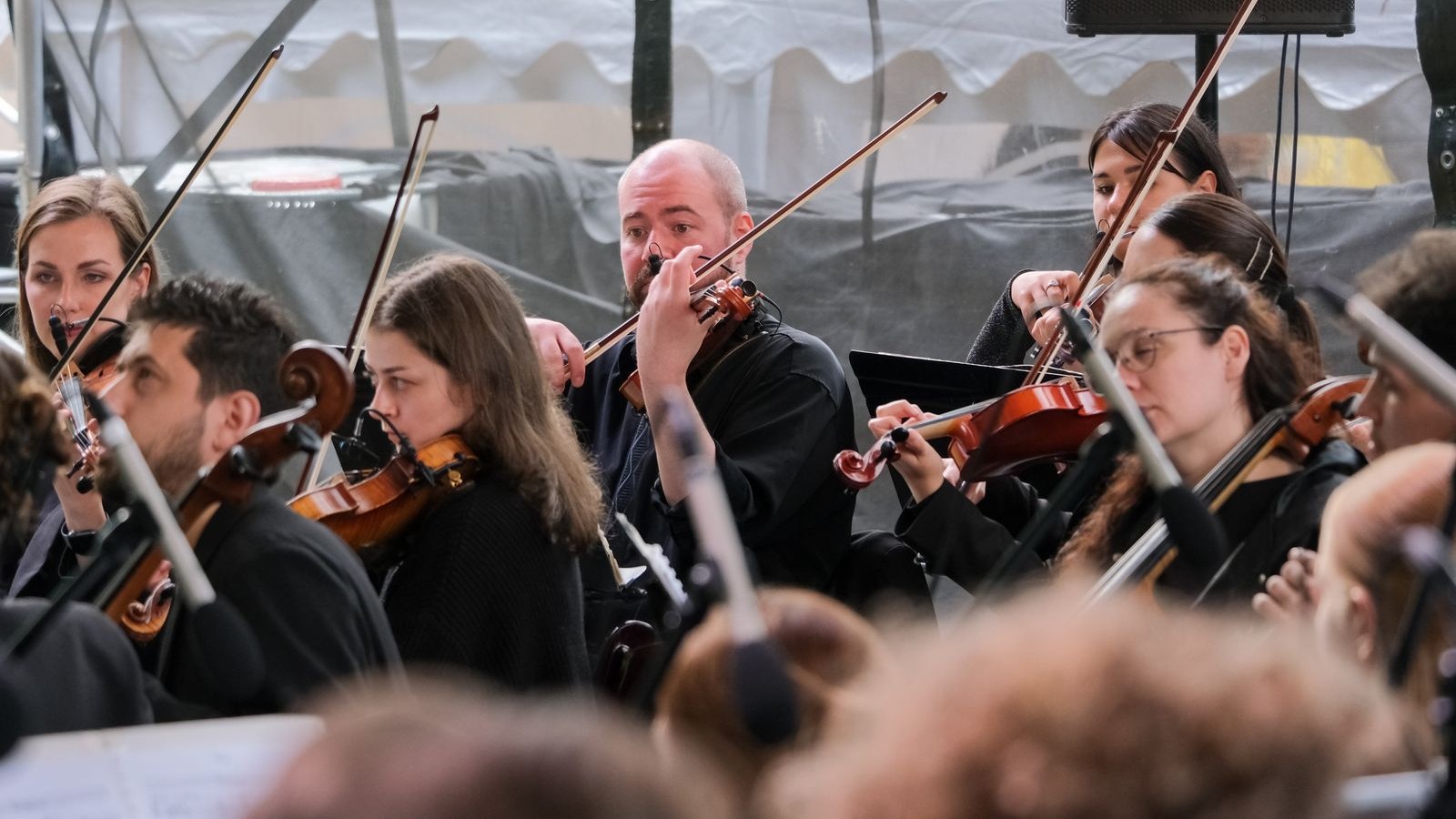
A significant cultural event recently unfolded at the Nikolay Roerich Estate Museum in Izvara, as it played host to an open-air premiere of Igor Stravinsky's seminal ballet, "The Rite of Spring." This unique production, marking a return to the ballet's roots in more ways than one, brought the avant-garde masterpiece to a setting intimately connected with its original visual architect, Nikolay Roerich. The event, meticulously prepared by a collaboration between the Leningrad State Regional Philharmonic and the St. Petersburg State Philharmonic for Children and Youth, saw Stravinsky's revolutionary score brought to life by the Symphony Orchestra of the Leningrad Regional Philharmonic.
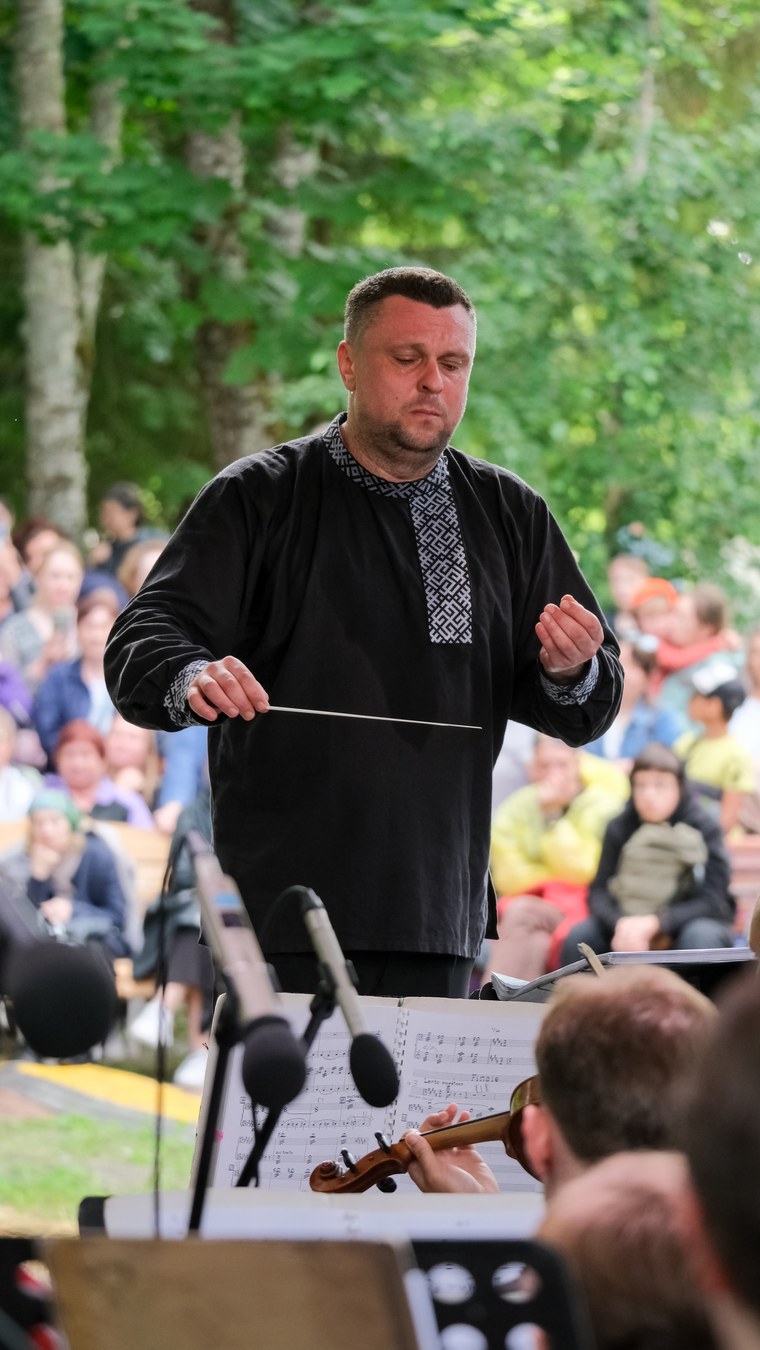
Under the baton of Mikhail Golikov, who also serves as the artistic director and chief conductor of the Leningrad Regional Philharmonic, the musical performance was complemented by the choreography of Alena Tyutyunikova. This particular rendition was strategically timed to coincide with the 115th anniversary of the ballet's libretto creation, a crucial detail given Roerich's pivotal role in its genesis. Roerich, a renowned artist, philosopher, and explorer, was not only the author of the ballet's original libretto but also the visionary behind the sets and costumes for its scandalous 1913 premiere. His profound influence on "The Rite of Spring" underscores the historical resonance of the Izvara performance, where the echoes of Stravinsky’s music filled the very grounds that shaped Roerich’s formative years.
Conductor Mikhail Golikov articulated the profound significance of the occasion. "An important historical event took place today – the ballet is being performed for the first time at the estate of Nikolay Roerich, who was not only an artist but also the author of the libretto and the creator of the sets," Golikov stated. He further emphasized the immersive power of the setting: "The atmosphere of this place, combined with Stravinsky's music, creates a profound impression – it will stay with every spectator for a long time." His words highlight not only the historical first of presenting the ballet in this specific location but also the potent synergy between the music, the story, and the landscape that was so integral to its original conception.
Nikolay Roerich: The Visionary Behind "The Rite of Spring"
To understand the depth of this Izvara performance, it is essential to delve into the figure of Nikolay Roerich (1874-1947). Born in St. Petersburg, Roerich was a polymath whose interests spanned art, archaeology, philosophy, ethnography, and peace activism. His connection to "The Rite of Spring" is foundational. Sergei Diaghilev, the impresario of the Ballets Russes, commissioned Roerich to create the sets and costumes for the ballet's premiere. More significantly, Roerich collaborated directly with Stravinsky on the libretto, drawing inspiration from Slavic pagan rituals and ancient Russian folklore.
Roerich’s artistic style, characterized by vibrant colors, symbolic imagery, and a deep appreciation for ancient cultures, perfectly aligned with Stravinsky’s revolutionary score. His designs for "The Rite of Spring" were not mere decorative backdrops; they were integral to the ballet's narrative and aesthetic impact. The costumes, heavy and symbolic, and the stark, primal sets immediately transported the audience to a prehistoric Slavic world, setting the stage for the raw, ritualistic sacrifices depicted in the ballet. This visual language was as radical in its time as Stravinsky’s music, contributing significantly to the legendary succès de scandale of the 1913 premiere.
The Izvara estate, where Roerich spent his childhood and youth, played a crucial role in his development and, by extension, in shaping his artistic vision. The natural landscapes, the ancient burial mounds, and the echoes of ancient Slavic history in the region undoubtedly informed his understanding of the pagan themes so central to "The Rite of Spring." Performing the ballet in this very locale, therefore, represents a homecoming, a literal grounding of the performance in the spiritual and geographical wellspring of its original inspiration. It connects the audience directly to the artist's formative experiences, allowing for a deeper appreciation of the ballet's underlying themes and Roerich's contribution.
Igor Stravinsky's "The Rite of Spring": A Cultural Earthquake
Igor Stravinsky's "The Rite of Spring" (Le sacre du printemps) is arguably one of the most influential and controversial works of the 20th century. First performed by the Ballets Russes in Paris on May 29, 1913, the ballet ignited a riot due to its dissonant score, unconventional choreography by Vaslav Nijinsky, and its depiction of a pagan ritual culminating in the sacrifice of a young maiden. The music itself was a radical departure from traditional tonality, characterized by jarring rhythms, brutal harmonies, and a primal energy that shocked and exhilarated audiences in equal measure.
Stravinsky's composition employed polyrhythms, polytonality, and a heavy emphasis on percussion and brass, creating a sound world that was primitive, aggressive, and undeniably modern. While initially met with outrage, "The Rite of Spring" soon garnered recognition as a masterpiece, fundamentally altering the trajectory of Western music and dance. Its influence can be felt across various art forms, from classical music to jazz, film scores, and contemporary dance. The ballet’s themes of primeval power, sacrifice, and the cyclical nature of life and death continue to resonate, making it a subject of continuous reimagining and interpretation.
For Mikhail Golikov, conducting the entire score of "The Rite of Spring" for the first time is a significant artistic milestone. This demanding work requires not only technical precision but also a profound understanding of its emotional and historical weight. His undertaking reflects the enduring challenge and reward of engaging with such a monumental piece, especially in a context that imbues it with added historical layers.
The Performance in Izvara: An Immersive Artistic Experience
The Izvara performance distinguished itself from traditional stage productions by doing away with a conventional proscenium arch. Instead, the artists danced barefoot on the natural grass, mere steps away from the audience. This deliberate choice to remove the physical and metaphorical barriers between performers and spectators created an intimate and immersive experience. The estate's sprawling landscape, with its trees, open spaces, and historical buildings, was not just a backdrop but an active participant in the stage action, seamlessly integrated into the unfolding drama.
This approach harks back to Roerich’s vision of a primal, uninhibited world. Dancing on the earth itself connects the performers and the audience to the very essence of the ballet's pagan themes. It emphasizes the raw, visceral nature of human ritual and the inextricable link between humanity and the natural world, a concept central to Roerich’s philosophy and artistic output. The proximity of the audience to the barefoot dancers would have enhanced the sense of vulnerability and intensity, making the ritualistic movements all the more palpable.
The collaboration between the Leningrad State Regional Philharmonic and the St. Petersburg State Philharmonic for Children and Youth underscores a commitment to both high artistry and cultural education. Presenting such a complex and historically significant work in an accessible, open-air format allows for new interpretations and introduces Stravinsky's masterpiece to a wider audience, including younger generations who might not typically attend formal ballet performances. The choice of ensemble, with the Leningrad Regional Philharmonic's Symphony Orchestra providing the musical foundation, speaks to the caliber of musicianship brought to this ambitious project.
Mikhail Golikov: The Conductor's Perspective
Mikhail Golikov, as the artistic director and chief conductor of the Leningrad Regional Philharmonic, is a central figure in this historic production. His decision to conduct "The Rite of Spring" in its entirety for the first time in his career, and in such a historically charged location, speaks to his artistic ambition and his understanding of the work's multifaceted significance. His comments emphasize the lasting impression such an integrated performance can leave on spectators, highlighting the power of art to transcend the immediate moment and create a profound memory.
Golikov's role extends beyond mere musical direction; as an artistic director, he helms the overall vision for the Philharmonic, guiding its programming and artistic direction. His choice to stage "The Rite of Spring" at the Roerich estate reflects a thoughtful curatorial approach, demonstrating an awareness of the historical and cultural threads that connect the music, the visual art, and the specific environment. This kind of contextualized performance is becoming increasingly valued in the arts world, offering richer, more meaningful experiences for both performers and audiences.
Alena Tyutyunikova: The Choreographer's Contribution
While the source text provides limited detail on Alena Tyutyunikova's choreography, her role is nevertheless critical. "The Rite of Spring" is as much a dance work as it is a musical one. The success of an open-air, non-traditional staging hinges heavily on the choreographer's ability to adapt the ballet's movements to a natural landscape and to integrate the surrounding environment into the narrative. Given the lack of a traditional stage and the proximity of the audience, Tyutyunikova likely crafted movements that were grounded, powerful, and evocative, echoing the raw energy of Stravinsky’s score and Roerich’s original vision.
Choreographers tasked with reinterpreting "The Rite of Spring" face the challenge of honoring its revolutionary spirit while making it relevant to contemporary audiences. The original choreography by Nijinsky was considered as radical as the music, departing from classical ballet conventions with its heavy, angular, and often ungraceful movements, designed to evoke primitive ritual. Tyutyunikova's work in Izvara would have been crucial in translating these ideas into an outdoor, immersive setting, allowing the dancers to interact directly with the earth and the natural elements, further enhancing the ballet's connection to pagan ritual and the land.
The 115th Anniversary and Enduring Relevance
The timing of this performance, coinciding with the 115th anniversary of the ballet's libretto creation, serves to highlight the enduring relevance of "The Rite of Spring." A work that caused a riot over a century ago continues to captivate and provoke, its themes of nature, sacrifice, and community resonating across generations. By bringing it back to the birthplace of its visual and thematic inspiration, the Izvara production underscores the timeless power of this monumental piece of art.
"The Rite of Spring" remains a touchstone for discussions about artistic innovation, the boundaries of performance, and the interplay between music, dance, and visual art. Its continued performance, especially in creative and historically significant contexts like the Roerich estate, ensures its place not just in cultural history but in contemporary artistic discourse. The Izvara premiere represents a significant moment in the ongoing life of this ballet, offering a fresh perspective on a work that has never ceased to challenge and inspire.
In conclusion, the open-air premiere of Igor Stravinsky's "The Rite of Spring" at the Nikolay Roerich Estate Museum in Izvara was more than just a ballet performance; it was a deeply symbolic and historically resonant event. It brought together the revolutionary music of Stravinsky, the foundational artistic vision of Nikolay Roerich, and the natural landscape that inspired it all. Under the musical direction of Mikhail Golikov and with choreography by Alena Tyutyunikova, this production offered audiences a unique, immersive experience, reinforcing the enduring power and relevance of a work that once shook the foundations of the art world. The echoes of Stravinsky's score, reverberating through Roerich’s childhood home, created an impression that, as Golikov noted, is surely destined to "stay with every spectator for a long time."
Dmitry Yurov