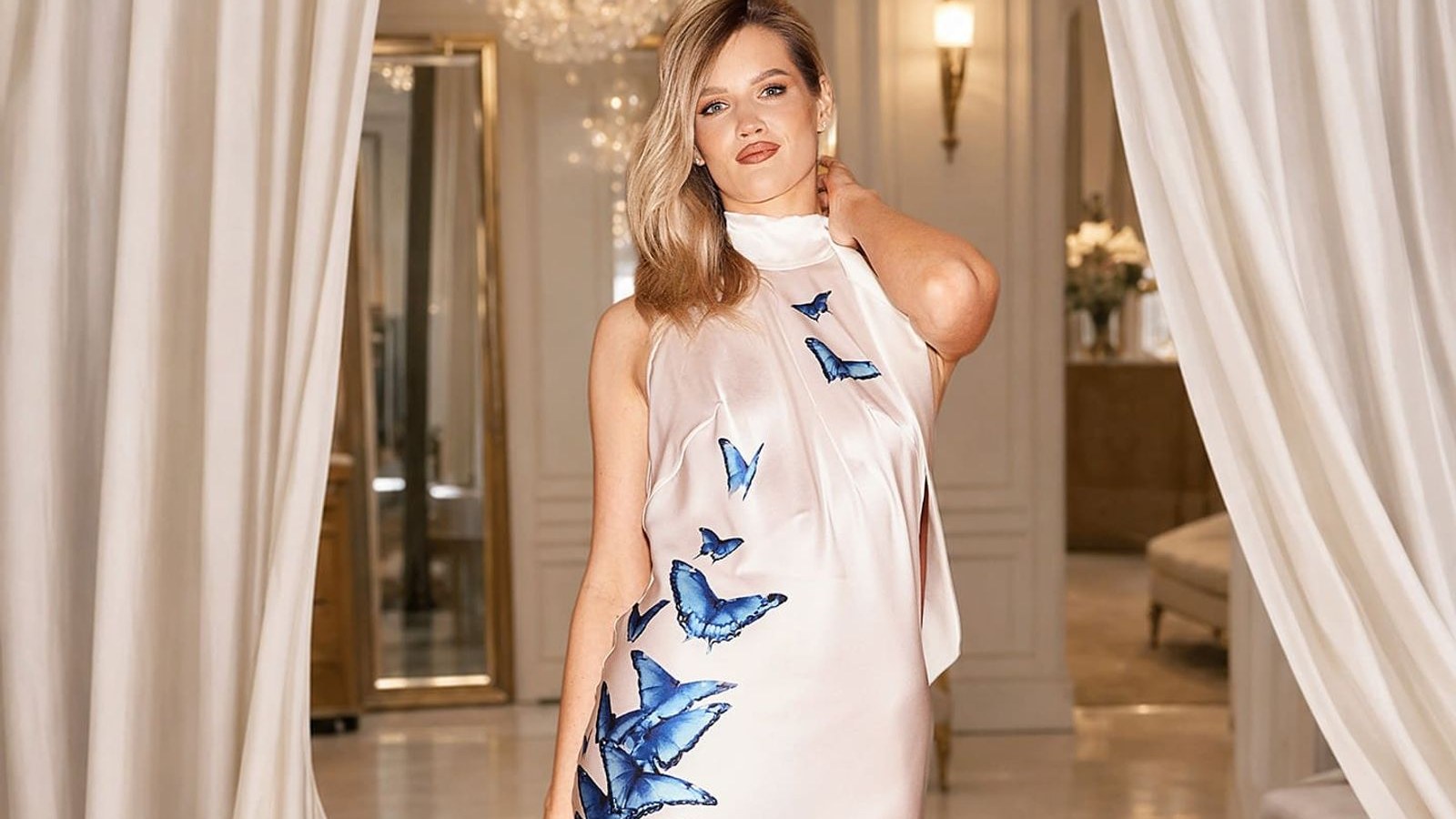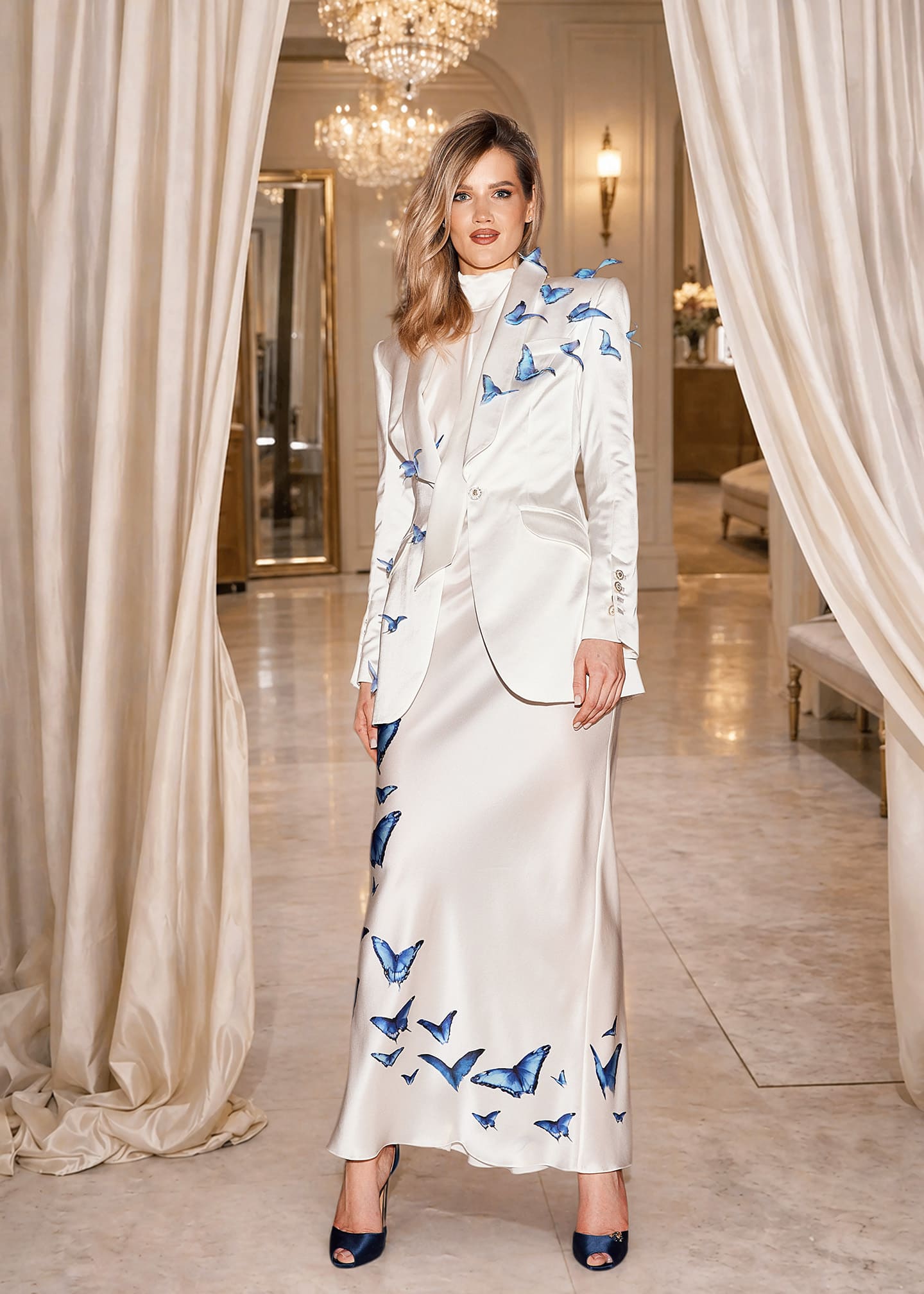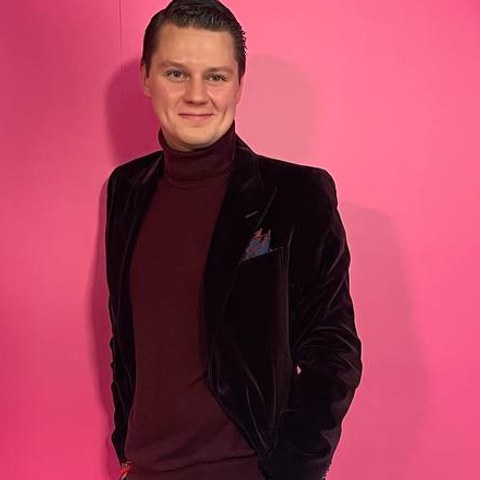
In a bold move that redefines the intersection of art and commerce, St. Petersburg-based brand AURORA.luxe has unveiled a groundbreaking business capsule collection. This curated line of women's and men's apparel, crafted from premium-grade silk, transcends the conventional notion of professional attire, transforming it into a wearable art form. At the heart of this collection is a collaboration with celebrated artist Ivan Slavinsky, whose captivating works have been meticulously transferred onto fabric, imbuing each garment with a depth and narrative typically reserved for museum canvases.
The announcement, originating from AURORA.luxe, highlights founder Julia Margo's vision to elevate the business wardrobe from a functional necessity to a collectible statement. This initiative is not merely about fashion; it's about personal expression, where the wearer’s individuality is amplified through the artistic integrity of the clothing. The collection blurs the lines between ready-to-wear and bespoke artwork, positioning silk as the canvas and the human silhouette as the frame, echoing Margo's own philosophy.
Ivan Slavinsky, the artistic force behind the stunning prints, is a master of fantastic realism. His distinctive style, characterized by phantasmagoric narratives, intricate metaphors, and "plastic riddles," finds a new medium in AURORA.luxe's silk. Slavinsky is an acclaimed contemporary Russian artist known for his vibrant and often surreal compositions. Born in St. Petersburg, his work has garnered international recognition, often drawing comparisons to historical masters while maintaining a distinctly modern voice. His art is frequently seen in galleries and private collections, and his foray into wearable art with AURORA.luxe represents a significant expansion of his artistic reach.
The collaboration itself is a testament to Slavinsky’s versatility and AURORA.luxe’s commitment to artistic integrity. Instead of merely adapting existing artworks, Slavinsky contributed his unique visual language to the collection, ensuring that the "phantasmagoric narratives, metaphors, and plastic riddles characteristic of his artistic style literally move from canvas to silhouette." This direct translation of artistic vision ensures that each garment is an authentic representation of Slavinsky's creative process, not merely a stylized reproduction.
The concept of "fantastic realism" is central to understanding Slavinsky's contribution. This artistic movement, while not strictly defined, typically involves blending realistic elements with imaginative or dreamlike imagery, creating a sense of heightened reality or a world that exists just beyond the familiar. Slavinsky's mastery of this style allows him to create works that are both visually stunning and intellectually stimulating, inviting viewers to explore deeper meanings and narratives within his compositions. The transfer of these complex visual narratives onto silk is a technical and artistic feat, demanding precision and a deep understanding of how light, texture, and movement interact with printed art.
Critics have noted historical echoes within Slavinsky's imagery, identifying resemblances to "Vrubel, Degas, and Petrov-Vodkin." Mikhail Vrubel was a prominent Russian Symbolist painter known for his rich, jewel-toned palettes and mythical subjects, often characterized by a sense of dramatic intensity and emotional depth. Edgar Degas, the celebrated French Impressionist, is known for his depictions of dancers and everyday life, capturing movement and light with a unique sensitivity. Kuzma Petrov-Vodkin, a Russian and Soviet artist, developed a distinct style known as "spherical perspective," which imbued his works with a sense of cosmic interconnectedness and often depicted figures with symbolic significance. These comparisons suggest that Slavinsky's work is rooted in a rich artistic heritage, yet he reinterprets these influences through his contemporary lens, creating something entirely new.
What differentiates AURORA.luxe's interpretation is that these historical echoes "no longer sound like a quotation from art history – they read as part of a modern wardrobe." This distinction is crucial. The garments are not intended as art historical references for an academic audience; rather, they are designed to be integrated seamlessly into the contemporary professional landscape. The art is not superimposed; it is intrinsically woven into the fabric of the garment, becoming an integral part of its identity and expression. This approach ensures that the wearer feels empowered by the art, rather than overwhelmed or costumed by it.
The target audience for this collection appears to be discerning individuals who seek to differentiate themselves through understated luxury and artistic appreciation. The collection is designed for a variety of professional and social settings: "negotiations, private dinners, business trips, and appearances where status is signaled not by a logo, but by the level of the fabric, the cut, and the concept." This emphasis highlights a shift in luxury consumption, moving away from overt branding and towards a more nuanced appreciation of quality, craftsmanship, and unique design. In an era where logos have become ubiquitous, AURORA.luxe offers an alternative form of status signaling, one that speaks to an individual's refined taste and cultural understanding.
The "level of the fabric" is a key component of this elevated status. AURORA.luxe's commitment to "premium-grade silk" is not merely a marketing claim; it's a foundational element of the collection's identity. Silk, renowned for its luxurious feel, natural sheen, and exceptional drape, has long been associated with sophistication and refinement. Its unique properties allow for prints to be rendered with clarity and vibrancy, enhancing the visual impact of Slavinsky’s artwork. The way silk interacts with light and movement further amplifies the dynamic quality of the designs, making each garment a living canvas.
Furthermore, "the cut" of each piece is meticulously considered. While the source text does not elaborate on specific silhouettes, the emphasis on a "business wardrobe" suggests tailoring that is both elegant and functional, suitable for professional environments while allowing for comfort and ease of movement. The interplay between the fabric’s drape and the garment’s structure is essential to showcasing the artwork effectively, ensuring that the prints flow seamlessly with the contours of the body.
The "concept" behind the collection is arguably its most distinctive feature. This is where Margo's vision truly shines: transforming clothing into an extension of personality. The idea that each piece is "created around the client's personal preferences" suggests a bespoke or made-to-order approach rather than a mass-produced seasonal line. This level of customization reinforces the collection's positioning as "an individual, premium-level commission," echoing the personalized nature of fine art acquisition. This model aligns with the growing demand for unique, consciously crafted items that reflect individual values and tastes, moving away from fast fashion and towards investment pieces.
Julia Margo herself articulates this philosophy with clarity: "For me, clothing is also art — only instead of a canvas there is silk, and instead of a frame, the silhouette of the person wearing the piece." This statement encapsulates the core tenet of AURORA.luxe. It elevates clothing from mere utilitarian function to a medium of artistic expression. The person wearing the garment is not just a consumer; they are an active participant in the artistic narrative, bringing the artwork to life through their movement and presence. This perspective positions the wearer as a connoisseur, someone who appreciates the artistry and craftsmanship embedded in their attire.
Margo further elaborates on her design philosophy, stating, "It matters to me that a piece doesn't just decorate a person but extends their personality: their character, taste, mood, inner freedom." This speaks to a deeper connection between clothing and identity. The garments are not superficial adornments; they are intended to resonate with the wearer's inner self, allowing them to project their individuality and values without relying on overt branding or trends. This focus on "inner freedom" suggests that the clothing empowers the wearer to express themselves authentically and confidently in any professional or social setting.
The meticulous attention to detail is paramount to achieving this vision. Margo explains, "That's exactly why we pay so much attention to print, color, fit, and detail — luxury begins where a piece becomes truly yours." This statement underscores the commitment to craftsmanship and personalization that defines AURORA.luxe. The selection of prints, for example, is not arbitrary; it's carefully chosen to align with Slavinsky's artistic narrative and to translate effectively onto silk. The choice of colors is precise, ensuring that the vibrancy and nuances of the original artwork are preserved. The fit is crucial, as it dictates how the garment drapes and moves, and how the art interacts with the body. Every detail, from stitching to finishing, contributes to the overall aesthetic and tactile experience of luxury.
In essence, AURORA.luxe's collaboration with Ivan Slavinsky represents more than just a new fashion collection; it marks a significant conceptual shift in how we perceive professional attire. It posits that a business wardrobe can be a space for artistic expression, personal narrative, and elevated status, defined by artistic merit rather than commercial branding. By merging the worlds of high art and high fashion, AURORA.luxe is carving out a niche for individuals who seek a sophisticated and distinctive way to communicate their character, taste, and inner freedom through their clothing. This St. Petersburg brand is not just selling garments; it is offering wearable masterpieces, curated experiences, and a new paradigm of luxury for the discerning individual.
Dmitry Yurov