 GetCelebrity Editorial
"We Will Financially Punish!": Larisa Dolina's Legal Crusade Against Online Jesters and Commercial Exploitation
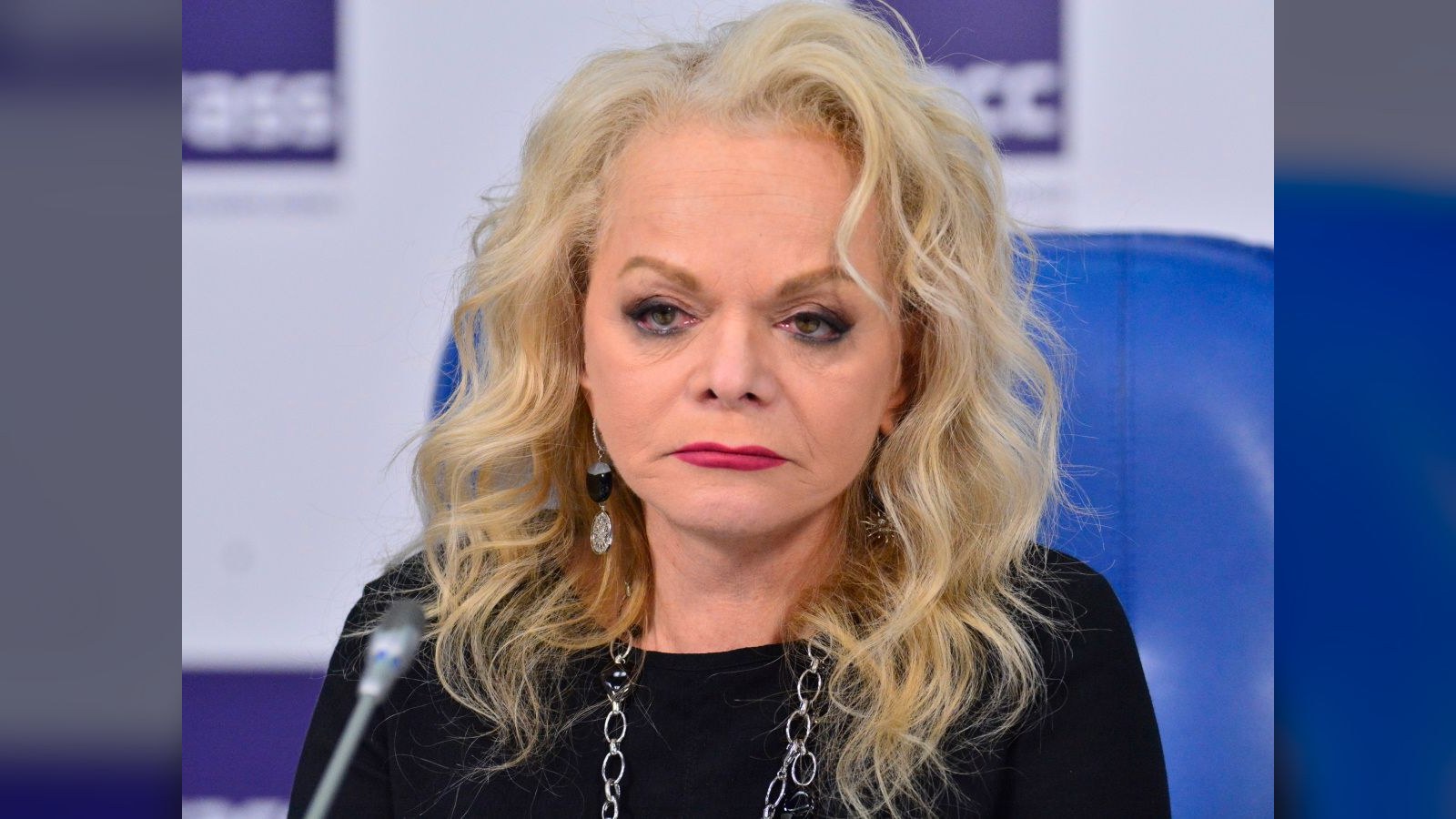
A storm is brewing in the Russian digital sphere as People's Artist Larisa Dolina declares an unprecedented legal war against those who dare to lampoon her online or exploit her image for commercial gain. The celebrated singer's director, Sergey Pudovkin, has made it abundantly clear that a dedicated team of legal professionals is already on the offensive, having meticulously documented a multitude of infractions and poised to inflict "financial punishment" upon the alleged perpetrators. This assertive stance signals a significant escalation in the ongoing battle between public figures and the often-unfiltered world of internet humor and digital marketing.
The motivation behind Dolina's firm decision, as articulated by Pudovkin, extends beyond mere personal slight. He emphasizes that the relentless stream of mockery and perceived insults has created a profound sense of discomfort not only for the esteemed artist herself but also for her immediate family – her daughter and granddaughter – who, according to Pudovkin, are also subjected to online bullying. This expansion of the scope of harm to include family members underscores the deeply personal nature of Dolina's legal pursuit and highlights the emotional toll that online interactions can exact on those in the public eye.
Pudovkin's statement meticulously outlines the dual nature of the violations being targeted. "Lawyers have identified a large number of instances to date of Larisa Dolina's name being used for commercial purposes, including images of her face and name, music, and videos for their advertising," he declared, leaving no room for ambiguity. He further stressed, "We will mark these instances. Of course, we will investigate, we will punish financially." This comprehensive approach indicates a concerted effort to safeguard Dolina's intellectual property rights and her personal brand, drawing a clear line between fair use and what her team considers exploitative commercial appropriation.
To fully grasp the magnitude of this impending legal offensive, it is crucial to understand who Larisa Dolina is and why this story resonates so strongly within the Russian cultural landscape. Larisa Aleksandrovna Dolina, born Larisa Kudelman, is a revered figure in Russian popular music. Her career spans several decades, marked by a powerful vocal range and a versatile repertoire encompassing jazz, pop, and rock. She gained widespread recognition in the Soviet Union and post-Soviet Russia, earning the prestigious title of People's Artist of Russia, an honor bestowed upon highly distinguished performing artists. Dolina's status as a national icon makes her legal actions particularly impactful, as they set a potential precedent for how other public figures might address similar online challenges.
The core of the legal challenge, particularly concerning the humorous aspect, lies in the fact that the authors of these memes are, "most often humorous," and comprise "ordinary Russians." This detail introduces a complex layer to the situation, as it pits a prominent public figure against what could be perceived as grassroots expressions of internet culture. The question then arises: where does harmless humor end, and actionable insult or defamation begin? This is a legal gray area that has been debated globally, and Dolina's case brings it to the forefront of Russian jurisprudence.
Legal experts have already weighed in on the delicate balance between freedom of expression and protection against defamation. Alexander Khaminsky, head of the Center for Law and Order in Moscow and Moscow Region, offered a crucial legal perspective. He noted that the Supreme Court of Russia has "repeatedly distinguished between verifiable statements of fact and evaluative judgments." Khaminsky's key assertion is that "a joke, irony, or critical opinion are not slander in themselves." This interpretation suggests that Dolina's legal team might face an uphill battle in proving defamation if the online content in question falls squarely into the categories of humor or subjective opinion, rather than false factual assertions aimed at damaging her reputation.
The broader implications of Dolina's actions have even drawn comments from figures who are themselves no strangers to public scrutiny and the world of memes. Vitaly Milonov, a well-known Russian parliamentarian and a frequent subject of internet humor, advised Dolina to "slow down." Milonov, who humorously described himself as a "veteran in this field," offered a pragmatic, perhaps even cynical, piece of advice: "You shouldn't take it too seriously or get overly offended. You can become a professional complainer. And as we know, in our country, they haul water on the offended." Milonov's counsel, rooted in his own experience with online jesting, suggests that an overly aggressive legal stance might backfire, potentially attracting more negative attention rather than quelling it. His comment about "hauling water on the offended" implies a societal tendency to dismiss or even find amusement in those who publicly express excessive grievance, particularly when it comes to internet humor.
Indeed, the potential for an adverse outcome from Dolina's lawsuit has been anticipated by other legal minds. Lawyer Alexander Benkhin predicts precisely the "opposite effect" from the singer's stringent actions. He forecasts the emergence of the "Streisand effect," a phenomenon where an attempt to suppress or remove information inadvertently leads to a dramatic increase in public awareness and the widespread dissemination of that very information. Benkhin's assessment is stark: in his opinion, the internet will simply be "flooded with publications about Dolina." This prediction aligns with the common understanding of how online communities often react to perceived censorship or heavy-handed legal tactics, frequently amplifying the content that was initially targeted for removal. The Streisand effect is named after American singer and actress Barbra Streisand, whose 2003 lawsuit attempting to remove aerial photographs of her Malibu residence from a public website resulted in the images becoming widely circulated online. The parallel here suggests that Dolina's efforts to control her online narrative might inadvertently create an avalanche of new memes and discussions about her, counteracting her original intent.
The background to this story also includes the evolving legal landscape surrounding intellectual property and personal rights in the digital age. As internet usage has soared and social media platforms have become ubiquitous, the lines between public and private, and between fair comment and defamation, have become increasingly blurred. Celebrities worldwide have grappled with issues of online harassment, the unauthorized use of their images, and the creation of memes that can range from harmless to deeply offensive. Dolina's case is not isolated but rather reflects a global struggle by public figures to assert control over their digital identities and protect themselves from perceived exploitation and abuse. The "financial punishment" aspect of her claim for commercial exploitation touches upon established copyright and trademark laws, which aim to protect artists' work and brand identity. However, applying these laws to the fluid and often anonymous nature of internet content, particularly memes, presents unique challenges.
Moreover, the concept of "bullying online," as mentioned by Pudovkin concerning Dolina's daughter and granddaughter, highlights a growing societal concern. While public figures are often expected to withstand a certain level of scrutiny, the extension of online negativity to their family members raises ethical questions about the boundaries of public discourse. This aspect of the case adds a layer of emotional weight, positioning Dolina's actions not just as a defense of her own image, but also as a protective measure for her loved ones against the potentially corrosive effects of internet negativity.
The coming weeks and months will undoubtedly reveal how this legal battle unfolds. Will Dolina's team successfully navigate the complexities of Russian internet law to secure financial retribution and curb online mockery? Or will the "Streisand effect" prevail, leading to an even greater proliferation of Dolina-related content and discussions? The case stands as a significant test of the legal framework surrounding digital expression and celebrity rights in Russia, with potential ramifications for how both public figures and ordinary internet users interact in the online realm.
Ultimately, Larisa Dolina's declaration of war on online jesters and commercial exploiters represents a bold, high-stakes move. It challenges the prevailing internet culture of free-flowing humor and often-unauthorized content use. The outcomes of her legal endeavors will not only shape her personal online narrative but could also contribute significantly to the broader legal and cultural discourse surrounding celebrity, satire, and digital rights in Russia and beyond. The world will be watching to see if "financial punishment" can truly tame the untamed beast of the internet, or if it will merely fuel its fire.