 Dmitry Yurov
In art, the dollar long ago ceased to be just a banknote: it can signify power, fear, freedom, vanity — or personal independence. Elena Grokhovitskaya chooses the latter interpretation. In her works, monetary symbolism transforms into a conversation about character, and painting steps out of its frame — onto silk scarves and clothing. We met with the artist to talk without advertising formulas: is it possible to create art about success without becoming a hostage to beautiful promises, where does the painting end and the brand begin, and what does a collector actually buy.
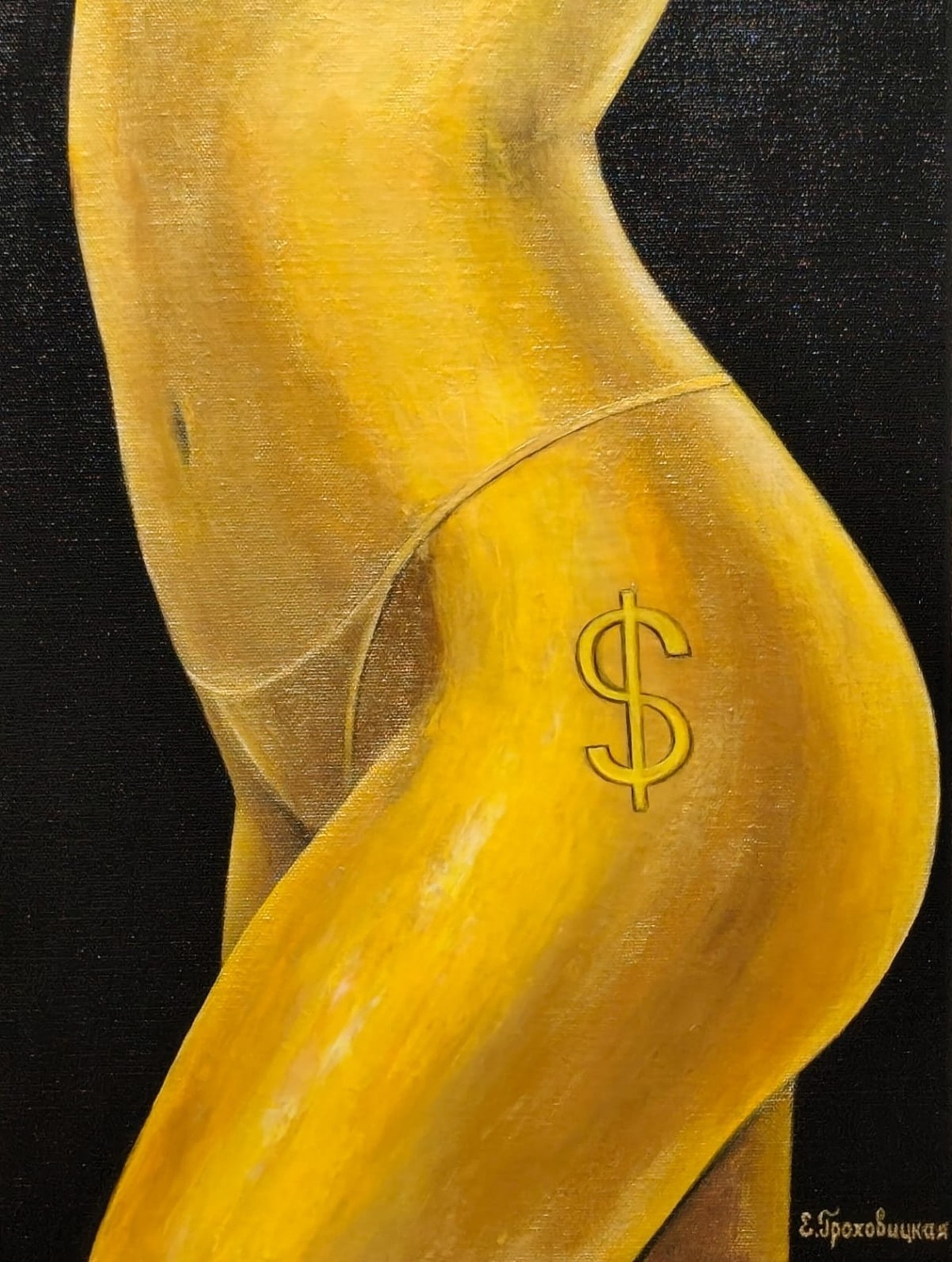
— In your art, money appears almost demonstratively. Weren't you afraid that viewers would see this as too straightforward a gesture?
— Straightforwardness doesn't scare me if there's a second layer behind it. Money is an image that is read instantly, but each person fills it with their own experience. For one, it's freedom, for another, anxiety, for a third, a measure of responsibility. I'm interested not in the currency symbol itself, but in what happens to a person around it.
— So, your "money paintings" are not about wealth?
— Not about wealth as a storefront display. Rather, about the ability to create and manage resources. I perceive money as a consequence of movement: labor, decisions, endurance, sometimes risk. Therefore, in my works, it is the energy of action, not a promise of easy luck.
— But on social media, art about money easily turns into a talisman of success. How close is this territory to you?
— I understand why viewers want to see a personal symbol in a painting. Art has always been endowed with additional power — memory, protection, hope. But for me, it's important not to promise a magical outcome. A painting does not replace actions. It can remind a person of their intention, focus attention, create a mood in the space. Its strength lies in the meaning that arises between the work and its owner.
— When did the idea of "Paintings on Clothes" emerge?
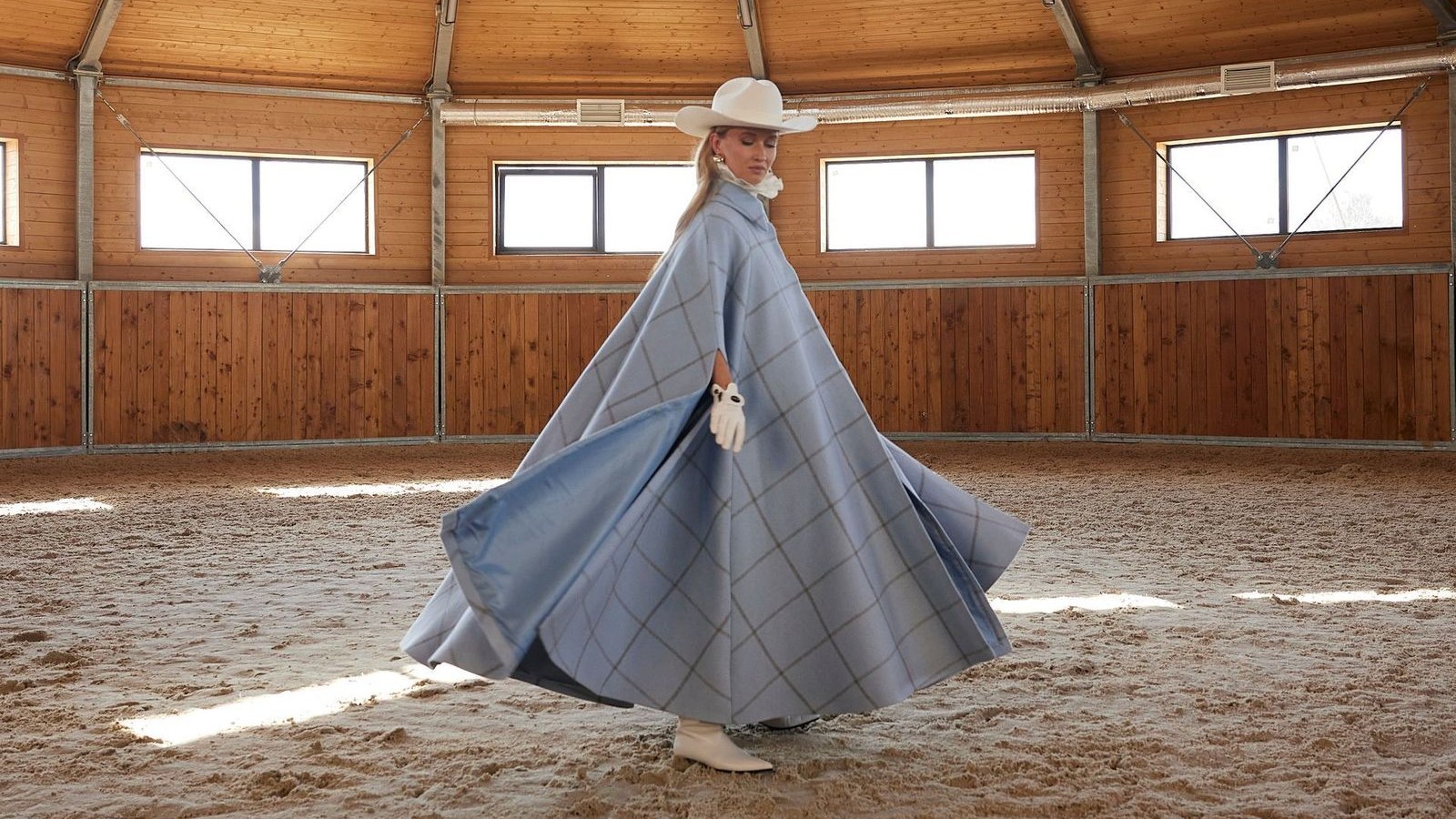
— From the desire to remove the distance between art and everyday life. First, there were silk scarves produced in Italy. I liked that the image stopped being static: it changed with gestures, fabric, light. Then the idea of swimsuits with original monetary symbolism arose. For me, it's not about transferring a picture onto an item, but a different way for the work to exist.
— Where, in that case, is the line between art and fashion?
— I'm not sure that this line needs to be guarded today. Something else is more important: does the author's thought remain when the medium changes. If the item becomes just a souvenir, the idea disappears. If it continues the artistic language, a full dialogue emerges. I want clothing not to illustrate a painting, but to carry its inner tension.
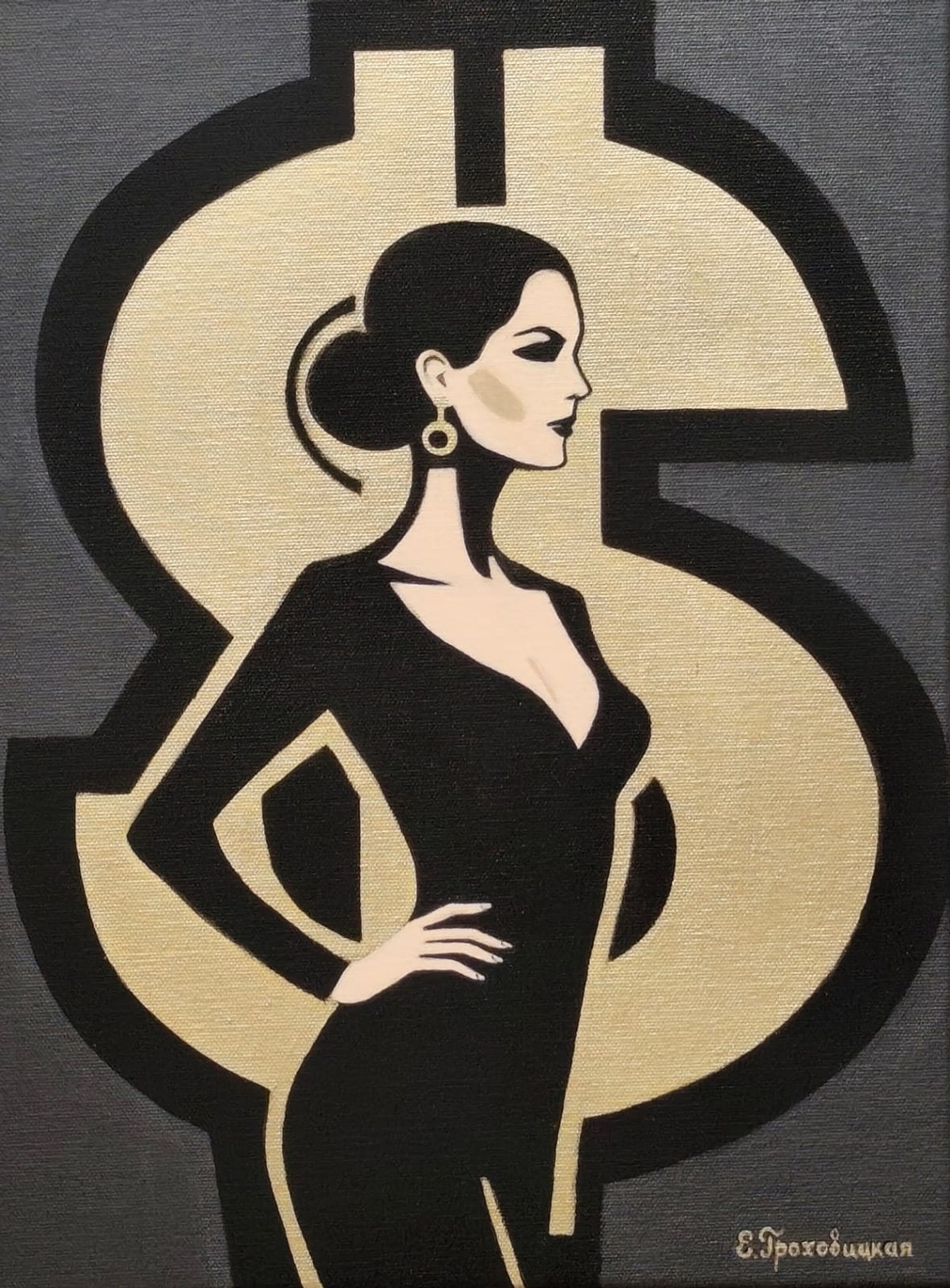
— You call painting the core of all experiments. Why?
— Because it is in the studio that the most honest part of the work happens. There is no audience, reaction, or sales there — only the canvas and the need to make a decision. Painting disciplines. It doesn't allow you to hide a weak idea behind packaging. Everything else — scarves, clothes, collaborations — makes sense as long as it is connected to this primary experience.
— Your public image involves many words about ambition. For an artist, is ambition an advantage or a danger?
— Both. Without ambition, it's hard to endure a long journey, especially when the result doesn't come immediately. But ambition becomes dangerous if an artist starts creating not a work, but a proof of their own significance. I try to return myself to the question: does the work have an energy that a person who knows nothing about my status or achievements will feel?
— Nevertheless, you emphasize professional recognition: membership in the Union of Artists of Russia, the status of an academician of the European Academy of Natural Sciences, the Geometria Awards 2025 prize. Why does a contemporary artist need regalia?
— Regalia do not make a painting stronger. But they mark stages of the journey and remind of responsibility. For me, the professional environment is important as a space of demanding standards. The courage to experiment must be based on craftsmanship, education, constant work — otherwise, provocation quickly becomes empty.
— Your works are in private collections and museum funds. What changes at the moment when a work leaves the studio?
— It ceases to belong solely to my intention. In the collector's home, the painting gains a different biography: new light, space, people, events. I like to think that the work continues to live without my control. Perhaps that's when it becomes complete.
— Today, the word "investment" is used by almost everyone who sells art. What does it mean to you?
— I treat it with caution. An artist should not promise price growth — the market is more complex. Investment value is built gradually: from the quality of the works, the recognizability of the style, the consistency of the author, exhibition history, collector interest, and professional reputation. But the first reason to buy a painting should still be personal: you want to live alongside it.
— So, aesthetic pleasure is more important than calculation?
— They don't have to conflict. Aesthetics attract, meaning retains, and the author's story can strengthen the work's value over time. But calculation without emotional connection turns art into a number. A good collection always tells about the person who assembled it: about their taste, intuition, ability to see something before others.
— What should a person feel when standing before your painting?
— There is no single correct reaction. But I resonate with a state of inner focus — when the work not only adorns the wall but returns to the person a sense of the scale of their own possibilities. It doesn't tell them, "You will definitely achieve success," but asks the question, "What are you willing to do for it?"
— You create art about strength. Is there vulnerability in it?
— Without it, strength would be decorative. The desire for success is almost always accompanied by the fear of not succeeding, of losing control, of being not significant enough. I am interested in precisely this contrast. A bright, confident image can hide a very personal question — and perhaps that's why it resonates.
— How do you envision the development of the "Paintings on Clothes" project?
— I want to turn it into an independent artistic line: with limited editions, collaborations, and exhibition projects where painting and fashion will converse as equals. At the same time, the edition size should remain meaningful. It is important for me not to dissolve the artistic gesture in endless production.
— And what question do you ask yourself today as an artist?
— How to preserve freedom when a system begins to form around my work — collectors, projects, recognition, expectations. Success opens up opportunities, but at the same time suggests repeating what has already worked once. It is important for me not to become a hostage to my own recognizability.
In Elena Grokhovitskaya's art, the symbol of success turns out not to be a final point, but the beginning of a conversation. Her paintings promise wealth less than they examine the price a person is willing to pay for their own self-realization: with attention, discipline, risk, time. Perhaps this is precisely why the dollar sign in them works not as an advertisement for a beautiful life, but as a mirror of desire — bright, attractive, and not always comfortable.