 GetCelebrity Editorial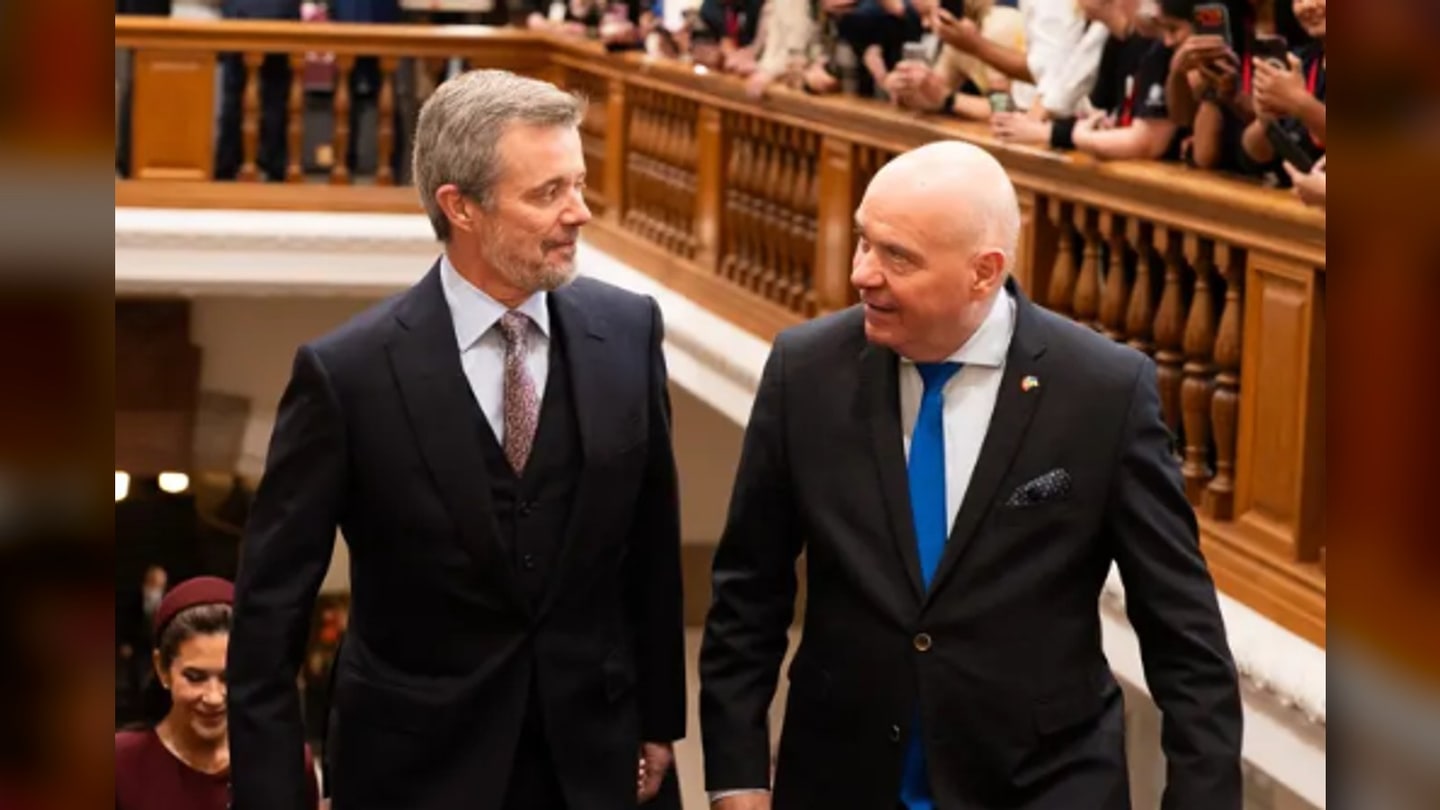
Copenhagen, Denmark – In a lighthearted moment that captured the attention of royal observers and the Danish public alike, King Frederik X of Denmark experienced a brief, unexpected hiccup during the official opening of his country's parliament. The monarch, accompanied by his wife, Queen Mary, and his aunt, Princess Benedikte, found himself momentarily unable to access his designated seat, leading to a charming display of good humor and resourcefulness.
The incident unfolded as the royal party arrived at Christiansborg, the historic seat of the Danish parliament, for the annual parliamentary opening. This traditional event, deeply ingrained in Danish constitutional and royal custom, sees the monarch and select members of the royal family observe the proceedings from a special balcony within the parliamentary chamber. As King Frederik, Queen Mary, and Princess Benedikte approached their customary viewing spot, they encountered an unforeseen obstacle: a red rope still in place, effectively barring access to the King's seat.
King Frederik, known for his pragmatic and often understated demeanor, initially attempted to navigate around the side of the barrier to reach his position. However, finding this maneuver impossible, he returned to the entrance to the balcony. It was at this point that he and Queen Mary, working together, carefully removed the red rope, clearing the path for themselves and Princess Benedikte to take their seats. The brief interlude, marked by the King's evident good humor, quickly became a talking point, highlighting the approachable nature of the Danish monarchy.
This annual parliamentary opening is a significant event in the Danish calendar, symbolizing the constitutional monarchy's enduring link to the nation's democratic institutions. The Danish royal family has a long-standing tradition of observing parliamentary proceedings, though the specific arrangement has evolved over time. Since 1988, the royals have occupied a dedicated balcony for such occasions. Prior to this, for significant events like official openings, they would sit among the politicians within the main parliamentary chamber. This shift to a dedicated balcony underscores a modern interpretation of the monarchy's role, maintaining a visible presence while respecting the working environment of the elected representatives.
The monarch in Denmark, while holding a largely ceremonial role, plays a crucial part in embodying national unity and tradition. King Frederik X ascended to the throne on January 14, 2024, following the abdication of his mother, Queen Margrethe II. His reign has been met with significant public interest and goodwill, with many observing his style of leadership as one that balances tradition with a modern, relatable approach. This small incident at the parliament, where he literally had to untangle a minor obstacle, further cemented this image.
Queen Mary, born Mary Donaldson in Hobart, Australia, has quickly become a beloved figure in Denmark since her marriage to the then-Crown Prince Frederik in 2004. Her grace, commitment to royal duties, and engaging public persona have earned her widespread admiration. Her calm assistance to King Frederik in removing the rope was a subtle yet clear demonstration of their partnership and shared commitment to their roles. For the parliamentary opening, Queen Mary was impeccably dressed in a deep red skirt suit, a color often associated with power and importance, and accessorized with a vintage Dior brooch featuring turquoises. This particular brooch has a history of its own, having been previously worn by the Queen during a visit to Paris, showcasing her penchant for classic elegance and re-wearing pieces from her sophisticated wardrobe.
Princess Benedikte, the younger sister of the former Queen Margrethe II and aunt to King Frederik X, also joined the royal couple. Princess Benedikte has been a lifelong, dedicated member of the Danish royal family, consistently undertaking official engagements and supporting the monarch. Her presence at the parliamentary opening underscores the continuity and collective duty of the royal house.
Once settled, the royal trio listened attentively to the opening speech delivered by Danish Prime Minister Mette Frederiksen. The Prime Minister’s speech traditionally outlines the government's legislative agenda and priorities for the upcoming parliamentary session, making it a pivotal moment in the nation's political calendar. The presence of the monarch and royal family at this event serves as a symbolic endorsement of the democratic process and the rule of law in Denmark, reinforcing the constitutional framework within which the government operates.
Christiansborg, the magnificent building where the Danish parliament, the Folketing, convenes, was fittingly adorned for the occasion. The country's flag, the Dannebrog, was prominently displayed, adding to the ceremonial atmosphere. Christiansborg Palace has a rich and complex history, having served as a royal residence and the center of Danish power for centuries. Today, it houses not only the parliament but also the Supreme Court and the Prime Minister's Office, making it a unique hub of executive, legislative, and judicial power. The visual tradition of the royals observing proceedings from their balcony in this historic building underscores the interwoven history of the monarchy and the state in Denmark.
The Danish parliament traditionally convenes on the first Tuesday of October each year. This timing ensures a consistent schedule for the nation's legislative body and provides a fixed point in the calendar for the annual opening ceremony. This regularity reinforces the stability of Danish democratic institutions and provides predictability in the political calendar.
The small incident with the red rope, while minor in the grand scheme of royal duties and parliamentary proceedings, offered a glimpse into the human side of royalty. King Frederik's easygoing reaction, his willingness to personally address the impediment, and the quick teamwork with Queen Mary resonated with the public. It contributed to an image of a monarchy that is both traditional and accessible, capable of formality but also endowed with a sense of humor and practicality. In an era where royal families navigate the delicate balance between maintaining regal mystique and appearing relatable, such moments often speak volumes.
The Danish monarchy, one of the oldest in the world, has a history spanning over a thousand years. Its evolution from an absolute monarchy to a constitutional one reflects the broader democratic development of Denmark. Today, the monarch's duties are primarily ceremonial and representative. The sovereign signs new laws, formally appoints and dismisses the Prime Minister and government, and represents Denmark at home and abroad. However, these acts are performed on the advice of the government and parliament, signifying the ultimate sovereignty of the people. The annual parliamentary opening is a key event where these historical and modern roles converge, with the monarch present not to govern, but to symbolize the enduring legacy and continuity of the Danish state.
In conclusion, King Frederik X's brief encounter with a red rope at the opening of the Danish parliament was more than just a minor inconvenience; it was a moment that perfectly encapsulated the modern Danish monarchy. It showcased the King's unpretentious nature, the strong partnership with Queen Mary, and the royal family's commitment to their constitutional duties. As the country moves forward under King Frederik's reign, such anecdotes will likely continue to endear the royal house to the Danish people, reinforcing the perception of a monarchy that is both regal and grounded.