 GetCelebrity Editorial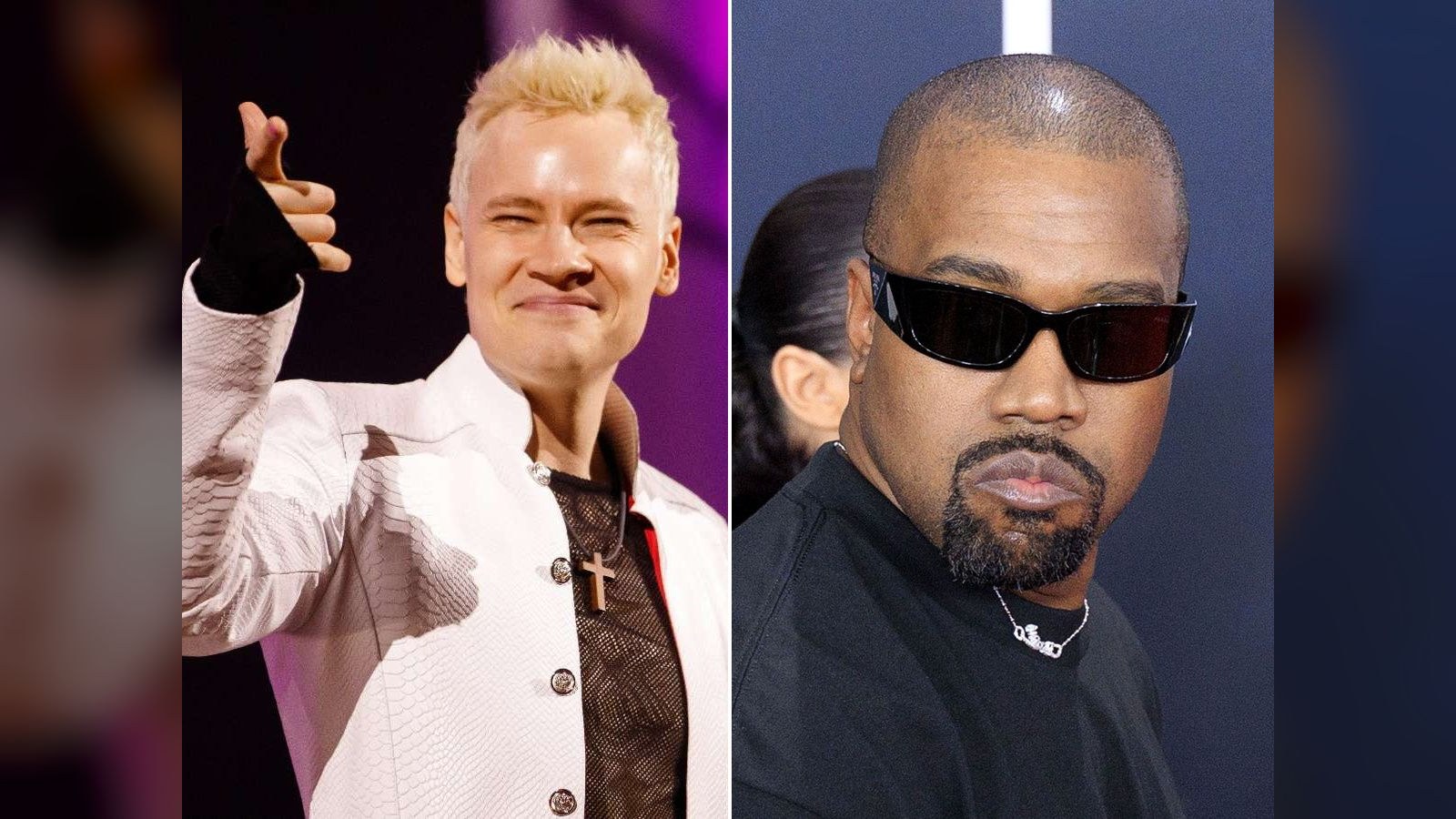
The Curious Case of Kanye, SHAMAN, and a Refused Duet: A Deeper Dive
The world of celebrity news thrives on intrigue, speculation, and the occasional outright fabrication. Such was the case with the recent rumors swirling around American music icon Kanye West’s upcoming concerts in St. Petersburg and a supposed refusal by Russian artist SHAMAN to perform alongside him. What began as whispers of an all-star Russian opening act quickly morphed into a more specific narrative: a direct offer from West to SHAMAN for a duet, and SHAMAN's subsequent rejection due to a preference against opening performances. This unfolding drama captivated Russian social media and entertainment outlets, ultimately revealing a meticulously constructed fiction. This article dissects the narrative, explores the individuals involved, and examines why such a story, even if untrue, gained significant traction.
Kanye West's Russian Endeavor: A High-Profile Event
Kanye West, a figure synonymous with both musical innovation and headline-grabbing controversies, announced two concerts in St. Petersburg, scheduled for October 10 and 11. These performances were immediately billed as a major cultural event within Russia. West's global stature ensures that any appearance he makes, particularly in a new or less frequent market, draws considerable attention. His concerts are known for their theatricality, artistic ambition, and often, their unpredictability. For Russian music enthusiasts, the prospect of experiencing West live was undoubtedly a significant draw, setting the stage for an event ripe for media speculation and public discourse.
The initial buzz around the St. Petersburg concerts centered on potential opening acts. Early rumors suggested a lineup of prominent Russian artists, including Polina Gagarina, Ani Lorak, Dima Bilan, and Sergey Lazarev, alongside SHAMAN. These names represent some of the most recognizable and successful figures in contemporary Russian pop music. Polina Gagarina, known for her powerful vocals and Eurovision Song Contest participation, commands a large following. Ani Lorak, a Ukrainian-born singer popular across the Russian-speaking world, brings a blend of pop and traditional influences. Dima Bilan, a Eurovision winner himself, is a household name, while Sergey Lazarev, another Eurovision alumnus, is celebrated for his energetic performances and pop anthems. The inclusion of SHAMAN in this initial rumored list already highlighted his growing prominence within the Russian music scene.
However, these initial speculations were swiftly debunked. TASS, the Russian state news agency, categorically stated: "No one will be there." This clarification effectively squashed the idea of a multi-artist Russian opening act, leaving the exact format of West's performances open to further conjecture and setting the stage for the subsequent, more specific, and ultimately fictitious, narrative involving SHAMAN.
Introducing SHAMAN: A Rising Star in Russian Music
At the heart of this story is Yaroslav Dronov, better known by his stage name SHAMAN. To understand the impact of the rumors, it is crucial to understand who SHAMAN is and why his name carries weight in the Russian entertainment landscape. SHAMAN is a Russian singer-songwriter who gained significant national recognition in recent years. His rise to fame has been meteoric, propelled by a distinct musical style that often incorporates patriotic themes and traditional Russian motifs, blended with modern pop and rock elements. His songs frequently resonate with a sense of national pride and cultural identity, earning him a dedicated and passionate fan base across Russia.
His public image is carefully cultivated, often portraying him as a voice of the people, grounded in Russian traditions and values. This positioning has made him a culturally significant figure, particularly in the current geopolitical climate. His performances are known for their emotive quality and direct appeal to the audience, often eliciting strong reactions. The idea of SHAMAN performing with an international superstar like Kanye West, therefore, was not merely a musical collaboration but carried symbolic weight, potentially representing a cross-cultural exchange at a time when such interactions are often viewed through a national lens.
The Duet That Never Was: Unpacking the Allegations
Following the refutation of the general opening act rumors, a new, more specific and sensational narrative emerged. This new wave of speculation centered on a direct offer from Kanye West to SHAMAN for a duet during the St. Petersburg concerts. SHAMAN's representatives were quoted, stating that West's team had approached Dronov's manager with the proposition. The alleged reason for SHAMAN's refusal was presented as his unwillingness to perform as an "opening act," a role he was supposedly "not accustomed to." This detail was key, as it positioned SHAMAN as an artist of sufficient stature to decline a direct offer from a global icon like West, suggesting an established hierarchy and self-assuredness within the Russian music scene.
The alleged refusal immediately ignited a firestorm of discussion on social media platforms and in Russian media. Internet users, described as "taught by bitter experience," expressed immediate skepticism regarding the veracity of these claims. This skepticism is noteworthy; it suggests a public that is wary of inflated or fabricated celebrity narratives, particularly those that appear too convenient or self-serving. Commentators "ironized," as the source text states, with remarks such as: "Kanye, apparently, is also not yet aware that he was refused," and "Shaman ran after Kanye for three days and three nights to say how indifferent he is to him." These sarcastic reactions underscore a sophisticated public capable of discerning potential public relations maneuvering or outright falsehoods.
The public's immediate doubt proved prescient. The story of the duet, and SHAMAN's alleged refusal, quickly unraveled. The definitive clarification came from Anna Subcheva, the owner of Say Agency and the primary organizer of Kanye West's concerts in Russia. Subcheva's statement was unequivocal and directly contradicted the narrative put forth by SHAMAN's representatives. "I responsibly declare that, as the organizer of Mr. West's performance in Russia, I did not contact the representative of the artist SHAMAN. I did not ask them for a joint performance. Who and why contacted the representative of the artist SHAMAN is a mystery to me. It certainly wasn't me," she stated.
Subcheva's statement effectively pulled the rug out from under the entire story. As the show-woman directly responsible for the logistics and artistic arrangements of West's Russian appearances, her denial held authoritative weight. Her assertion that she did not initiate any contact or extend an invitation to SHAMAN's team definitively proved that the story of the duet, and the subsequent refusal, was indeed "someone's fabrication."
Why the Fabrication? Exploring the Motivations
The immediate question that arises from this debunked story is: why was it fabricated? While the source text does not offer direct answers to this question, several plausible motivations can be inferred, particularly within the context of celebrity public relations and national identity.
One primary motivation could be to elevate SHAMAN's profile. By associating his name with Kanye West, even in a story of refusal, SHAMAN's team could have aimed to reinforce his image as an artist of significant standing, someone who operates on a level where he can decline offers from global superstars. This narrative subtly suggests that SHAMAN is not merely a regional phenomenon but an artist with an international draw and a clear vision for his career, one that does not involve being a supporting act. It creates an impression of high demand and artistic integrity, potentially bolstering his brand and appeal to his existing audience, while also introducing him to a wider public who might not have been familiar with his work prior to this controversy.
Another angle could involve generating buzz around SHAMAN himself, independent of Kanye West's concerts. In the competitive world of entertainment, any story that garners media attention, even if negative or controversial, can be seen as beneficial for an artist's visibility. The story certainly succeeded in placing SHAMAN's name in numerous headlines and social media discussions, ensuring his continued presence in the public consciousness.
Furthermore, the narrative of SHAMAN, a distinctly Russian artist, purportedly declining an offer from an American global icon, could also be interpreted through a lens of national pride. In a geopolitical climate where cultural independence and self-sufficiency are often emphasized, such a story could subtly resonate with segments of the public who appreciate a perceived assertion of Russian artistic strength and autonomy. It aligns with SHAMAN's broader public persona, which often emphasizes patriotism and national values.
Finally, there's the possibility of a misunderstanding or miscommunication that escalated into a fabricated narrative. While Subcheva's statement is clear, it's conceivable that a low-level inquiry or an indirect contact might have been misinterpreted or deliberately exaggerated by SHAMAN's representatives for PR purposes. However, Subcheva's firm denial of any contact at all suggests a more deliberate fabrication rather than a simple misunderstanding.
The Aftermath: Trust and Media Scrutiny
The quick debunking of the Kanye West-SHAMAN duet story highlights several important aspects of modern celebrity news. Firstly, it underscores the persistent issue of misinformation and fabricated narratives in the entertainment industry. In an age of rapid information dissemination, false stories can quickly gain traction, often fueled by social media and the desire for sensational content.
Secondly, it showcases the increasing skepticism of the public. The "Internet users, taught by bitter experience" who immediately doubted the claims are indicative of a media-savvy audience that is often critical of public relations stunts and unsubstantiated celebrity pronouncements. This public scrutiny, often expressed through humor and irony, can play a crucial role in holding public figures and their representatives accountable.
Thirdly, the incident emphasizes the importance of authoritative sources in clarifying facts. Anna Subcheva's direct and unambiguous statement, as the concert organizer, was essential in cutting through the rumors and establishing the truth. Without such an intervention, the fabricated story might have persisted, potentially shaping public perception of both artists involved.
In conclusion, the story of Kanye West, SHAMAN, and the duet that never was serves as a compelling case study in contemporary celebrity media. It demonstrates how rumors can rapidly evolve, how public figures can be strategically positioned, and how, ultimately, truth can emerge even amidst a flurry of speculation and fabrication. While the concerts themselves promised to be a "real event," the peripheral drama surrounding SHAMAN certainly added an unexpected, albeit entirely manufactured, layer of intrigue to the narrative.