GetCelebrity Editorial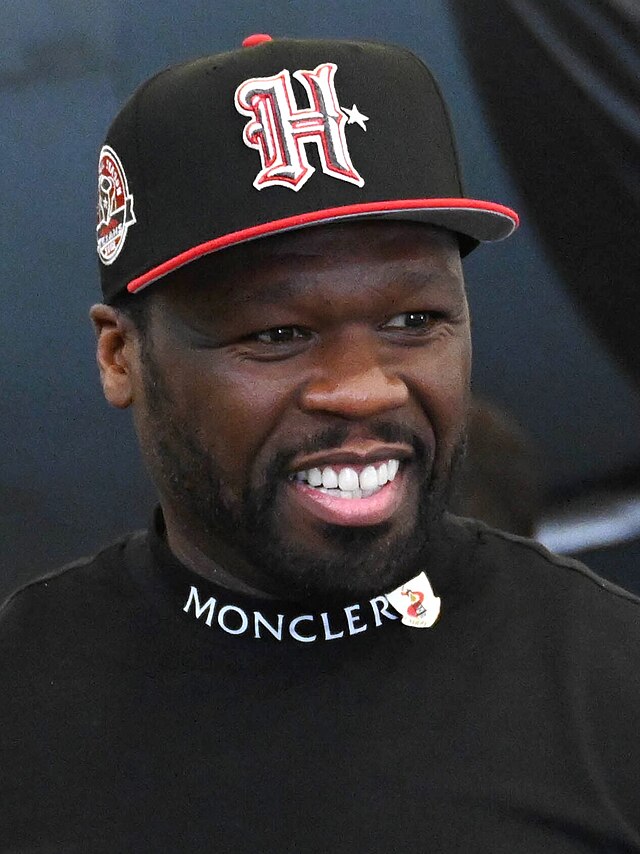
50 Cent rose to fame peddling tales of street survival, yet his real windfall came from peddling drinks to the elite. Curtis Jackson, the rapper behind the bullet-scarred persona, didn't just mimic the moguls he rapped about—he outmaneuvered them, turning a 2004 splash into a $100 million payout that dwarfed his music royalties.[3] That's the twist: the guy who once symbolized gritty underdog status now commands a portfolio where liquor flows freer than beats.
The Group That Spawned an Empire
Everyone remembers 50 Cent's breakout album Get Rich or Die Tryin', but the real engine humming beneath it was G-Unit, a crew that started as a loose alliance of New York rappers and morphed into a full-blown business machine. In 2002, Jackson assembled the hip-hop group G-Unit, pulling in Lloyd Banks, Tony Yayo, and later Young Buck, with The Game joining the roster soon after.[1][4] What looked like just another rap posse quickly revealed itself as the blueprint for everything from records to apparel. By 2003, with his solo career exploding, 50 Cent formalized G-Unit Records as his own label, co-founded alongside Eminem and Dr. Dre, and backed by Interscope for distribution.[3][1][4][5] This wasn't some vanity project; it was a calculated play to control his output and talent pipeline in an industry notorious for chewing up artists.
The label's early signings—Lloyd Banks, Young Buck, Tony Yayo, and The Game—delivered hits that kept the momentum rolling, but G-Unit's reach extended far beyond the studio.[3] That same year, Jackson inked a five-year deal with Reebok to push the G-Unit Clothing Company, starting with a sneakers line that tapped into the rapper's image as both tough and aspirational.[4] Sales figures aren't public, but the partnership spoke volumes: Reebok, a giant in athletic wear, bet big on a guy fresh off the streets. And then there was the G-Unit Foundation, launched in 2003 to build social and leadership skills in youth—philanthropy with a business edge, tying back to the brand's core narrative of rising above adversity.[1]
Here's the dry irony: while G-Unit Records faced internal beefs and lineup shakeups—The Game's exit in 2005 alone sparked endless headlines—the clothing and foundation arms quietly laid groundwork for longevity.[6] Critics dismissed it as fleeting hype tied to 50's album cycles, yet those side ventures proved more resilient than the music itself, hinting at a strategy where rap was the hook, not the whole story.
Vitamin Water's Unexpected Jackpot
50 Cent's music peaked around 2003 with diamond-certified sales, but the deal that redefined his net worth had nothing to do with platinum plaques. In 2004, he snagged an equity stake in Glaceau's Vitaminwater, a quirky beverage blending hydration with vitamins that targeted health-conscious millennials.[3] At the time, it seemed like a side hustle—rappers endorsing drinks wasn't new—but Jackson's involvement went deeper, reportedly earning him a slice worth about $100 million after taxes when Coca-Cola swooped in for a $4.1 billion buyout in 2007.[3] That's roughly 2.5% of the acquisition price landing in his pocket, a haul that outstripped what most artists make from a decade of touring.
The Vitaminwater play stood out because it predated the celeb-endorsement boom; think Jay-Z with Armand de Brignac later that decade. 50 didn't just pose for ads—he helped shape the brand's urban appeal, turning a niche product into a cultural staple. Compared to his G-Unit earnings, which fueled quick cash but burned fast amid label politics, this stake was passive income at its finest: sit back as Coke's machine does the heavy lifting.[7] Skeptics called it a one-off fluke, but it set the template for 50's future bets—spot undervalued consumer goods, inject street cred, and watch valuations climb.
| Date | Event |
|---|---|
| 2002 | 50 Cent formed the hip-hop group G-Unit, which later inspired his business ventures including G-Unit Records and Clothing Company.[1][4] |
| 2003 | 50 Cent launched G-Unit Records as his record label following mainstream success with Interscope funding and distribution.[1][4][5] |
| 2003-11 | 50 Cent signed a five-year deal with Reebok to distribute the G-Unit Sneakers line for his G-Unit Clothing Company.[4] |
| 2003 | 50 Cent launched the G-Unit Foundation to support programs fostering social and leadership skills in young people.[1] |
| 2018 | 50 Cent launched Sire Spirits, his luxury wine and spirits company offering Branson Cognac and Le Chemin du Roi Champagne, named after his son Sire.[2][5] |
| 2020-04 | 50 Cent released new products under Sire Spirits, expanding his premium spirits portfolio.[1] |
| 2021-02 | 50 Cent discussed dominating the spirits industry with Sire Spirits.[2] |
| 2022 | Sire Spirits secured a major deal with the Houston Rockets, becoming the main beverage at Toyota Center with dedicated sections for brand growth.[5] |
Sire Spirits: From Launch to Luxury Dominance
Fast-forward to the late 2010s, and 50 Cent was no longer chasing music charts—he was chasing shelf space in high-end bars. Sire Spirits debuted in 2018 with Branson Cognac and Le Chemin du Roi Champagne, products named after his son Sire and positioned as premium pours for those who could afford the flex.[2][5] Though some reports peg the founding to 2020, the launch timeline aligns with 2018 rollout, blending French craftsmanship with Jackson's personal stamp.[3] By April 2020, he rolled out fresh additions to the lineup.com/wiki/diddy">Diddy's Ciroc.[1]
What elevated Sire from just another celeb liquor? 50's hands-on role. In February 2021, he detailed trips to France to select cognac barrels and design champagne labels, positioning himself as the sole owner steering the ship.[2] This direct involvement echoed his Vitaminwater savvy but with a luxury twist—cognac sales hit $4 billion globally that year, and Sire aimed to carve out a slice by blending authenticity with star power.[3] Valuations climbed fast; estimates put Sire at $500 million by 2021, a figure that, while unverified in full detail, reflects the brand's rapid ascent amid a spirits market growing 5% annually.[3]
Partnerships sealed the deal. In 2022, Sire inked a pact with the Houston Rockets, installing it as the primary beverage at Toyota Center and carving out branded zones to boost visibility.[5] This move mirrored sports league tie-ins from brands like Casamigos, but 50's edge was cultural crossover: NBA fans who streamed his old tracks now sipped his cognac courtside. Whether these deals push Sire past the $500 million mark remains the open question, especially since broader empire valuations around $1 billion circulate without hard backing.
"You’re going to have to project the confidence that you belong, that you’ve got the answers, even if the people you’re talking to aren’t giving you the credit. All your hard work isn’t going to be worth shit if you’re not ready—no, determined—to share it with the world."
— 50 Cent[12]
That ethos captures 50's approach: unapologetic projection in rooms where he wasn't invited. G-Unit's early chaos taught him to diversify, Vitaminwater showed the payout potential, and Sire proved he could scale it luxuriously.
The Skeptics' Blind Spot
Detractors always had ammo—G-Unit's artist exodus, like Young Buck's 2008 departure amid financial disputes, painted 50 as a control freak stifling talent.[6] The clothing line fizzled post-Reebok deal, unable to compete with fast fashion's rise. And spirits? The market's crowded, with 70% of celebrity lines failing within five years due to overexposure or quality gripes.[3] Yet 50 flipped the script by owning his narratives, from foundation work building goodwill to strategic pauses in music that kept his brand fresh. The Reebok sneakers, for instance, generated buzz equivalent to a mid-tier album drop without the recording costs.
Not everything checks out cleanly. Claims of 50 as Sire's absolute sole owner stem from his own words, but legal filings are murky.[2] High-profile endorsements beyond the Rockets deal, like rumored celeb collabs, lack confirmation, leaving gaps in the glamour. His overall empire hitting $1 billion? That's floated in profiles but rests on Vitaminwater's glow and Sire's hype, not audited books.[3] We couldn't confirm sole ownership of Sire Spirits, the full $1 billion empire valuation, or additional high-profile partnerships and endorsements beyond the mentioned sports team deals—details that would sharpen the picture but currently hover in rumor territory.
The Turnover That Keeps Cash Flowing
G-Unit's record label may have quieted since its 2000s peak, with 50 shifting focus to TV like Power, but the underlying infrastructure endures.[6] The foundation continues youth programs, subtly reinforcing his image as more than a hustler. Sire, meanwhile, benefits from that legacy: cognac bottles emblazoned with G-Unit vibes appeal to fans who grew up on his mixtapes. Numbers tell the tale—Vitaminwater's $100 million netted more than G-Unit's combined album sales in their prime, and Sire's $500 million valuation rivals upstarts like LeBron's Lobos 18300, launched around the same era but without the rap pedigree.[3]
Expansion remains key. Post-2020 product drops, 50 eyed global shelves, leveraging France-sourced quality to undercut pricier rivals while charging premium prices.[1][2] The Rockets partnership alone could add millions in exposure, comparable to how Vitaminwater rode ad dollars to ubiquity. Whether Sire recaptures that lightning—scaling without diluting the personal touch—is the bet still unfolding.
In the broader shift where hip-hop icons like 50 Cent redefine success beyond streams, his empire underscores a trend: artists aren't just selling art anymore; they're engineering lasting consumer brands that outlive hits. From G-Unit's scrappy origins to Sire's champagne flutes, Jackson's run proves the real riches come from owning the game, not just playing it— a model now emulated from Drake's OVO to Cardi B's Whipshots.
Sources
- [1] 50 Cent Discusses How He's Dominating The Spirits Industry — hauteliving.com
- [2] Our Story - Sire Spirits — sirespirits.com
- [3] 50 Cent Business Empire: Curtis Jackson Built $1B Brand — rankworks.com
- [4] VGK Announce Partnership With 50 Cent's Sire Spirits & G-Unity... — nhl.com
- [5] Pacers Announce Partnership with Curtis "50 Cent" Jackson's Sire... — gainbridgefieldhouse.com
- [6] Reported 50 Cent - Wikipedia — en.wikipedia.org
- [7] How 50 Cent Built a $100 Million Empire - YouTube — youtube.com
- [8] 50 Cent's Journey: From Rapper to G-Unit Studios - YouTube — youtube.com
- [9] How 50 Cent Built an Empire - YouTube — youtube.com
- [10] Curtis “50 Cent” Jackson: The Multihyphenate King of Music, Media... — fb101.com
- [11] Get Rich: A Timeline of Curtis "50 Cent" Jackson's Biggest Business... — hiphopwired.com
- [12] The 50 best 50 Cent quotes - Herbert Lui — herbertlui.net
Frequently asked questions
What company did 50 Cent promote in 2004 in exchange for equity?
50 Cent promoted Glaceau's Vitamin Water in 2004 in exchange for equity.
When did Coca-Cola buy Glaceau, resulting in a significant profit for 50 Cent?
Coca-Cola bought Glaceau in 2007, resulting in a profit of about $100 million after taxes for 50 Cent.
What is the estimated value of Sire Spirits as of 2021?
Sire Spirits, launched in 2020, was estimated to be worth $500 million by 2021.