GetCelebrity Editorial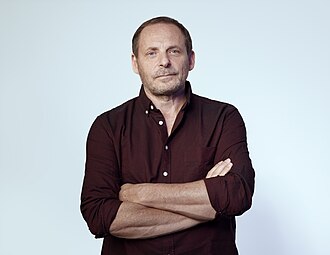
In the shadow of Moscow's glass towers, where tech dreams once collided with geopolitical storms, Arkady Volozh has engineered a improbable pivot. From the rubble of sanctions and forced exile, he's steering a new venture that's inked a $20 billion pact with Microsoft, outpacing the very empire he built.
Seeds of a Digital Russia
Arkady Volozh co-founded Yandex in 1997, back when the internet in Russia was a scrappy frontier, not the sprawling network it would become.[1][2] He saw it as more than code and servers— a tool to craft an open, forward-looking nation, woven into the world's economy without leaning solely on oil and gas. "I am known as one of the founders of Yandex," Volozh once said. "In our minds, when we founded it, we weren’t only creating a technology company. We were helping to create a new Russia – open, progressive, integrated into the global economy, and able to bring value to the world beyond natural resources."[7]
The company started as Russia's nod to Google, honing search tech that would sift through Cyrillic queries and local quirks.[1][2] Volozh, already a serial entrepreneur with a stint at CompTek International under his belt, poured his energy into making it distinct. No copying the giants; Yandex would carve its own path. "We never set up Yandex to imitate what others were doing," he reflected. "We've been in the business longer than other search engines and have created many original products."[8] By the early 2000s, that vision was taking root, with users flocking to a platform that felt native, not imported.
Three years in, Volozh stepped up as CEO, leaving CompTek behind to focus on Yandex's ascent.[2][4] It was a bet on persistence. Russia’s tech scene was nascent, dotted with hurdles like unreliable infrastructure and regulatory whims. Yet Yandex grew, layering on maps, email, and e-commerce that mirrored daily life—from navigating snowy streets to booking taxis in gridlocked cities. Today, it boasts 3.5 billion monthly users, a proof to how deeply it's embedded in the region's digital pulse.[1][2][3][4][5]
Peak and the Nasdaq Spotlight
By 2011, Yandex was ready for the global stage. Its IPO on Nasdaq that year marked the biggest tech debut since Google's own in 2004, pulling in investors eager for a slice of Eastern Europe's rising star.[2] Shares soared, valuing the company at a peak of $30 billion come November 2021.[1][2][3][4][5] Volozh's stake hovered around 8.5%, anchoring his fortune at $2.3 billion before the world shifted.[1][2][3][4][5]
The growth wasn't flashy; it was methodical. Yandex expanded into ride-hailing, delivery, and cloud services, becoming a one-stop ecosystem for millions. Volozh, ever the builder, stayed hands-on until 2014, when he eased back from day-to-day operations.[1] Even then, his influence lingered, guiding a company that employed thousands and shaped how Russians searched, shopped, and connected. It felt invincible, a bridge between East and West in an era of uneasy détente.
But empires, like cities, sit on fault lines. Volozh's wealth was tied tight to Yandex—no dividends flowing, no steady paycheck to cushion the ride. "I have 95% of the assets in the shares of one company," he admitted in a rare candid moment. "If you had it, would you somehow diversify? We don't have dividends in the company—for now, at least. And I don't have a regular salary."[10] That concentration would soon test his resolve.
The Invasion's Reckoning
February 2022 cracked everything open. Russia's invasion of Ukraine triggered swift backlash, and within three months, the EU slapped sanctions on Volozh, forcing him to resign as Yandex CEO.[1][2] His net worth plunged to $580 million, a stark drop from the pre-war highs.[1][2][3][4][5] Yandex, caught in the crossfire, faced delisting threats and asset freezes, its global ambitions curtailed overnight.
Volozh didn't stay silent long. In August 2023, he publicly condemned the war, a move that echoed his earlier vision of a progressive Russia.[1] "I am against the war," he stated flatly.[9] His board had rallied behind him earlier that year, arguing in June 2022 that "Rather than being sanctioned, Arkady should be lauded for building, from the ground up, one of the most independent, modern and progressive companies in Russia and one of the most innovative companies in Europe."[3] Still, the damage rippled. Engineers fled, partnerships frayed, and Volozh turned his focus outward—to those "talented Russian engineers who took a decision to leave the country." "Since the start of the war, I have been focused on trying to support" them, he said, calling it "an extraordinarily complex process, helping these engineers to start a new life."[7]
The sanctions hung heavy, isolating Volozh from his creation. Yandex split into pieces: the Russian core walled off, the international arm rebranded and relocated. It was a forced reinvention, born of necessity rather than choice. By March 2024, the EU lifted the restrictions, clearing a path forward.[1][2] Volozh, now untethered, eyed the horizon.
Nebius Rises from the Ashes
July 2024 brought closure and a fresh start. Yandex NV offloaded its Russian assets for $5.2 billion, wrapping up the painful divestment.[1][2] With that, Volozh stepped in as CEO of Nebius Group, the international successor carrying Yandex's cloud and AI ambitions abroad. It's no small pivot: Nebius has already eclipsed Yandex in overall value, a quiet reversal that underscores the shift in fortunes.[1][2][3][4][5]
The crown jewel landed soon after—a $20 billion deal with Microsoft, fueling Nebius's data centers and compute power.[1][2][3][4][5] Volozh, drawing on decades of tech savvy, is positioning it as a hub for AI innovation, free from the old constraints. Whether it recaptures Yandex's scale remains the intriguing unknown, but the momentum feels real. Engineers once uprooted now build in new locales, their skills redirected toward global plays rather than local silos.
| Date | Event |
|---|---|
| 1997 | Arkady Volozh co-founded Yandex, initially as Russia's answer to Google, developing search technology.[1][2] |
| 2000 | Volozh became CEO of Yandex after leaving his position as CEO of CompTek International.[2][4] |
| 2011 | Yandex conducted its IPO on Nasdaq, the largest tech IPO since Google's in 2004.[2] |
| 2014 | Volozh stepped back from operational management of Yandex.[1] |
| 2022-03 | Volozh was sanctioned by the EU within three months of Russia's invasion of Ukraine and quit as Yandex CEO.[1][2] |
| 2023-08 | Volozh publicly condemned the war in Ukraine.[1] |
| 2024-03 | EU sanctions against Volozh were lifted.[1][2] |
| 2024-07 | Yandex NV sold its Russian assets for $5.2 billion, finalizing the divestment and enabling Volozh to become CEO of Nebius Group.[1][2] |
Threads That Linger
Volozh's 8.5% stake in Yandex persists, a remnant of the old guard linking past to present.[1][2][3][4][5] It's a modest tether now, dwarfed by Nebius's ascent, but it speaks to the man’s lasting tie to what he started. In interviews, he’s mused on the personal toll—the lack of diversification, the all-in wager on one venture. Yet there's no regret in his tone; only the quiet resolve of someone who's weathered the storm.
The story of Volozh mirrors Russia's tech arc: bold beginnings, explosive growth, then fracture under external pressures. His shift to Nebius suggests a second act, one less bound by borders. Engineers he’s supported carry that forward, coding in exile what couldn't thrive at home.
What We Couldn't Confirm
Rumors swirl that Volozh inherited Yandex’s former data center in Finland as part of the asset shuffle, but details remain murky—no public records or statements pin it down. If true, it could strengthen Nebius's European footprint; if not, it's just another whisper in the wind of corporate realignments.
Arkady Volozh's path from Yandex founder to Nebius helmsman charts a resilient arc through sanctions and sales. The $20 billion Microsoft tie-up signals big stakes ahead, even as his Yandex legacy endures. In the end, it's a reminder that tech empires bend but rarely break entirely.
Sources
- [1] Yandex founder's $20 billion comeback - The Bell — en.thebell.io
- [2] Reported Arkady Volozh - Wikipedia — en.wikipedia.org
- [3] Arkady Volozh - Putin's Oligarchs - Coda Story — codastory.com
- [4] The Russian billionaire who became a double enemy of the state — intellinews.com
- [5] Nebius CEO Arkady Volozh Explains Why His Blockbuster Meta... — businessinsider.com
- [6] Arkady Volozh - Nebius — nebius.com
- [7] Arkady Volozh - Wikiquote — en.wikiquote.org
- [8] Arkady Volozh quote: We never set up Yandex to imitate what others... — azquotes.com
- [9] Yandex founder Arkady Volozh condemns "barbaric Russian... — en.thebell.io
- [10] Volozh Arkady Yuryevich - TAdviser — tadviser.com
Frequently asked questions
Where is Arkady Volozh currently residing?
Arkady Volozh has resided in Israel for years.
What is the name of the group Arkady Volozh oversees?
Volozh oversees Nebius Group.
How many monthly users did Yandex command at its height?
Yandex commanded 3.5 billion monthly users at its height.