 GetCelebrity Editorial
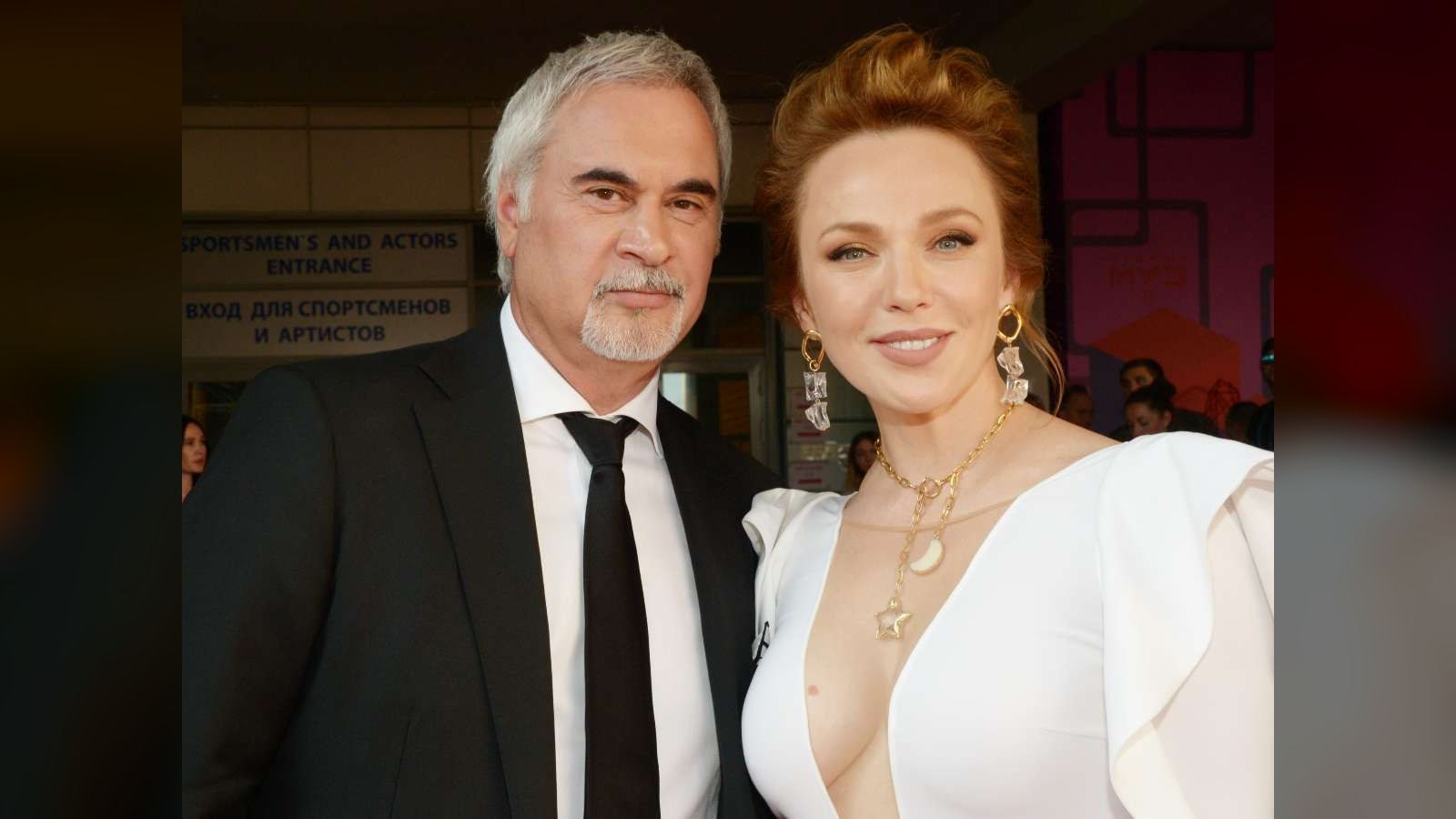
Albina Dzhanabaeva and Valery Meladze: A Look at Their Family Life and Public Perception
The recent celebration of Agata Meladze’s fifth birthday has once again thrust the personal lives of former "VIA Gra" soloist Albina Dzhanabaeva and her husband, renowned singer Valery Meladze, into the public spotlight. The couple’s youngest child has become the subject of an active debate among fans: who does she resemble more – her celebrated mother or her famous father? This seemingly innocuous discussion, sparked by Dzhanabaeva herself, has opened a window into the ongoing scrutiny and historical controversies that continue to shadow their relationship.
Albina Dzhanabaeva, once a prominent figure in the iconic Ukrainian-Russian pop group "VIA Gra," transitioned from a dazzling stage career to a more private, yet still scrutinized, family life. Her relationship with Valery Meladze, a towering figure in Russian pop music, has been a source of continuous public interest, not always positive. The primary reason for this persistent examination stems from the circumstances surrounding the inception of their family. Dzhanabaeva has historically faced, and continues to receive, criticism for having become romantically involved with Valery Meladze while he was still married to his first wife, Irina. This period saw the birth of their first son, Konstantin, prior to Meladze's official divorce. This timeline has cemented a narrative in the public consciousness that Dzhanabaeva "took" Meladze from his family, a narrative that has proved remarkably resilient over the years.
The weight of these past scandals significantly influenced Dzhanabaeva's approach to sharing her family life with the public. For an extended period, she chose to keep her younger children out of the public eye, a clear strategy to shield them from the often-harsh judgment and relentless media attention that accompanied their parents’ story. This reticence was a direct consequence of the continuous criticism she endured, which often focused on the perceived impropriety of her relationship with Meladze. The desire to protect her children from the scrutiny she herself faced is understandable, reflecting a common instinct among public figures navigating complex personal histories.
However, a noticeable shift in Dzhanabaeva’s public relations strategy has emerged recently. With the family having reportedly relocated abroad, Albina has adopted a more open approach, signaling a potential desire to redefine her public image and narrative. This new tactic involves a greater willingness to share glimpses into her family life, particularly featuring her middle son, Luka, and her daughter, Agata. This shift could be interpreted as an attempt to normalize their family unit in the public eye, presenting a unified and happy front, and perhaps, in doing so, mitigating some of the historical negativity.
The catalyst for the current discussion around Agata’s resemblance came in the form of a humorous and touching video shared by Dzhanabaeva on her personal blog. In this post, she candidly confessed something deeply personal: her sincere wish for Agata to be an "exact copy" of herself. This desire, a common sentiment among mothers, reveals a vulnerability and an intimate perspective on her hopes for her daughter. However, as Dzhanabaeva playfully revealed, nature had a different plan. According to her assessment, Agata is growing up to be "a spitting image of her famous father," Valery Meladze.
Dzhanabaeva’s concise caption accompanying the social media post, "That's how we live," suggests an underlying nonchalance regarding public opinion. This tone implies a level of comfort with her family’s reality and perhaps a growing resilience to the external commentary that has long plagued her. It indicates a move towards embracing her family's dynamic as it is, rather than conforming to public expectations or anxieties.
Despite this apparent indifference, the internet, true to form, immediately reignited the debate. Comments poured in, with many subscribers reinforcing Dzhanabaeva’s own observation: Agata is indeed a "copy of Valery." This widespread agreement underscores Meladze's recognizable features and the public's perception of his dominant genes. The online discussion quickly escalated into a flurry of opinions, with users weighing in on the resemblance from various angles.
Amidst the predominantly "copy of dad" comments, a segment of Dzhanabaeva’s online followers chose to offer support and a differing perspective. These subscribers attempted to reassure the singer, asserting that Agata still possesses features reminiscent of her mother. Comments such as "A spitting image of her mother" and "She's your copy, sweet girl" emerged, offering a counter-narrative and a sense of solidarity with Dzhanabaeva. Other users attempted a more nuanced view, acknowledging the strong paternal resemblance while still identifying elements of the mother in Agata: "Agatushka really looks very much like Valery, a mini-copy of her dad, but there's still something of you in her, she's a wonderful girl, simply charming and a doll." This kind of commentary reflects a desire to be diplomatic, perhaps to acknowledge both parents, or to simply offer a more balanced observation.
The variety of comments, ranging from "Copy of dad" and "No, not dad" to the more philosophical "Symbiosis," highlights the subjective nature of facial resemblance and the diverse ways in which individuals perceive family likenesses. It also demonstrates the enduring public interest in the children of celebrities, where every new photograph becomes an opportunity for collective analysis and discussion.
The story of Albina Dzhanabaeva and Valery Meladze is more than just a celebrity news item; it’s a narrative woven with threads of personal choice, public judgment, the complexities of family dynamics, and the evolving nature of public perception in the digital age. Their journey, from the controversial beginnings of their relationship to their current family life, reflects broader societal discussions about love, marriage, divorce, and the often-unforgiving spotlight that falls on public figures.
Valery Meladze, born in Batumi, Georgian SSR, rose to prominence in the early 1990s and quickly became one of the most beloved and recognizable voices in Russian pop music. His distinctive baritone and emotional delivery have garnered him numerous awards and a dedicated fanbase that spans generations. His artistic collaborations, particularly with his brother Konstantin Meladze, a renowned composer and producer, have produced a string of chart-topping hits that have cemented his legacy in the entertainment industry. Given his significant public profile, any aspect of his personal life, especially his family, inevitably attracts substantial attention.
Albina Dzhanabaeva's career with "VIA Gra" (also known as Nu Virgos) placed her at the forefront of a highly successful and often controversial girl group. Known for their provocative image and catchy pop anthems, "VIA Gra" achieved immense popularity across post-Soviet countries. Dzhanabaeva’s transition from this high-octane environment to a more settled family life, while still maintaining an artistic presence, showcases her adaptability and resilience. Her public persona has always been intertwined with her relationship with Meladze, and the journey of navigating that narrative has been a central theme in her public life.
The decision to move abroad, as mentioned in the source text, could be a pivotal moment for the family. Such a move often signifies a desire for greater privacy, a fresh start, or an attempt to distance oneself from persistent scrutiny in their home country. For Dzhanabaeva, this relocation appears to have empowered her to adopt a new strategy regarding her children's visibility, moving from concealment to cautious sharing. This shift might be an indicator of a stronger sense of security and perhaps a desire to control her own narrative, rather than letting past controversies dictate it entirely.
The seemingly simple act of sharing a video of her daughter and commenting on her resemblance becomes a microcosm of these larger themes. It’s a personal moment made public, immediately inviting the same types of discussions and judgments that have defined their relationship for years. The internet's instantaneous and often unfiltered nature amplifies these discussions, turning a private family observation into a wide-ranging public debate.
Ultimately, the ongoing public interest in Agata’s resemblance is not merely about genetics; it's about the enduring fascination with celebrity families, the persistent memory of past scandals, and the human tendency to project narratives onto public figures. For Albina Dzhanabaeva and Valery Meladze, it’s a testament to their enduring presence in the public consciousness, for better or worse. As Agata grows, her public image, like that of her siblings, will continue to be shaped by the complex and storied history of her parents, a narrative that Albina Dzhanabaeva now seems more willing to cautiously share, albeit on her own terms.