 GetCelebrity Editorial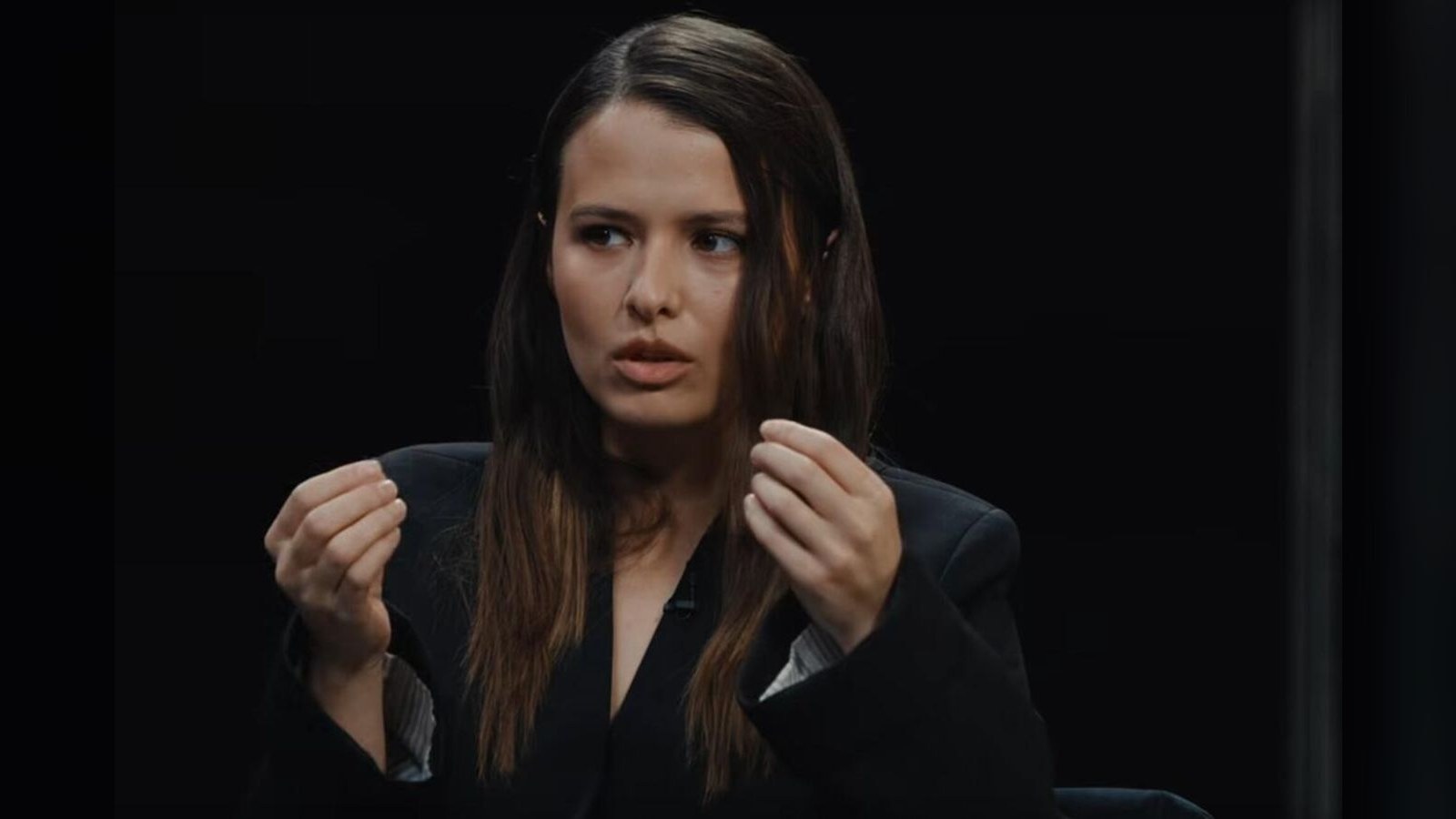
HEADLINE: Lyubov Aksenova revealed why she moved out from her husband: "It was hard"
Lyubov Aksenova's Unconventional Method Acting: A Deep Dive into "Without Me"
Lyubov Aksenova, a prominent figure in contemporary Russian cinema and television, has recently offered a rare glimpse into the depths of her preparation for acting roles, particularly concerning her work on the film "Without Me." Known for her meticulous approach to character development and her commitment to delivering authentic performances, Aksenova's dedication often leads her to employ unconventional methods. Her recent revelations, made during an episode of "Actor's Studio" with Vadim Vernik on VK Video, shed light on an extraordinary personal experiment undertaken to fully inhabit her character's emotional landscape for the film. This experiment involved a temporary separation from her husband, Pavel, a decision she described as challenging but ultimately invaluable for her craft.
Who is Lyubov Aksenova?
Lyubov Aksenova, born Lyubov Novikova, is a Russian actress who has garnered significant recognition for her versatility and compelling performances across various genres. Her career trajectory began in the early 2010s, and she quickly rose to prominence, becoming a recognizable face in Russian film and television. Aksenova has starred in numerous successful projects, including television series and feature films, earning critical acclaim and a dedicated fan base. Her roles often showcase a wide range of emotions and character complexities, from intense dramatic portrayals to lighter comedic turns. This dedication to her craft is what makes her recent disclosures about her preparation for "Without Me" particularly noteworthy.
Aksenova's filmography includes a diverse array of projects that have solidified her reputation as a serious actress committed to her roles. Her acting style is often characterized by a naturalistic approach, which requires a deep understanding and embodiment of her characters' internal worlds. This pursuit of authenticity frequently extends beyond the superficial aspects of a role, compelling her to explore psychological and emotional dimensions that require significant personal investment. The temporary separation from her husband for "Without Me" serves as a striking example of this profound commitment.
The Film "Without Me" and the Character's Emotional Core
The specific film, "Without Me," for which Aksenova undertook this unique preparatory measure, clearly demanded an exceptional level of emotional immersion. While the source text does not elaborate on the plot of "Without Me," it strongly implies that the character Aksenova portrays experiences a profound sense of separation, loss, or emotional void. Aksenova's decision to temporarily live apart from her husband was directly linked to her struggle to authentically grasp these complex emotions.
The core of her challenge, as she articulated it, lay in the stark contrast between her own stable and loving personal life and the emotional state required for her character. "When I started working on the script, I realized that I live in such a safe world, next to me is a person who loves me unconditionally, and I love him, and at home I feel very relaxed, and I needed to feel a sense of separation," Aksenova explained. This statement highlights a fundamental aspect of method acting: the actor's attempt to draw upon or create real-life experiences that mirror the character's journey, thereby making the portrayal more genuine and resonant. For Aksenova, her secure and loving home environment, while personally fulfilling, became an obstacle to accessing the vulnerability and emotional isolation her character required.
The Decision to Separate: A Deliberate Choice
Aksenova's decision was not impulsive but rather a considered step in her methodical preparation. She explicitly communicated her needs to her husband, Pavel, demonstrating a level of transparency and mutual understanding within their relationship that allowed for such an unusual request. Pavel's response, asking how she would be more comfortable, indicates a supportive and understanding partner, recognizing the professional demands of his wife's career. This mutual respect is a crucial underpinning for an experiment of this nature to even be considered.
The specifics of the separation were also carefully thought out by Aksenova. She did not merely want her husband to leave; she had a very particular condition. "I said, I want you to leave, because I need his things to be at home and for me to have access to them," the actress recalls. This detail is significant. It suggests that her need for "separation" wasn't about complete emotional or physical detachment from Pavel himself, but rather about cultivating a specific feeling of his absence within her familiar space. Having his belongings present would serve as a constant reminder of his existence and their connection, yet juxtaposed with his physical absence, it would intensify the feeling of separation – a nuanced emotional state she sought to replicate for her role.
The Terms of the Experiment: No Communication
Further emphasizing the rigor of this self-imposed experiment, Aksenova and Pavel agreed to a period of no contact. Aksenova did not even know where her husband would reside during this time. This intentional communication blackout was designed to maximize the feeling of isolation and the emotional impact of absence. In a world saturated with instant communication, deliberately severing contact for an extended period represents a significant challenge, particularly for a couple who share a loving relationship. This restriction would undoubtedly amplify any feelings of longing, uncertainty, and disconnection, all of which were presumably vital for her character's emotional landscape.
The Psychological Toll: "It Was Hard"
The experiment, however, took its toll. Aksenova's nerves began to fray after approximately two weeks. This period encompassed a week of her initial preparation while living alone, followed by roughly a week of actual filming. She described the filming itself as "difficult," suggesting that the on-set demands, combined with her self-imposed personal isolation, created an intensely stressful environment. The cumulative effect of these pressures eventually led her to break the agreed-upon silence. "At some point I just started calling him at night," she admitted. This spontaneous act, driven by emotional distress, underscores the depth of the challenge she faced and the psychological impact of the separation.
The reunion was simple yet poignant. "We met on Tverskaya and went home," she recounted. Tverskaya Street is a major artery in Moscow, a public and central location, suggesting a straightforward and unembellished reunion after the period of separation. The act of "going home" together signifies the end of the experiment and a return to their shared life, providing a much-needed sense of relief and normalcy after a period of self-imposed emotional austerity.
The Value of the Experience: Invaluable for the Role
Despite the personal difficulties, Aksenova unequivocally stated that this experience proved "invaluable for the filming." Prior to the separation, she had struggled to fully understand and embody her character's emotions. Her comfortable personal life, while desirable, created a barrier to accessing the specific feelings of separation and emotional vulnerability required for the role. The experiment, however, enabled her to bridge this gap. "Before separating from her husband, she could not fully understand her character's emotions, but after the experiment, she was able to feel the full range of her experiences," the source text concludes.
This outcome highlights a crucial aspect of method acting: the belief that genuine emotional experience, even if artificially induced for the purpose of a role, can lead to a more authentic and impactful performance. By subjecting herself to a controlled environment that mirrored the character's emotional state, Aksenova was able to bypass intellectual understanding and achieve a deeper, visceral connection to the role. This kind of experiential learning allows actors to portray emotions not just as observed behaviors, but as deeply felt internal states, making their performances more believable and compelling for the audience.
Method Acting and Its Controversies
Lyubov Aksenova's approach, while effective for her, falls within the broader tradition of method acting, a technique that has both fervent adherents and vocal critics. Pioneered by figures like Konstantin Stanislavski and later popularized in the West by Lee Strasberg, method acting encourages actors to draw upon their own experiences and emotions to inform their performances. While it can lead to incredibly powerful and nuanced portrayals, it also raises questions about the psychological toll it can take on actors and the boundaries between personal life and professional commitment.
Actors engaging in method acting often immerse themselves deeply in their roles, sometimes remaining in character even off-set, or undertaking extreme physical and psychological transformations. While Aksenova's experiment did not involve physical transformation, the emotional and relational aspect of her preparation speaks to the intense demands method acting can place on an individual. Her candid admission about her nerves giving out underscores the potential emotional fragility inherent in such approaches.
The "Actor's Studio" setting, where Aksenova shared these details, is itself historically linked to discussions around method acting. The original "Actors Studio" in New York, where Lee Strasberg famously taught, became synonymous with this intense approach to acting. Vadim Vernik's "Actor's Studio" on VK Video, therefore, provides a fitting platform for contemporary actors like Aksenova to discuss their processes, contributing to the ongoing dialogue about the craft and its demands in the modern era.
The Balance Between Art and Life
Aksenova's story also implicitly touches upon the delicate balance that creative professionals, especially actors, must strike between their artistic demands and their personal lives. Her ability to communicate her needs to her husband and his willingness to support her, even in such an unusual request, speaks to a strong foundation in their relationship. The temporary nature of the separation and their eventual reunion on Tverskaya Street and return home signifies a conscious decision to re-establish the boundaries between her demanding professional life and her stable personal one.
This incident serves as a testament to the dedication and sacrifices some actors are willing to make to achieve authenticity in their roles. It also highlights the often unseen emotional labor involved in creating compelling performances. For Lyubov Aksenova, the discomfort and emotional strain of temporary separation were a price she was willing to pay for what she considered an invaluable artistic outcome.
Her openness in sharing this deeply personal experience not only provides insight into her individual acting process but also contributes to a broader understanding of the rigorous and often psychologically challenging world of professional acting. It reminds audiences that the performances they see on screen are often the result of profound personal investment and a relentless pursuit of truth in portrayal.
Conclusion
Lyubov Aksenova's revelation about her temporary separation from her husband for her role in "Without Me" offers a compelling glimpse into the lengths to which some actors go for their craft. Her meticulous preparation, driven by a desire for complete immersion, led her to undertake a personal experiment designed to cultivate a profound sense of separation. While difficult and emotionally taxing, Aksenova emphasized that this experience was invaluable, allowing her to access and portray the full range of her character's emotions with a depth she could not achieve otherwise. This story not only underscores her dedication as an actress but also sheds light on the often challenging and deeply personal journey involved in method acting, highlighting the intricate balance between artistic pursuit and personal well-being.