 GetCelebrity Editorial
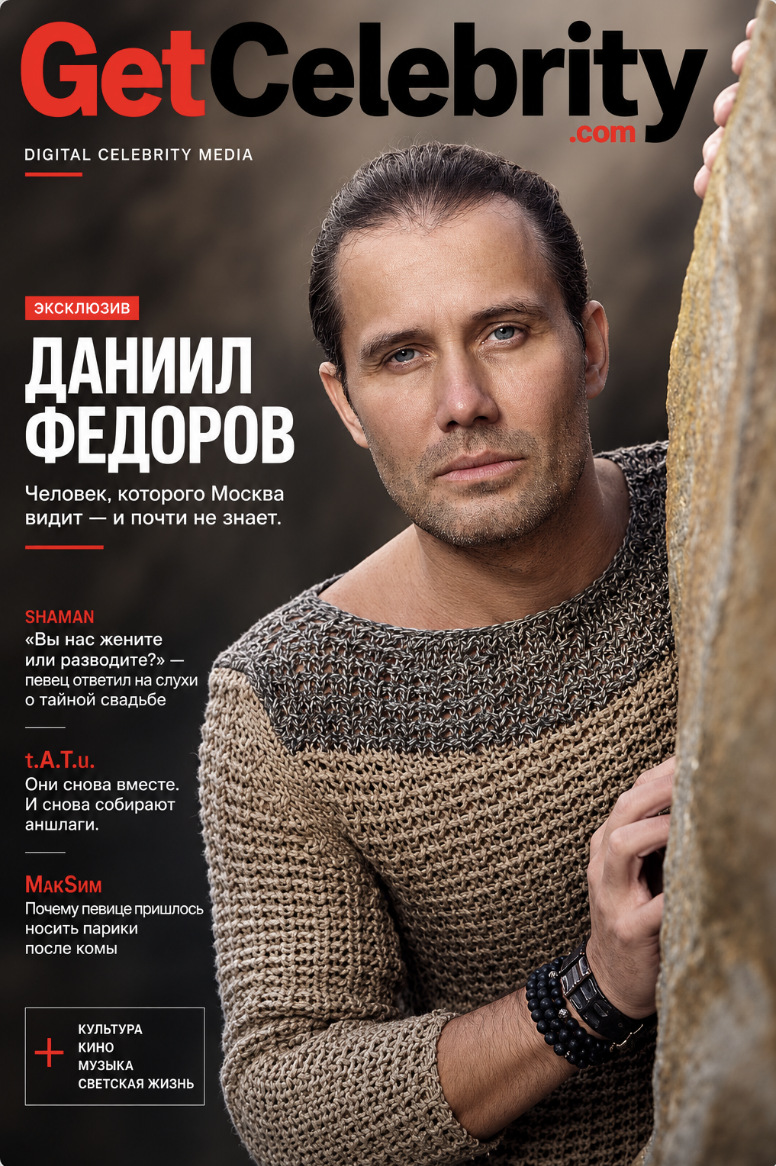
This interview wasn't born in an editorial office or according to a pre-approved plan. GetCelebrity.com's Editor-in-Chief Andrey Zaruyev met with Daniil Fyodorov, an artist with whom he has shared a connection for over twenty years. Over these years, Andrey has seen him at dozens of premieres, exhibitions, and social events, but each time he was convinced: the person captured by cameras is much deeper than his public image.
Daniil is remarkably organic in Moscow's social scene—calm, friendly, possessing an uncanny sense of the evening's mood, able to sustain a conversation and crack a timely joke. But behind this ease, there's no fuss or superficiality. He's a man of the old school: well-read, refined, dislikes arguments, but can talk for hours about painting, time, and people. Perhaps this is why his portraits always reveal more than the first impression suggests. Fyodorov doesn't paint society chronicles or a collection of recognizable faces—he paints people and the era that shines through them.
A Family Album in Portraits
— Danya, in our over twenty years of acquaintance, I've seen you paint contemporaries, actors, and Moscow. But for the past year and a half, you've almost entirely immersed yourself in your family's history. Why now?
— The past year and a half have been dedicated to the project "Osipovs-Fyodorovs: A Dynasty of Artists. A Family Album. Painting"—portraits of our family members, essentially a pictorial family tree. Each of these individuals lived in their own time, and through their faces, I wanted to bring forth an entire stratum of life across several generations, express respect for my ancestors, and restore a spiritual connection with those who lived before us. Everyone has a family history, but we don't always manage to hear and comprehend it. Turning to the past helps understand the values of another era, re-evaluate them today, and sometimes find answers to our own questions.
— When painting is passed down in a family from generation to generation, does it perhaps cease to be just a profession?
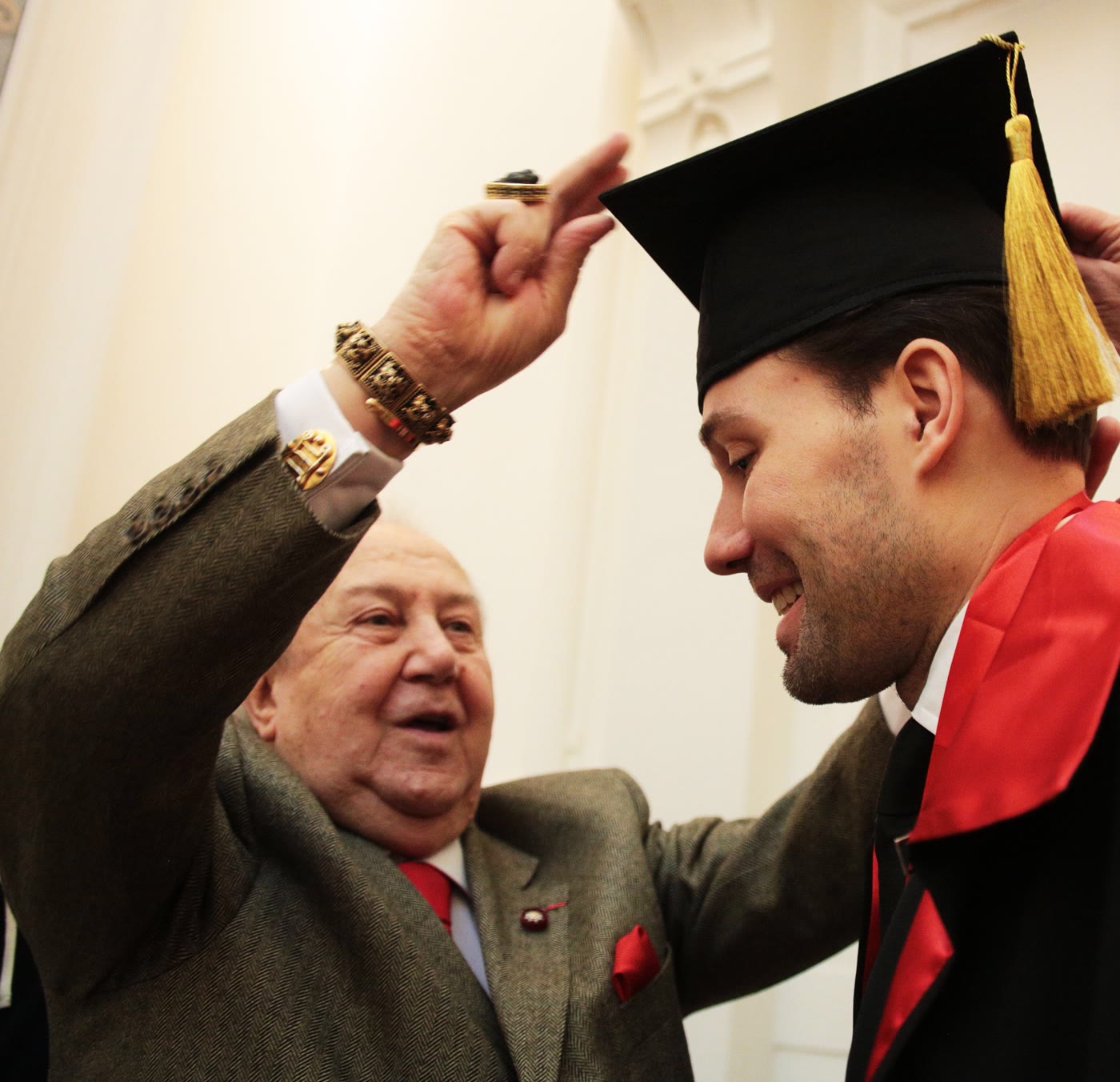
— Of course. A family dynasty isn't just a fancy term; it's faces, characters, stories, and legends. It's several generations of the same family, sequentially passing down professional skill, knowledge, experience, and traditions of fine art. Our dynasty has existed in Russian art for over 120 years. Zurab Konstantinovich Tsereteli called it one of the oldest, most vibrant, and diverse creative dynasties in Russia, and the works of its masters are housed in the largest art collections in Russia and private collections worldwide. Belonging to such a history is not a privilege but a responsibility: it must be continued not by name, but by one's own work.
A Pictorial Century at the Academy of Arts
— In 2024, the exhibition "A Pictorial Century: The Art of the Osipovs-Fyodorovs Dynasty" was held at the Russian Academy of Arts. For you, was it a conclusion or a beginning?
— Both. The exhibition at the Russian Academy of Arts, Russia's premier creative and scientific organization in the field of fine arts, was itself a confirmation of the project's scale. The exhibition occupied the grand enfilade of the halls of the Russian Academy of Arts—the famous former Morozov mansion on Prechistenka. For the first time, the family's art was shown so comprehensively: paintings, drawings, theatrical and decorative works, portraits and self-portraits, Moscow landscapes and those of central Russia, still lifes, and decorative compositions. I've participated in family exhibitions since 1994; important milestones were Washington in 2002 and Paris in 2015, where my portraits of cultural figures and Moscow landscapes were presented. At the Russian Academy of Arts, works created since 2001 were exhibited: the series "The Beach," "Golden Autumn," "Old and New Moscow," as well as portrait cycles "Moscow Holidays," "Legendary Soviet Ballet Dancers," "East-West," "Theater Figures," and "Legends of World Cinema." Therefore, the exhibition truly marked the end of a significant period and, at the same time, opened a new one.
Moscow Society: People, Not Noise
— Moscow's social scene knows you as well as its art world. But it always seemed to me that your presence at premieres and receptions is also part of your work. Am I mistaken?
— No. Moscow has a very active cultural and social life, and invitations to such events for an artist are not just an opportunity to be seen. Ideas are born there, meetings happen, and future images take shape. Every person has their own posture, mannerisms, charisma, and internal rhythm—these observations gave rise to the well-known portrait series of our contemporaries. Art critics have noted that they formed a kind of portrait of society. My grandmother, the artist Tamara Alexandrovna Osipova, loved people very much; I think that quality has been passed down to me. Interaction helps to perceive the new and then transfer it to the canvas.
— You give the impression of someone who never gets lost in social bustle. How do you manage that?
— Because people are what interest me most, not the noise around them. Even at the loudest event, you can have one truly important conversation. I'm not drawn to arguments, strong emotions rarely surface, but a conversation about art, history, a book, or human character can last for hours. It's important for an artist not only to see but also to listen.
Another Moscow: Quiet and Almost Personal
— In your work, there's also a very different Moscow—quiet, green, almost personal. Where do you find it?
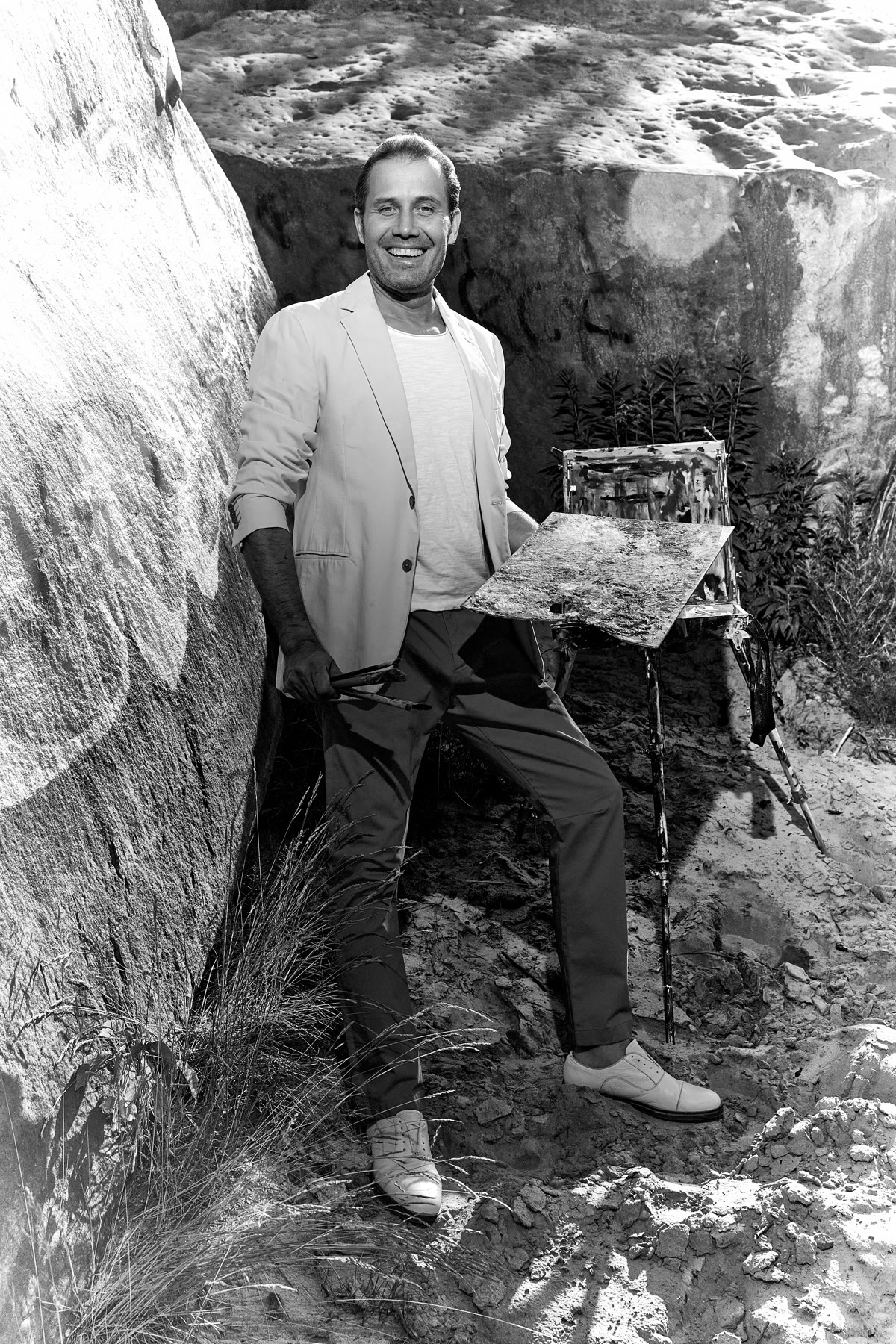
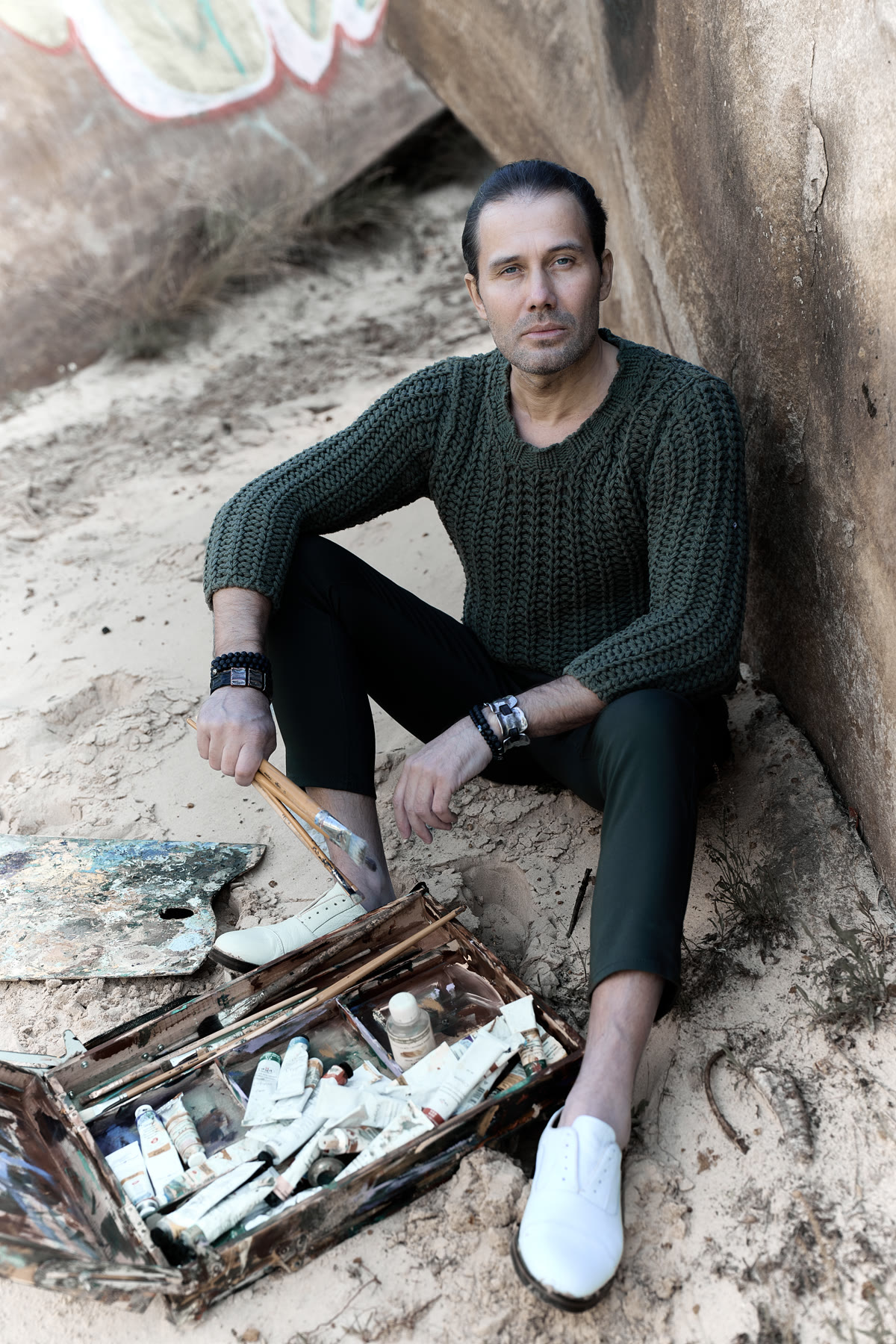
— In my favorite parks and on walks. Trees, flowers in different periods of summer, the morning birdsong, the evening sunset—all create a mood that I want to capture on canvas. Moscow can be grand, noisy, and swift, but it can also be intimate, almost deserted. In a landscape, it's important to capture not just a recognizable view but the mood of a specific day.
Portraits of World Stars
— Over the years, many world stars have been by your side. Whose portraits and meetings remain particularly vivid in your memory?
— One of the most memorable encounters was with Sophia Loren. Her portrait was presented during one of the actress's visits to Moscow; the work required special care because I've admired Sophia Loren since I first saw her in the film "Marriage Italian Style." In the mid-2010s, I painted a portrait of Demi Moore, which I presented to her during her visit to Moscow with Ashton Kutcher. Pierre Richard has always remained an amazing actor for me—primarily because of the film "The Toy"—so I wanted to capture him as a young man, as millions of viewers remember him. And Daniel Radcliffe, upon seeing his portrait, remarked that I was the only artist who had correctly depicted his eyebrows. According to him, this detail alone made the entire work successful.
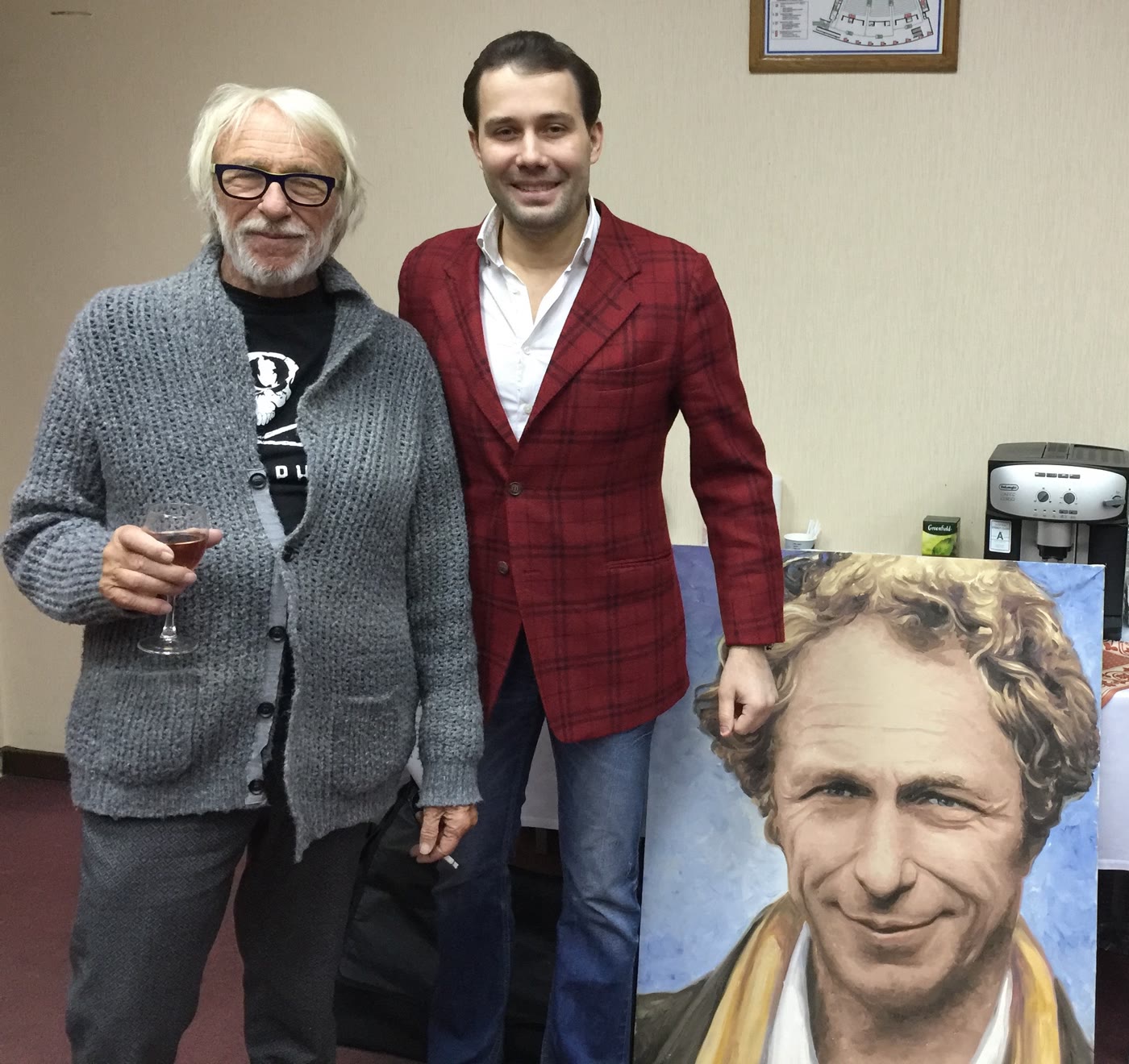
— The story with Radcliffe's eyebrows is perhaps one of the most accurate compliments to a portraitist. Whose image are you working on now?
— Currently, I'm working on a portrait of People's Artist of the Russian Federation, pianist Yuri Alexandrovich Rozum. We are friends, I often attend his concerts, and I admire his talent and mastery. It's important to convey not only external resemblance but also the depth of personality, the musician's inner composure, and the energy that arises during performance.
Likeness or Character
— What is more important to you in a portrait—likeness or character?
— Likeness is necessary, but the main thing is to capture the essence of the person. In female portraits, special attention is naturally given to beauty; in male portraits, to charisma, individuality, and the gaze. Children's portraits are interesting in their own way: children are spontaneous and still open to the world; their emotions are genuine. An adult knows how to construct an image and hide behind it; a child almost never does. Appearance can be conveyed technically. A true portrait begins where the person appears beyond the facial features.
Moscow's Flowers and a New Exhibition
— You've already begun preparations for a major solo exhibition. What will it be like?
— The exhibition will showcase the strongest works created to date: portraits, Moscow landscapes, and the series "Moscow's Flowers," which I have been intensively working on since 2024. It was first presented at the Russian Academy of Arts. Flowers are an infinite theme and the adornment of life. We admire them, and they, as Rasul Gamzatov writes, "look at us." Their color, form, and the combination of a budding blossom and different stages of flowering are captivating; en plein air, in highlights and shadows, the plants themselves suggest the composition. A special place is occupied by the Moscow State University Botanical Garden on Lenin Hills with its collections of roses and peonies, lilacs and mock orange, irises, phlox, and tulips. Each visit becomes a creative discovery. The artistic concept for the series has been found, and now it is being prepared for a full presentation at a solo exhibition.
Charity: The First Step
— There is another theme in your life that you speak about without unnecessary pathos—charity.
— I am an ambassador for the "Life in Motion" foundation, which helps children with disabilities fulfill one of their most important dreams—to start walking. My works are also donated to charity auctions, and the proceeds are directed to those in need of help. Art should not exist solely within the studio, gallery, or private collection. If a painting helps a child take their first step, it gains another, very important meaning.
We end the conversation, but continue to talk for a long time afterward without the recorder—about exhibitions, people, and Moscow, which changes faster than the paint can dry. Daniil, as always, doesn't argue, listens attentively, and occasionally says something ironic—quietly, almost in your ear. This, perhaps, is his rare quality: to be noticeable without striving to be louder; to remain a person of Moscow society and never become a person of the social chronicle.
Andrey Zaruyev, Editor-in-Chief of GetCelebrity.com
Background
The Osipovs-Fyodorovs Dynasty
The founder of the dynasty was Alexander Efimovich Osipov (1892–1981). The second generation includes his daughter Tamara Alexandrovna Osipova (1924–1989) and her husband Vladislav Georgievich Fyodorov (1924–1993). The third generation is their daughter Maria Vladislavovna Fyodorova. The fourth generation is Maria's son, Daniil Yurievich Fyodorov.
Alexander Efimovich Osipov
Artist and educator, member of the Union of Artists of the USSR. A representative of the academic school of painting, a master of portraiture and landscape. He received his art education in St. Petersburg: at an icon-painting studio, the school of the Imperial Society for the Encouragement of Arts, headed by N.K. Roerich, and the Imperial Academy of Arts. His teachers included A.V. Makovsky and V.V. Belyaev. In the 1920s, he participated in exhibitions of the ISTR association ("Art for the Workers"). He created iconic landscapes of Moscow and Leningrad—"Moscow is Being Built," "Rostral Column," as well as landscape series of the Baltic region, Moldova, and Crimea. In the 1920s–1940s, he taught graphic arts in the Don region, drawing and painting at the Moscow Secondary Art School, Moscow general education schools, the Aviation Institute, and a workers' faculty. A solo exhibition was held in 1973 in the halls of the Moscow Union of Artists on Begovaya Street.
Tamara Alexandrovna Osipova
Member of the Union of Artists of the USSR. Known for works dedicated to ballet. Among her iconic canvases are "Behind the Scenes. G. Ulanova and E. Maximova during rehearsal," "Galina Ulanova. Rehearsal," "Portrait of a Ballerina," "The Nutcracker," and others. In the rehearsal halls of the Bolshoi Theatre, she drew and painted N. Bessmertnova, E. Maximova, V. Vasiliev, M. Lavrovsky, and other ballet soloists. Her solo exhibition "Rehearsal," dedicated to the 200th anniversary of the Bolshoi Theatre, took place at TsDRI in 1976. Osipova's works were "akin to the art of ballet in their lightness and artistry" (M. Liepa). She graduated from the Moscow Secondary Art School in 1944 and the V.I. Surikov Moscow State Art Institute in 1950, from the studio of S.V. Gerasimov. Her teachers included V.V. Favorskaya, I.I. Chekmazov, and D.K. Mochalsky. Her diploma work was "Nakhimovets"; supervisor—S.V. Gerasimov, reviewer—M.V. Alpatov. In the 1950s, she worked as a marine painter, and in the 1960s, she turned to themes of childhood and figure skating. The artist's work is characterized by spatiality, a "pearly" palette, and brilliant drawing.
Vladislav Georgievich Fyodorov
Member of the Union of Artists of the USSR, participant in the Great Patriotic War. An outstanding painter and colorist, a successor to the traditions of painting of the 1920s–1930s. A master of mood landscapes, Fyodorov created an epic picture of Russian nature in works such as "The Herd," "Peaceful Sky," "It Got Cold," "Morning," and "Spring in Tarusa." He graduated from the Moscow Secondary Art School in 1944 and the V.I. Surikov Moscow State Art Institute in 1950, from the studio of S.V. Gerasimov; his teacher was V.V. Pochitalov. His diploma work was "The Firstborn"; supervisor—S.V. Gerasimov, reviewer—M.V. Alpatov. He worked on the theme of motherhood in paintings like "In the Garden," "Mother and Daughter," "Over the River. Evening," and "Sleeping." The exhibition "Vladislav Fyodorov. Painter" was held at the Moscow Union of Artists in 2018. A conference "Creative Quests and the Measure of Freedom in Russian Painting of the 1940s–1980s. In Memory of Vladislav Fyodorov" was held at the Russian Academy of Arts, resulting in the publication of a collective monograph of the same name. "Fyodorov's work is based on immense painterly culture, magnificent taste, and drama..." (O. Kostina).
Maria Vladislavovna Fyodorova
Honored Artist of the Russian Federation, Academician of the Russian Academy of Arts, member of the Union of Artists of Russia, the Moscow Union of Artists, and the Union of Theater Workers. She works at the intersection of visual and theatrical arts. She graduated from the Faculty of Applied Arts at the Moscow Textile Institute and, from 1974 to 1983, worked at the All-Union Fashion House (ODMO). For half a century, she has created stage costumes. She is the author of costumes for artists of the Russian State Folk Dance Ensemble, the "Russian Song" ensemble, the State Concert Orchestra of the RSFSR, and theatrical productions. In visual arts, she is a student of her parents and Professor of Painting at the Moscow State Art Institute, V.V. Favorskaya. She created graphic series such as "Fair," "Skomorokhi," "Sirin Birds," "Fairy Tale Beasts," and "Cities." "...The artist inherited not only the tradition of Russian scenography but also another, no less valuable and rich tradition—that of the Moscow school of easel painting..." (A.V. Tolstoy). The conference "The Art of Costume. Costume as Art. For Maria Fyodorova's Jubilee" was held in 2022 at the Russian Academy of Arts.
Daniil Yurievich Fyodorov
Painter, Honorary Academician of the Russian Academy of Arts, member of the Union of Artists of Russia, the Moscow Union of Artists, and the Union of Theater Workers. He works in the genre of contemporary ceremonial portraiture. "Without fear of bold aesthetic experiments, he creates a gallery of images of our contemporaries and idols of the past..." (D.V. Rodionov). He studied at the V.A. Serov Art School No. 1 and at Indiana University South Bend in the USA under Professor E. Droege. He is a graduate of the Art and Graphics Faculty of the Moscow State Pedagogical University (2001). His teachers were V.A. Igoshev and E.V. Shorokhov. His solo exhibitions have been held since 2004. The poly-stylism of his creative thinking is expressed in the artistic solutions of series such as "Outstanding Theater Figures," "Heroes of the Fatherland," "East-West," and others. Retrospective portrait cycles include "Russian Writers and Poets," "Legends of World Cinema," and "Stars of Soviet Ballet." He has created landscape cycles such as "Old and New Moscow," "Skyscrapers," and "The Cheryomushki-Znamenskoye Estate." "Grandfather's Palette" is a significant work in the family collection. He has been awarded the Silver Medal of the Russian Academy of Arts, diplomas from the Russian Academy of Arts, the Moscow Union of Artists, and public organizations.