 GetCelebrity Editorial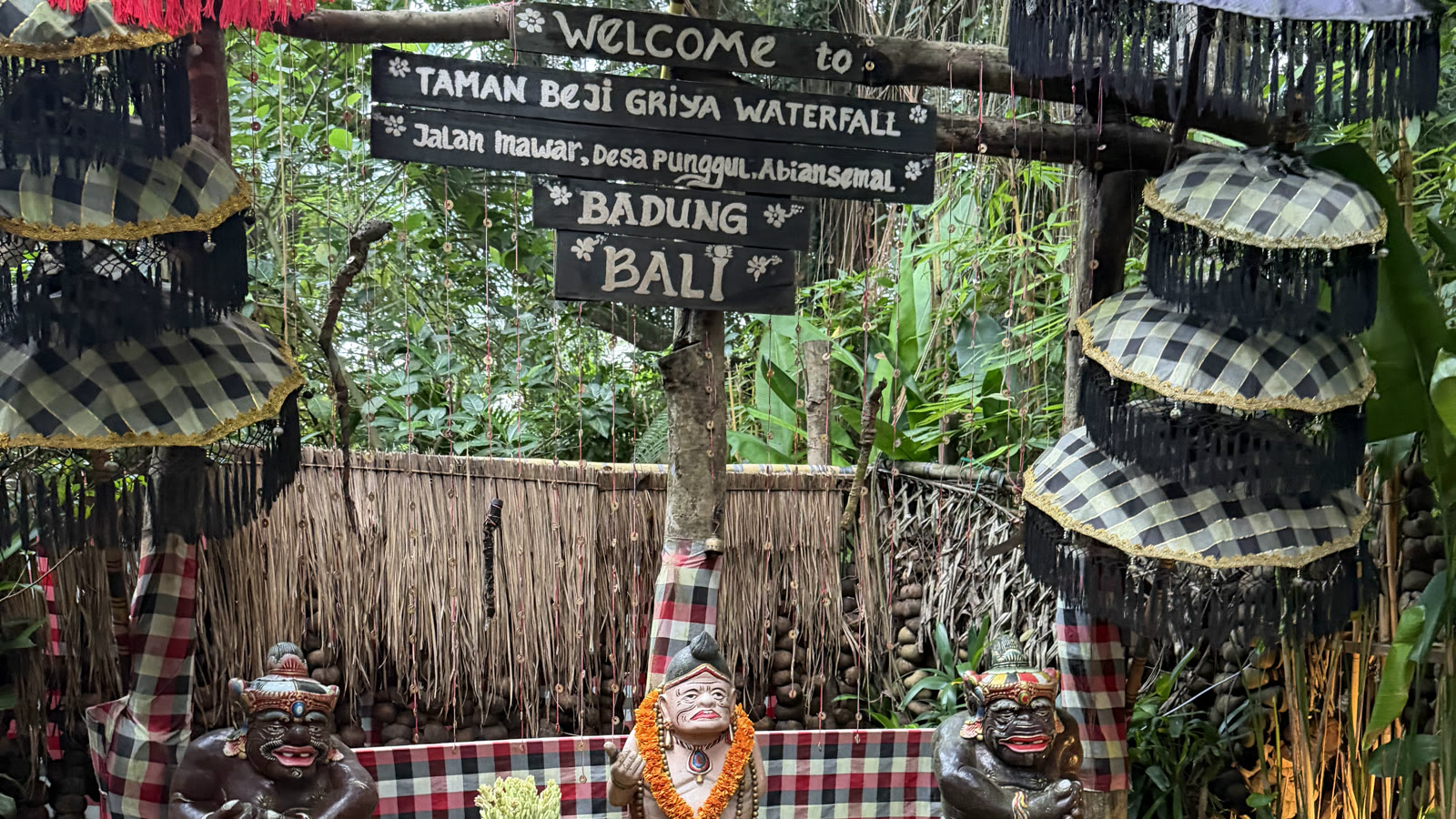
At Taman Beji Griya in Bali, water is not scenery. It is a ritual, a therapist, a stagehand, and, inevitably, a business model.
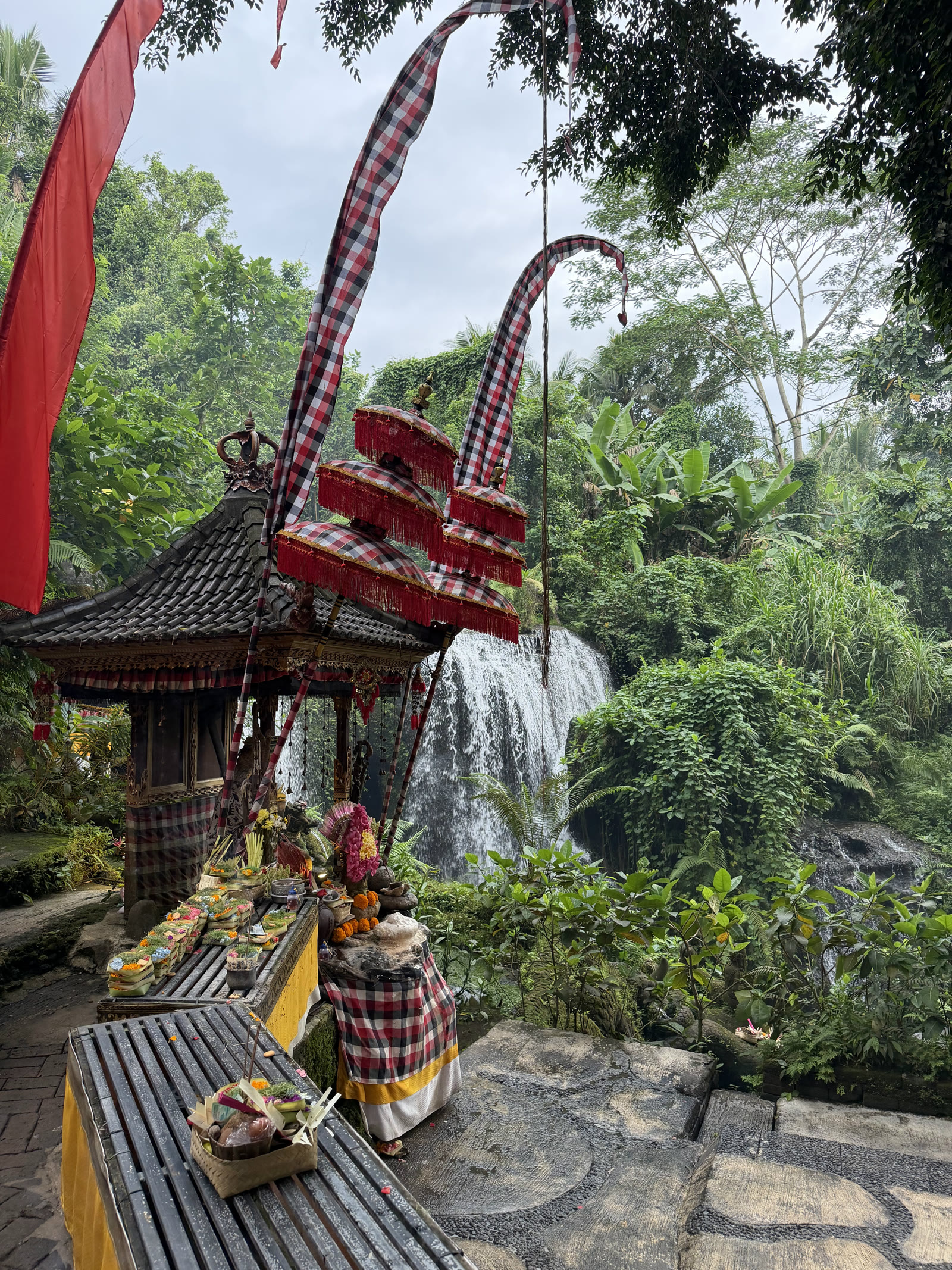
On Bali, a temple is rarely just a temple. A small offering on the sidewalk is not decoration, no matter how often tourists step over it while checking Google Maps. And water, especially sacred water, is not merely something to photograph before lunch. It is a working substance. It cleanses, blesses, cools the body, rearranges the mood and, on a good day, briefly silences the little executive committee that lives in the modern traveler’s head.
Taman Beji Griya Waterfall, in the village of Punggul in Abiansemal, Badung, looks at first like another Bali entry in the global catalog of places people call hidden even after three tour operators and six thousand reels have found them. It is west of Ubud, close enough for a half-day trip and far enough from the usual traffic theater to feel like the island has stepped out of its influencer costume for a moment.
But this is not a waterfall in the ordinary sense. It is a beji, a sacred water site, and the reason people come is not only to see the cascade. They come for melukat, a Balinese purification ritual in which water, prayer, offerings and the body itself become part of a ceremony of release. In American terms, it is somewhere between a baptism, a therapy session, a cold plunge and an immersive theater piece - except nobody asks you to sign a waiver admitting that you have a soul.
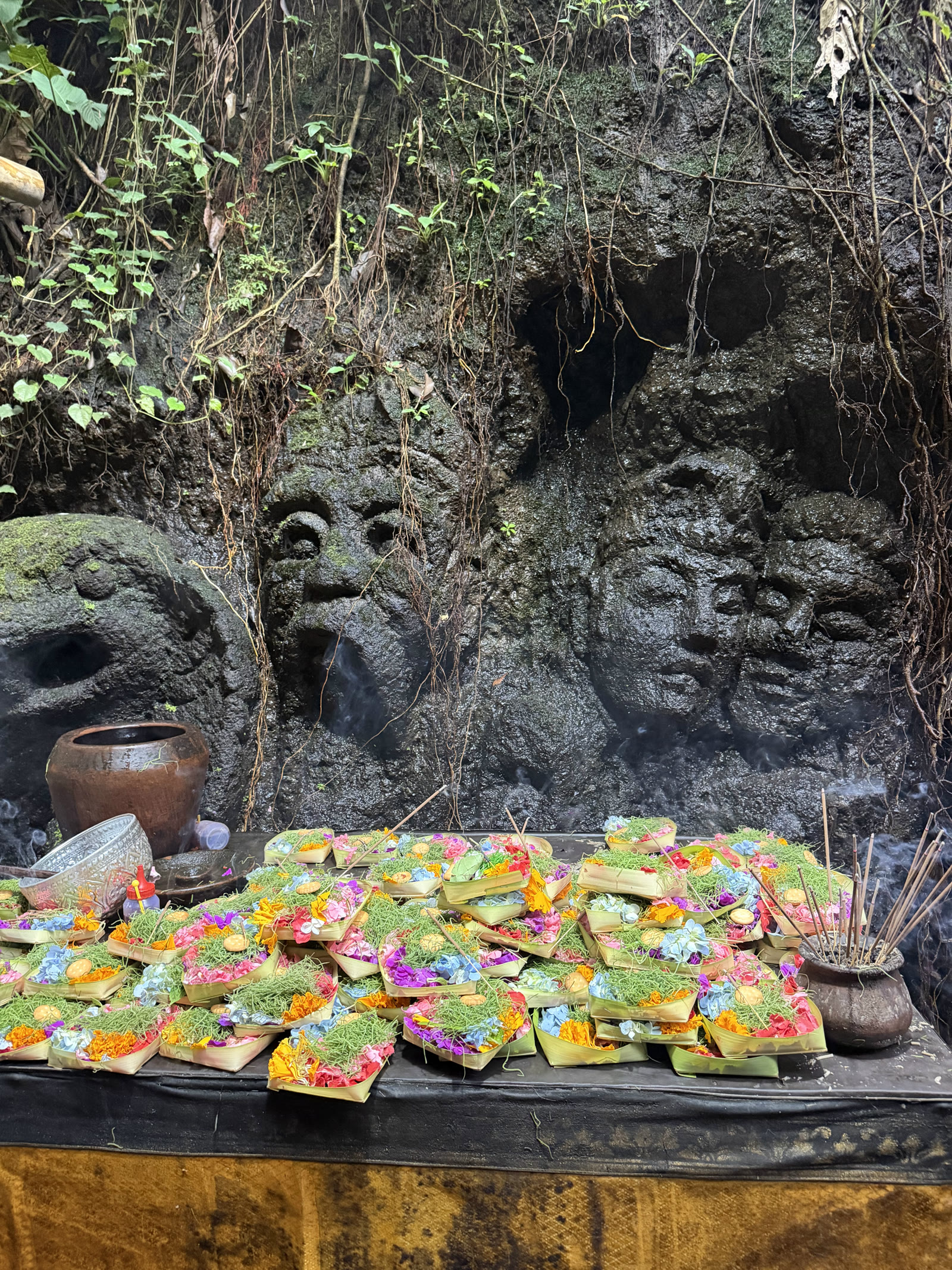
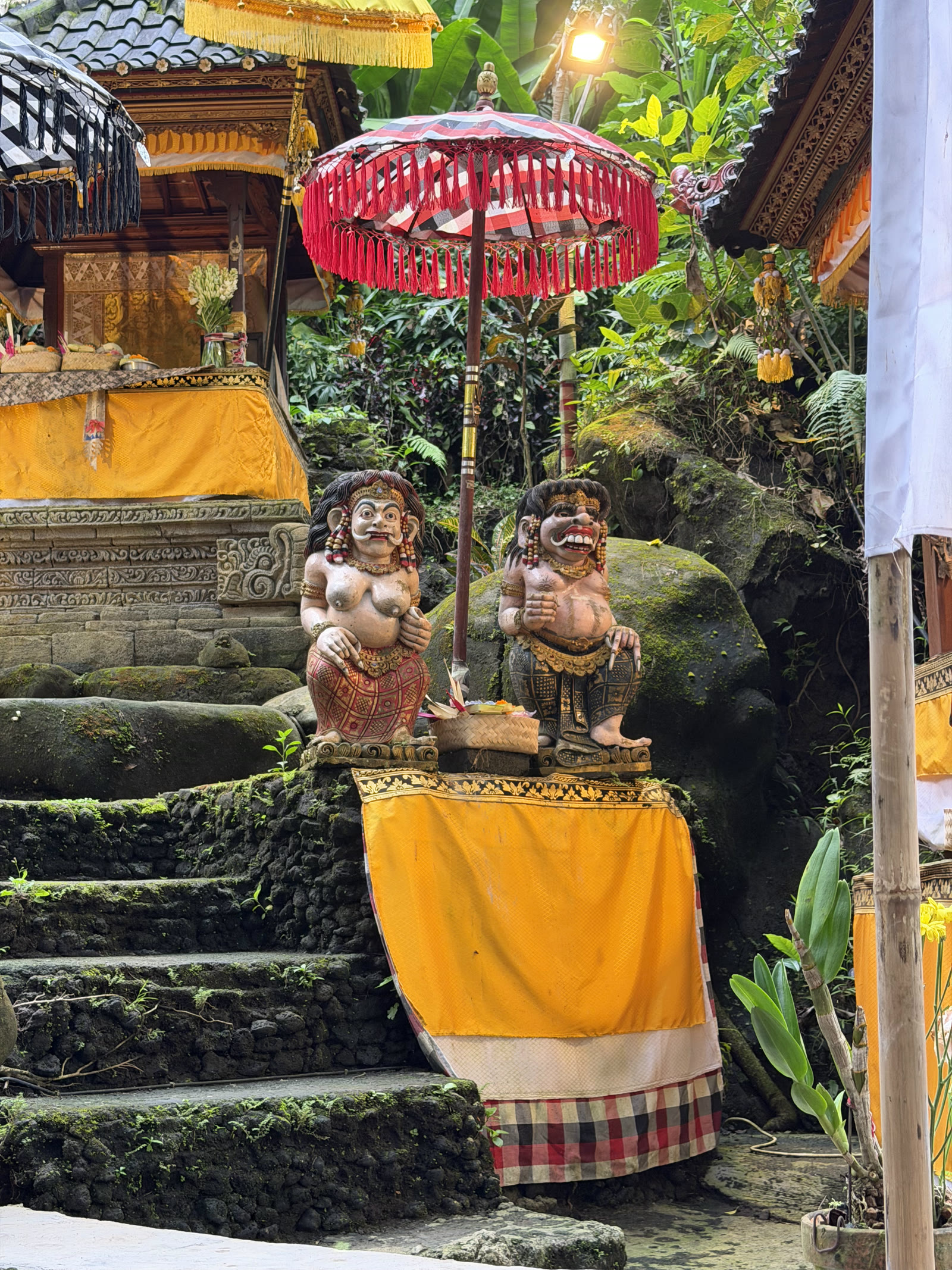
The setting helps. There are carved stone walls, damp steps, a canyon, a cave, faces in the rock, the roar of falling water and that particular Balinese choreography in which the sacred and the practical stand shoulder to shoulder. A priest may be nearby. A guide may be explaining what to do. A cashier is certainly somewhere in the system. Bali has never been embarrassed by this arrangement. Westerners often prefer their spirituality either free and wild or expensive and branded. Bali simply lets the gods, the parking lot and the payment counter coexist.
A Place That Was Heard, Not Found
The place also has a story, and it is a very Balinese one. According to local tradition, the site is connected to Griya Gede Manuaba Punggul, a Brahmin priestly household. For years, the area functioned as a secluded spiritual space near water, tied to meditation and family religious practice. In 2018, during meditation, a pawisik - a kind of divine whisper or spiritual instruction - was said to have been received: restore the site, open access to the holy water and make the space available for prayer and purification.
In Los Angeles, a man who hears a voice during meditation may launch a podcast. In New York, he may raise seed funding. In Bali, he restores a sacred waterfall. To be fair, the Balinese version has better lighting.
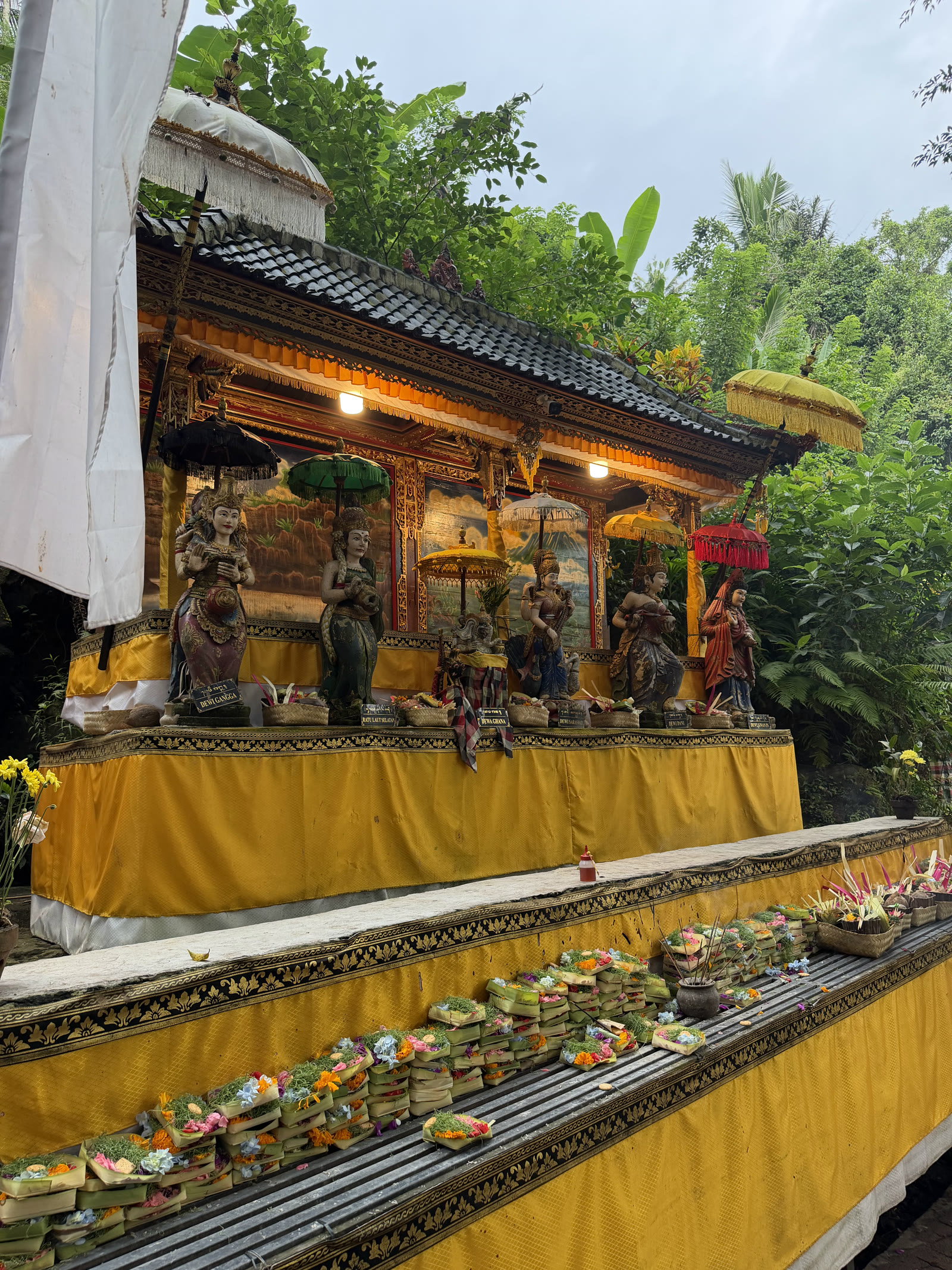
The ritual begins before the water. You do not simply wander in wearing whatever survived the scooter ride. You are given a sarong. You are told how to behave. There are offerings. There is prayer. This matters. The sarong is not a costume for a cultural photo opportunity. It is a small correction to the tourist ego: you are entering someone else’s sacred grammar, and for once the island is not asking you to be comfortable first.
The Ritual: Not a Swim, a Passage
Then comes the water sequence: springs, cave, waterfall, pool, and, often, a final cleansing with young coconut water. Bali has an almost suspicious faith in the coconut. It hydrates, decorates, feeds, purifies and, if asked politely, could probably refinance a villa in Canggu.
The most dramatic moment is the release under the waterfall. Visitors are encouraged to let go of anger, anxiety, grief, heaviness - all the emotional luggage that arrives without paying baggage fees. The water is loud enough to swallow a scream. That is not a minor feature. In a world where every feeling seems to be recorded, edited, captioned and judged, the chance to shout into falling water and have nobody rate the performance is practically a luxury product.
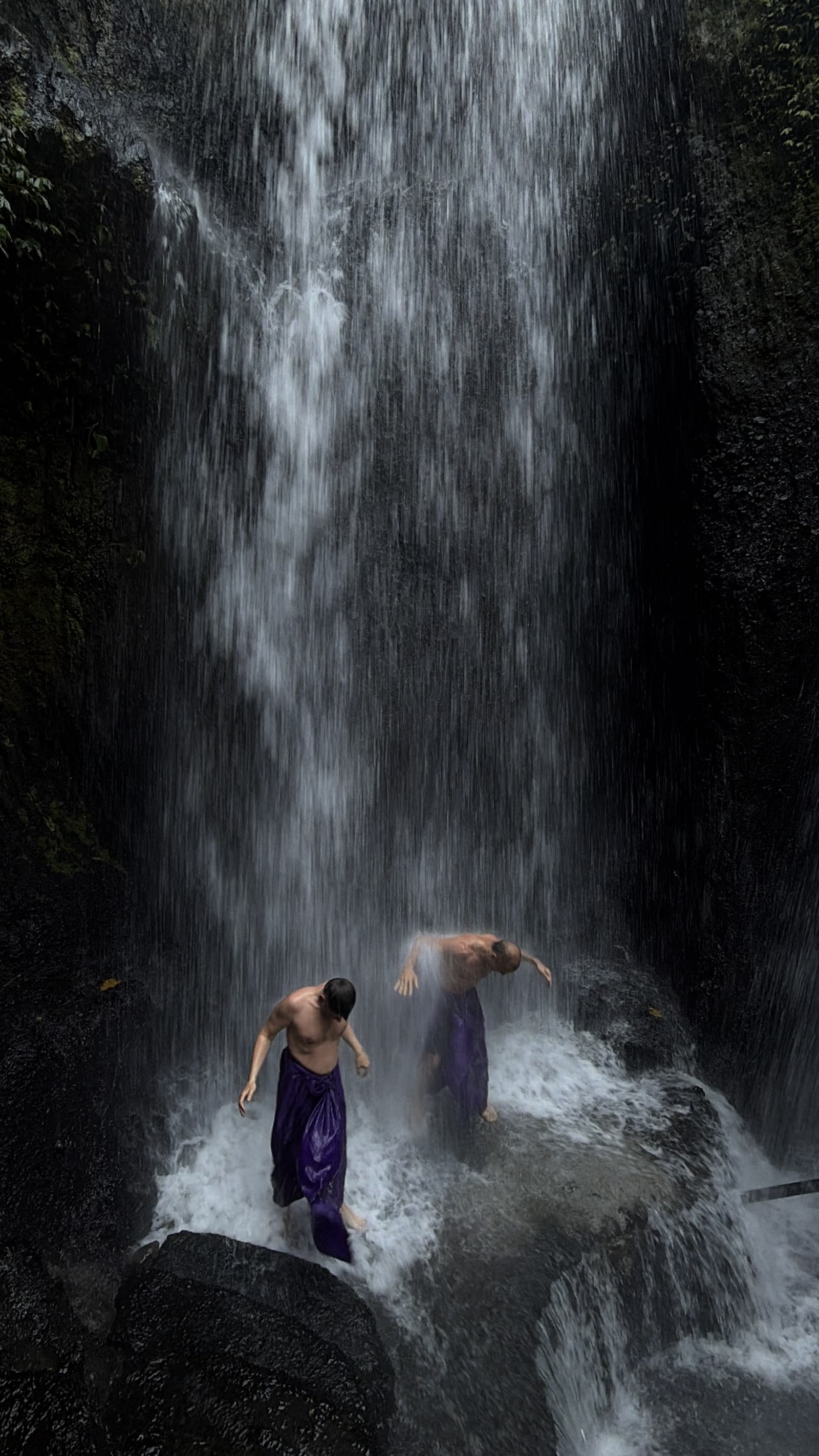
And yet the power of the place does not depend on whether one believes in special energy, past lives or an overworked chakra department. It works because it gives the body something to do. You descend. You change clothes. You pray, or at least stand still while others do. You step across wet stone. You enter cold water. You hear the roar. You lose some control. You stop looking clever because water has never respected cleverness.
That is what makes Taman Beji Griya interesting for the contemporary traveler. The ritual has a clear arc: preparation, surrender, impact, release, return. Before and after are built into the experience. Even skeptics can understand the structure. It is not a lecture about transformation. It is transformation staged through movement, temperature, sound and embarrassment, the underrated four elements of travel.
The Sacred, With a Price List
Of course, this is Bali in the 2020s, so the sacred does not arrive unmonetized. Taman Beji Griya is organized, managed and priced. Beyond melukat, visitors may encounter offerings of palm reading, healing therapy, aura work, chakra balancing, past-life regression and other forms of spiritual luggage handling. The inner cynic wakes up quickly when holy water is followed by a menu of metaphysical upgrades.
But to dismiss the place as a tourist trap is too easy, and also too American. Bali is not a museum where tradition must sit motionless behind glass to be considered authentic. Here, ritual and commerce have long shared the same road. A temple stands near a shop. An offering lies beside a motorbike. A priest may walk past a parking attendant. The sacred is not kept clean by being kept poor, and the everyday is not made vulgar by standing near prayer.
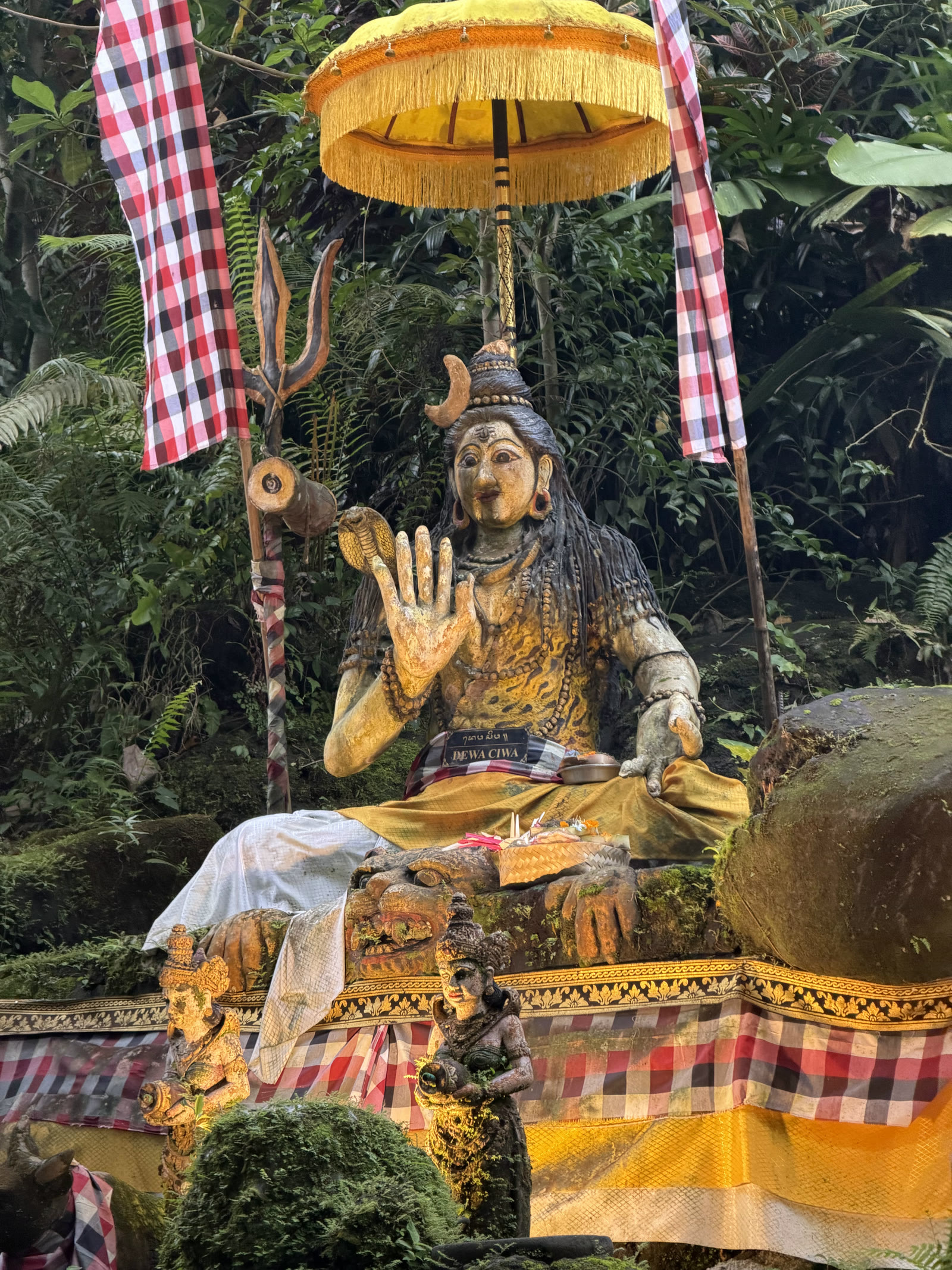
The better question is not whether Taman Beji Griya is commercial. It is. The better question is whether the ritual still has force inside that commercial frame. For many visitors, the answer appears to be yes. Not because the waterfall guarantees enlightenment - it does not, and customer service should not be expected to process returns on unresolved childhood wounds - but because the place creates a rare pause in the machinery of travel.
Most vacations now operate like project management software. Flights, transfers, hotel confirmations, restaurant lists, sunset reservations, screenshots, reviews, routes, outfits, angles. The traveler arrives in paradise and immediately becomes the unpaid intern of his own itinerary. Taman Beji Griya interrupts that. For an hour or two, the agenda is very simple: go down, get wet, follow instructions, let the water fall.
This simplicity is the point. A traveler who cannot stop thinking may not need another viewpoint, cocktail bar or rice terrace. He may need a ritual that gives thinking the day off. Standing under a waterfall is not subtle. That is why it works. Water does not negotiate. It does not validate. It does not ask whether you prefer feedback in writing. It lands on your head, and for a moment the management structure collapses.
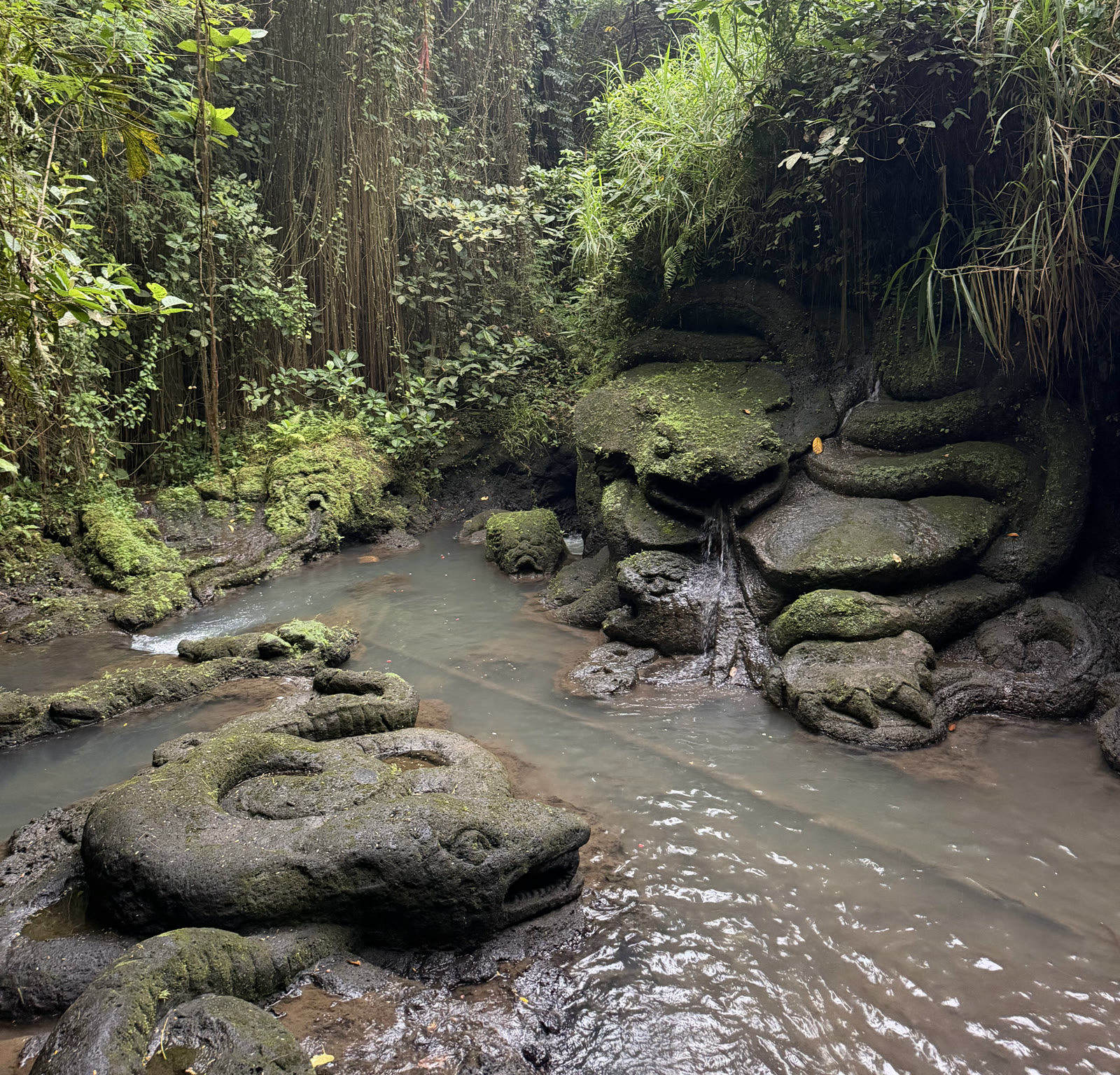
Visually, the site is stronger than many of Bali’s more straightforward waterfalls. The carved stone and cave give the place a ceremonial architecture, a sense that the landscape has been edited by myth. This is useful for photographers, of course, but the better use is to notice the atmosphere before turning it into content. The dampness, the echo, the carved faces, the dim passages and the sudden force of the cascade all work together. The place has stagecraft, but the good kind - the kind that remembers the audience is also part of the scene.
What to Know Before You Go
Practical advice is necessary because spirituality does not protect the ankle. Go early. The light is softer, the crowds are thinner and the odds are lower that your purification will take place behind someone attempting a fourth take for TikTok. Bring a change of clothes, a towel and a bag for wet things. Wear shoes that can survive slippery stone. Hotel flip-flops are not footwear; they are a legal argument waiting to happen.
Bring cash and clarify what is included before you begin: basic entry, melukat, guide, towel, locker, photographs and additional practices may not be the same thing. Ask plainly. The phrase "that is extra" sounds spiritually identical in every language.
Respect the temple rules. Dress modestly. Listen when someone explains the order of the ritual. Women should be aware that, in Balinese Hindu practice, entering temple spaces during menstruation is generally not permitted. This is not a wellness-center policy or a tourist inconvenience; it is a religious norm. You are a guest.
Also, do not arrive determined to mock everything. Skepticism is allowed; rudeness is not. A ritual does not have to win an argument with a visitor in order to be real to the people who practice it. The most useful posture here is not belief or disbelief, but attention.
Who should go? Anyone who wants more from Bali than another pretty view. Anyone interested in ritual, water temples, Balinese culture or the new global appetite for spiritual travel. Anyone who suspects that a trip can be more than a sequence of scenic confirmations. Anyone ready, if only briefly, to stop observing and participate.
Who Should Go - and Who Should Not
Who should skip it? Travelers who hate organized spirituality, resent entrance fees, dislike getting wet, want a free natural swimming hole or believe that every ritual is automatically a scam if it appears within fifty yards of a price list. They are not wrong to protect their mood. They should simply choose another waterfall and complain there.
The reason Taman Beji Griya stays with you is that it contains several Balies at once. The old island of water, prayer and invisible order. The modern island of packages, guides, add-ons and phones. The theatrical island of stone faces and caves. The therapeutic island where exhausted visitors come hoping that a place can do in ninety minutes what their lives have avoided for years.
That hope is both touching and ridiculous, which is usually where the best travel stories begin.
No, the waterfall will not make you a new person. It will not solve your marriage, repair your nervous system, forgive your inbox or turn you into someone who says "journey" without irony. But it may give you one clean interval: a descent, a cold shock, a shout nobody edits, a moment after the water when the body is quiet and the mind has temporarily misplaced its clipboard.
The Honest Ending
Taman Beji Griya is not the cheapest waterfall in Bali, not the wildest, not the most secret. It is, however, one of the most narrative. A visitor enters dry, skeptical and slightly overmanaged. He is dressed, guided, prayed over, sent through water, asked to release what he brought, given coconut water and returned to daylight in a less polished condition.
Enlightenment is not guaranteed. Wetness is. But sometimes, in travel as in life, wetness is a more honest beginning.