 GetCelebrity Editorial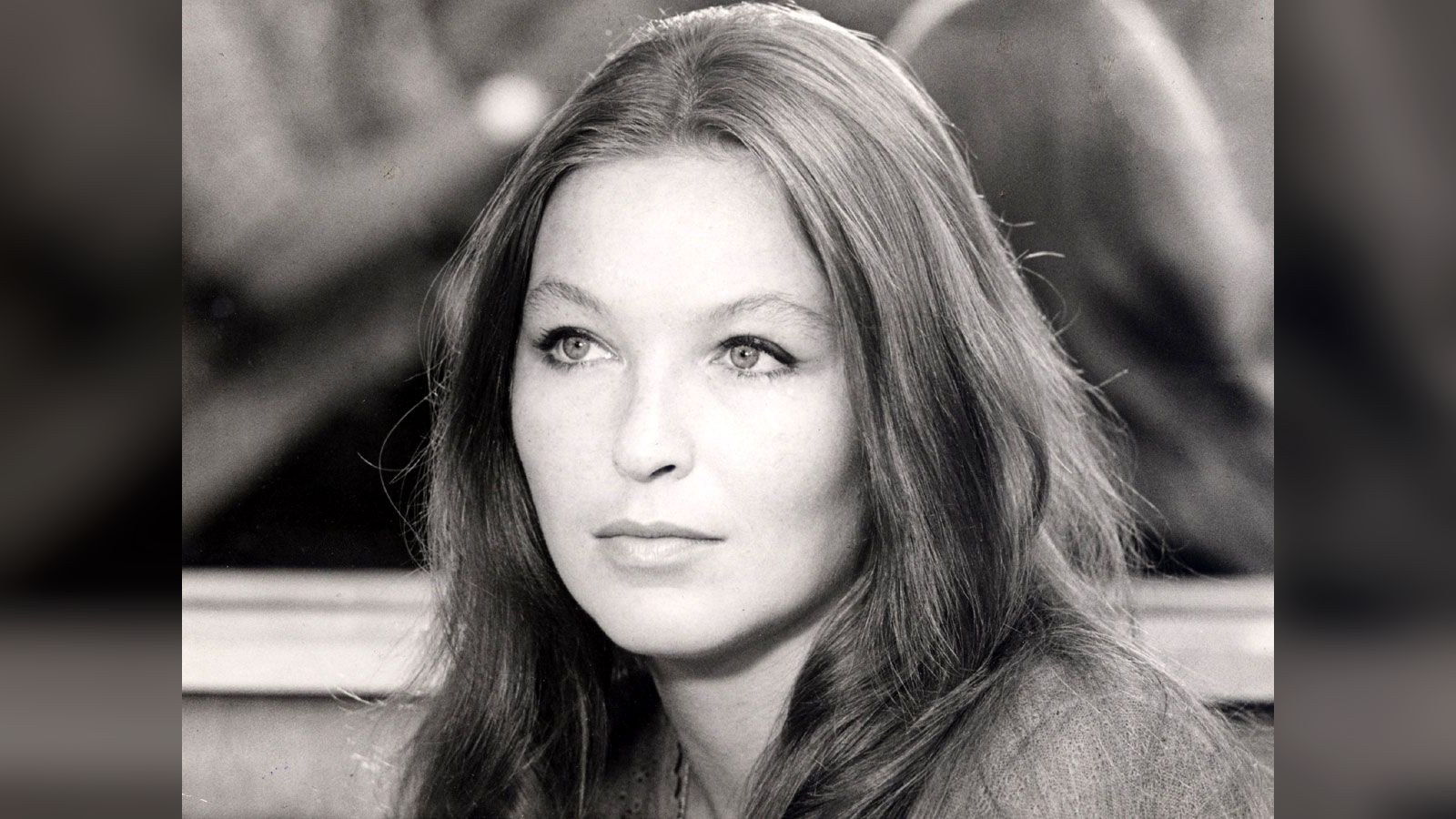
On September 24, Marina Vlady passed away. 88 years of life encompassed a multitude of events, but for us, of course, she is primarily Vysotsky's wife. Marina loved the word "baba" (broad/dame). When talking about her life with her Soviet husband, she would say: "Volodya loved me first as an image, and then as a broad"; "What's a broad to do when a man is so wild?"; "I endured it, like any broad"... This coarse word least of all suited her aristocratic appearance. Journalists from "Komsomolskaya Pravda" even once remarked: "What kind of broad? That word doesn't suit you." Usually, we use it like this: "That jerk has a new broad again." But her husband's mistresses, whom she constantly found in his bed when returning at the wrong time, Vlady called not "babas" but "fresh loves." She called herself a "baba."
Showcase Love
Their marriage with Vysotsky, even during their lifetimes, seemed strange and unnatural. Such an international showcase love. He would call her every five minutes in France. He wrote poems about taking her to palaces where flutes played. She, leaving her children and career, would fly to him at his first call. She treated him, sewed him up from drugs, took him abroad, gave him "Mercedes" cars, personally at the highest level ensured that the Russian talent was given an apartment, a visa, roles, and whatever else could be given... And for 46 years after Vysotsky's death, this union gave many no peace. Nuances and assumptions surfaced, casting a shadow on the canonical version of the marriage, as described by Marina in her book. For example, that it was a "showcase" sponsored by the KGB. Why? Allegedly, Marina kept the singer of all Russia on a golden leash so that he wouldn't flee abroad, blurt out anything extra, and would remain loyal to his imperfect homeland. Or, say, the couple jointly worked as KGB agents, and all their foreign trips were not romantic voyages, but carefully planned special operations to recruit and transfer money to Russian spies. Or, suppose, Vysotsky was not involved, and only Marina spied — after drinking bouts, she reported to the proper authorities about the employees of Taganka, the most liberal theater in the Soviet Union.
Got Rid of Junk
Recently, much has been said about Vysotsky not loving Marina Vlady. While being the husband of the French beauty, he constantly cheated on her. From him, actress Tatyana Ivanenko had a daughter, Anastasia — in 1972, the very year Marina's mother was dying and she couldn't often travel to the Union. And for the last two years of his life, Vysotsky was seeing a young student, Oksana Afanasyeva (now Leonid Yarmolnik's wife), and even planned to marry her. Some are convinced that Vlady provoked the bard's death. Allegedly, she deliberately didn't put him in the hospital. The status of a widow is nobler than the fate of a divorcee, so she left him to die alone. There are other versions... I was working on this article in a cafe. Suddenly, a well-dressed man approached. It seemed he had been standing behind me and reading what I wrote. "Don't believe what they say about them!" he declared knowingly. "Marina didn't support him, he supported her. I know for sure. He was raking in money, and she was hiding it in European accounts." When asked where he got such information, the man stated that his father was Vysotsky's neighbor in the house on Gruzinskaya Street. "What about the gifts? Marina gave him a 'Mercedes'!" "Oh, what 'Mercedes'?" the interlocutor grimaced. "Just junk. She got rid of illiquid assets..."
Freedom to Die
When they met, Vlady was a seasoned shark of European show business. She was friends with politicians, billionaires, and members of the communist party, and knew how to manipulate. Could she have lost her head over a penniless, binge-drinking actor? In one TV show, it was seriously stated: she was looking for an exotic project to write a bestseller about it. Allegedly, this simple truth was revealed to Vysotsky during a visit to Europe. There he met aviator Jean-Claude Brouillet, Marina's second husband. The French millionaire looked at the Russian genius with pity and said: "Don't think she's saving you. Marina doesn't love men. You are not a husband to her, but a trophy. She will squeeze your talent until you break. And when only an empty shell remains of you, she will write a beautiful book about it." However, there is no reliable evidence of that conversation. Vysotsky died in 1980, at the height of the Olympics. The causes of death are unknown, an autopsy was not performed. Either he couldn't get a dose, or in a drunken sleep, his tongue fell back and he choked on vomit. Marina was not nearby. A month before that, he had promised to fly to her and get treatment, but he broke down. She, discussing his death, said that she could have forcibly committed him to a sanatorium. However, she didn't do it because she valued freedom too much.
Imported Wife
Vladimir Vysotsky, seemingly self-sufficient, was tormented internally by a feeling of his own worthlessness. Everything wounded him. In particular, despite having millions of fans, he suffered from the absence of a Writers' Union card (ridiculous, considering that even Yakubovich is now included in the Union). An "imported" wife was important to him as proof of his own exclusivity. Getting Marina was like catching a star from the sky. They say that when Vysotsky was committed to Kashchenko during a binge, the psychiatric hospital staff were amused by his words that he was Marina Vlady's husband and diagnosed him with delirium tremens. She was higher in status and social standing, but she became his wife — like in Greek myths, when gods made alliances with mortals. These alliances led to nothing good: having given a person what he wanted, the gods did not empower him to bear it. Thus, by showering Vysotsky with foreign trips, apartments, money, cars, she did not give him the strength to bear the freedom he so dreamed of. But it is much more interesting why a world celebrity made such sacrifices. It must be understood that the union with Vysotsky was, rather, unprofitable for her. She had her place in cinema, and the union with Vysotsky resulted in a ten-year career hiatus for her. Plus changes in living standards and comfort. In France, she had a 12-room house and servants, and in Russia, at first, she didn't even have her own housing. She had to huddle in a 9-square-meter room with friends, buy tickets for the night train to Leningrad to spend the night together... But to understand Marina's motives, one must start from her biography.
Youngest "Son"
Marina was born with "emigrant trauma." Her grandmother was forced to leave Russia, and, however strange it may sound, Russia "ailed" in this family. The pain resonated especially with Marina. In the family, besides her, there were three daughters. The parents kept hoping for a boy, and she became that boy. Her father, Vladimir Polyakov, taught her to fight, hammer nails, and do housework. Andrei Platonov has a chilling story "Semyon" — about a boy who, after his mother's death, put on her dress and took on maternal duties to help the family. Something similar happened to Marina. When her father died, she was only 13, but it was she, as the "son," who took on the care of those who remained. She worked hard, acted, and her mother and older sisters lived on her money.