GetCelebrity Editorial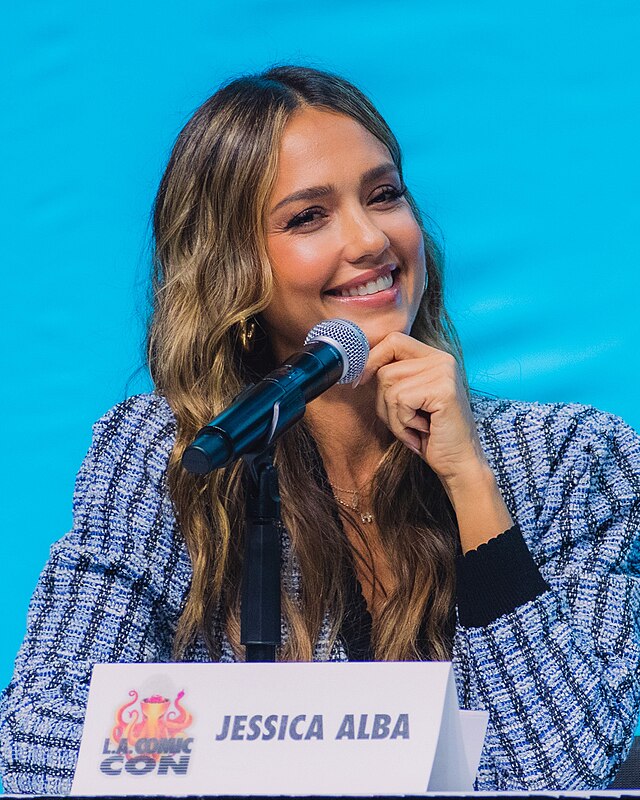
Jessica Alba: The Business Empire Behind The Honest Company
Jessica Alba, the actress who dodged bullets in Sin City, pivoted to battling laundry detergents, turning a personal allergy scare into The Honest Company—a $1.44 billion public entity peddling eco-friendly diapers and wipes. But for all the clean-living hype, the brand's path hit sudsy snags, from false-ad claims to persistent losses, proving that even "honest" empires bleed red ink.
The spark from a pregnancy mishap
Alba's shift from screen roles to startup founder stemmed from a 2008 episode that flipped her worldview.[7] Pregnant with her first child, Honor, she reacted badly to a standard detergent, sparking a deep dive into product ingredients.[8] This wasn't just celebrity wellness talk; Alba drew from her own history of childhood illnesses, which had left her wary of chemicals long before motherhood.[1] "When I had my baby she really changed the context of my life and my priorities, and I really just thought about my life choices and purpose and legacy differently," Alba said.[12] That moment crystallized a gap in the market for safer family basics, leading her to co-found The Honest Company in Santa Monica on January 17, 2011, alongside Brian Lee, Sean Kane, and Christopher Gavigan.[7]
The company's pitch was straightforward: essentials like diapers and wipes, free from harsh additives, delivered via subscription.[9] Launching in 2012, it tapped into rising parental anxiety over toxins, growing fast enough to hit $50 million in sales by 2013— a figure that dwarfed many direct-to-consumer startups in their early years.[10] Alba, stepping into uncharted territory as a business novice, later reflected on the internal hurdles: "I believed that there was a real opportunity for my idea, but I had to overcome a lot of self-doubt about establishing and running a business."[13] Her role as chief creative officer kept the vision personal, even as the operation scaled.
Scaling amid the clean-beauty boom
By 2014, Honest locked in a nationwide deal with Target, a move that pushed it beyond online subscriptions into brick-and-mortar shelves.[11] That same year, a $70 million funding round pegged the valuation at $1 billion, joining the rarefied club of unicorns just three years in.[8] Growth accelerated; by 2015, another $100 million infusion bumped the worth to $1.7 billion, even as whispers of product questions surfaced.[2] Revenue topped $300 million in 2016, outpacing rivals like Burt's Bees in the natural-care niche.[2]
Expansion wasn't limited to sales. Honest snapped up Alt12 Apps in 2015, bolstering its tech side for better customer tracking.[7] The subscription model, which accounted for much of the early haul, evolved to include bath, beauty, and home lines, broadening appeal.[6] Alba's celebrity pull helped—her name opened doors—but the real draw was the promise of transparency in an industry rife with greenwashing.[9] Sales climbed to $319 million by 2021, a steady climb from the $300.5 million posted in 2020, despite a $14.5 million net loss that year.[1] Those figures, while impressive for a 10-year-old brand, highlighted the thin margins in consumer goods, where marketing eats up as much as production.
| Date | Event |
|---|---|
| 2008 | Jessica Alba, pregnant with her first child Honor, suffered an allergic reaction to a mainstream laundry detergent, prompting her to research safer ingredients in baby products.[7] |
| 2011-01-17 | The Honest Company was founded in Santa Monica, CA, by Jessica Alba, Brian Lee, Sean Kane, and Christopher Gavigan to offer safer family essentials.[7] |
| 2012 | The Honest Company launched with initial products including diapers, wipes, and baby care items via a direct-to-consumer subscription model.[7] |
| 2013 | Sales reached $50 million, and the company expanded baby and home-care lines while initiating first major retail tests.[7] |
| 2014 | Honest secured a national retail partnership with Target and raised $70 million in venture funding, achieving a $1 billion valuation.[7] |
| 2015 | The company reached a unicorn valuation of $1.7 billion amid product scrutiny and acquired Alt12 Apps.[7] |
| 2021-04 | The Honest Company filed for an initial public offering.[7] |
| 2021-05-05 | The Honest Company began trading on NASDAQ under ticker HNST, raising $412.8 million in its IPO with a $1.44 billion valuation.[7] |
The scandals that exposed cracks
Honest's rise wasn't spotless. A March 2016 Wall Street Journal probe uncovered that the company's detergent contained sodium lauryl sulfate, despite labels claiming it was free of the irritant.[2] The revelation struck at the core of Honest's brand—transparency in ingredients. Just a week later, a lawsuit followed, accusing the firm of misleading labels on products billed as natural, plant-based, or chemical-free.[2] These hits came at a peak moment, with the $1.7 billion valuation fresh in investors' minds, turning the "honest" moniker into an unintended punchline. In a dry twist, the company that named itself after truthfulness found its own claims under the microscope, much like the detergents it promised to purify.
The fallout tested Alba's resolve. Yet the business pressed on, filing for an IPO in April 2021 and going public on May 5, pulling in $412.8 million at a $1.44 billion valuation—down from 2015 highs but still a solid debut for a consumer upstart.[1] By February 2022, the market cap had dipped to about $550 million, reflecting broader volatility in post-IPO stocks.[1] Alba emphasized self-awareness in steering through: "You have to be brutally honest with yourself and understand your strengths and weaknesses."[13] The scandals, while damaging, didn't derail the trajectory; revenue held firm, suggesting consumers forgave—or overlooked—the lapses in a crowded wellness market.
Valuation swings and the public leap
Honest's money story reads like a startup thriller: from $1 billion in 2014 to $1.7 billion in 2015, then a public valuation of $1.44 billion in 2021, before settling at $550 million by early 2022.[1] That 2015 peak, post-$100 million round, came amid acquisition buzz and retail wins, outstripping peers like Seventh Generation, which traded hands for $700 million around the same era.[2] The IPO raised eyebrows—$412.8 million in fresh capital for a company posting losses, betting on Alba's star power and the evergreen demand for "clean" goods.[1]
Yet profitability remained elusive. The 2020 net loss of $14.5 million on $300.5 million revenue mirrored industry pressures, where scaling distribution costs more than it saves.[2] Alba framed success beyond balance sheets: "The only way you can measure your success is by reflecting and seeing what you want out of the experience. And the journey is just as much a part of the success you seek out."[14] Post-IPO, shares fluctuated, hitting lows that valued the company lower than its private highs, a reminder that public markets demand quarterly proof over long-term vision. Still, 2021 sales of $319 million signaled resilience, edging up from the prior year and fueling bets on future growth in beauty and household segments.[1]
Reports floated various unverified details about Honest's early days and Alba's role, such as her breaking out in hives from that 2008 detergent, the company hitting $10 million in 2012 sales, reaching a $2 billion brand value, achieving $1 billion valuation in under a decade, Alba gracing Forbes's 2015 Self-Made Women cover, and the founding pinned squarely to 2011 without co-founder nuance. While these paint a vivid origin tale, we couldn't confirm them through available records, leaving gaps in the polished narrative of rapid ascent.
This saga of Alba's empire underscores a broader shift: celebrities ditching red carpets for boardrooms, where personal stories fuel billion-dollar brands in the quest for authenticity. But as Honest's dips show, the clean label doesn't guarantee smooth sailing—it's the grit in facing doubts, scandals, and losses that defines whether these ventures endure or fade into trend footnotes. Whether Alba's model inspires more actor-CEOs to chase purpose over profit remains the lingering question in an era where wellness sells, but trust is hard-won.
Sources
- [1] Reported The Honest Company - Wikipedia — en.wikipedia.org
- [2] How Jessica Alba Built the $2 Billion Honest Company — thefashionlaw.com
- [3] Jessica Alba, Actor and Founder of The Honest Company — parachutehome.com
- [4] Actress; Founder and Chief Creative Officer, The Honest Company — aspenideas.org
- [5] Celebrating 10 Years of 'The Honest Company' With Jessica Alba — youtube.com
- [6] The Honest Story — honest.com
- [7] What is Brief History of Honest Company? – PortersFiveForce.com — portersfiveforce.com
- [8] Reported Jessica Alba's Honest Company's Ups and Downs Over the Years — usmagazine.com
- [9] How Jessica Alba Created The Honest Company - Slidebean — slidebean.com
- [10] What is Brief History of Honest Company? — businessmodelcanvastemplate.com
- [11] Honest Company: Timeline of Events - Bunmi Laditan — bunmiladitan.wordpress.com
- [12] Jessica Alba Talks Building The Honest Company Empire - YouTube — youtube.com
- [13] 10 Inspirational Quotes from Successful Actress-Turned ... — entrepreneur.com
- [14] 18 Inspirational Jessica Alba Quotes - Addicted 2 Success — addicted2success.com
- [15] Jessica Alba talks Honest Company skeptics who doubted her brand — foxbusiness.com
Frequently asked questions
What was the approximate valuation of The Honest Company as a public entity?
The Honest Company was valued at approximately $1.44 billion as a public entity.
What prompted Jessica Alba to start The Honest Company?
A bad reaction to standard detergent while pregnant with her first child in 2008 prompted Jessica Alba to start The Honest Company.
What types of products does The Honest Company sell?
The Honest Company sells eco-friendly diapers and wipes, among other products.