GetCelebrity Editorial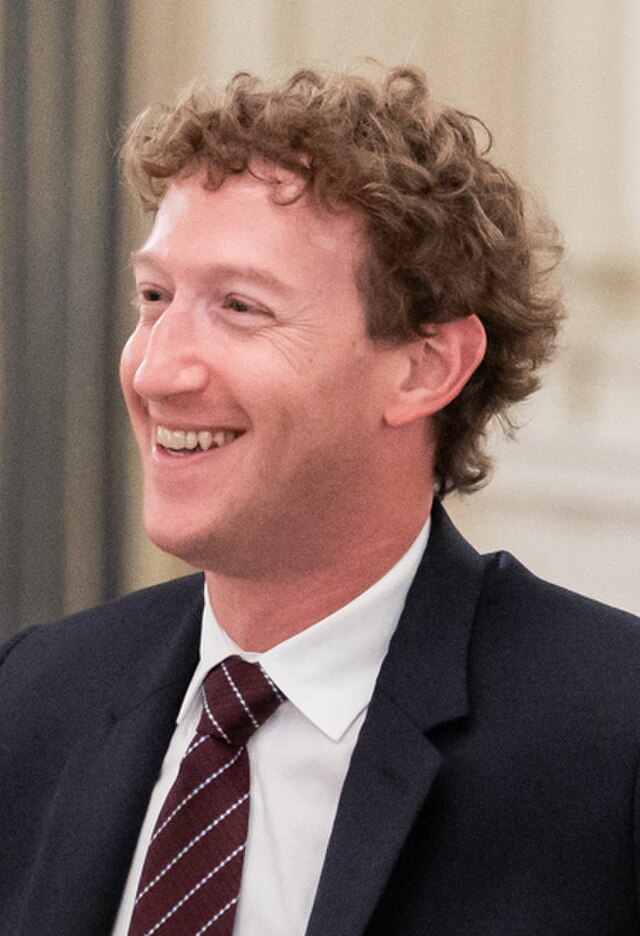
| Date | Event |
|---|---|
| 2004-02-04 | Mark Zuckerberg, along with roommates Chris Hughes, Dustin Moskovitz, and friend Eduardo Saverin, launched Facebook from his Harvard dorm room as an online directory to connect college students.[6] |
| 2006 | Facebook expanded to the general public, driving rapid user growth to over 100 million users by 2008.[1] |
| 2012 | Facebook acquired Instagram for $1 billion, establishing dominance in mobile visual content.[1] |
| 2014 | Facebook acquired WhatsApp for $19 billion and Oculus VR, expanding into private messaging and virtual reality.[1] |
| 2021-10-28 | Mark Zuckerberg announced the rebranding of Facebook to Meta Platforms, Inc., signaling a strategic pivot to the metaverse.[1] |
| 2022 | Meta's stock plummeted after losing users for the first time, yet Zuckerberg doubled down on metaverse investments despite losses.[2] |
| 2023 | Meta launched Meta Quest 3 and introduced the Meta AI assistant to WhatsApp and Messenger amid Reality Labs record losses.[2] |
| 2026-01-28 | Meta announced Q4 and full-year 2025 financial results with over $200 billion in revenue, up 22% from the prior year, positioning for AI expansion.[3] |
That Billion-Dollar Dorm Bet
Fast-forward, and Zuckerberg's already rewriting the rules. At 23 in 2008, he claims the title of world's youngest self-made billionaire, a kid from White Plains, New York, who'd tinkered with computers since grade school.[2] Facebook isn't just a site anymore; it's the pulse of social life, with ads creeping in to monetize the connections. But Zuckerberg eyes bigger fish. In 2012, he drops $1 billion on Instagram, snagging a photo-sharing app that's all filters and feeds, locking down mobile before competitors even boot up.[1] Smart move—Instagram's stories and reels now fuel Meta's grip on eyeballs.
Two years later, 2014 hits like a acquisition spree. WhatsApp falls for $19 billion, a chat app with encryption that whispers secrets across borders, pulling in billions who shun public posts.[1] Then Oculus VR joins the fold, Zuckerberg's first real bet on virtual worlds, goggles that promise escape from the flat screen grind.[1] It's classic Zuck: spot the gap, buy the bridge. By now, his net worth balloons—$108 billion as of September 2023, landing him 10th on the rich list, right up there with old money and oil barons.[1]
The empire hums along, but cracks show. Users hit escape velocity, monthly actives topping any nation's headcount, yet privacy scandals and algorithm tweaks stir the pot.[1] Zuckerberg testifies before Congress, hoodie and all, defending the platform like a founder king. Still, the machine churns cash—until it doesn't.
Rebrand Roulette
October 28, 2021: Zuckerberg steps to the mic, rebrands the whole operation to Meta Platforms, Inc.[1] Facebook stays, but it's just a cog now in this metaverse dream, a digital frontier where avatars roam and economies bloom in VR. Sounds sci-fi, right? But Zuck pours billions into it, Reality Labs bleeding red even as the core ad business prints money.[2]
2022 tests the steel. For the first time, users dip—stock tanks, whispers of overreach grow louder.[2] Meta axes over 11,000 jobs in November, a brutal cull in the Valley's history.[1] Yet Zuckerberg digs in, doubling metaverse bets amid the rubble. It's the gambler's stare: all in on VR when TikTok nips at heels and Apple tweaks privacy to hurt ad targeting.
Come 2023, resilience kicks in. Meta Quest 3 drops, sleeker headsets for the faithful, while a Meta AI assistant slips into WhatsApp and Messenger, chatting up users like a digital sidekick.[2] Losses mount in Reality Labs—record ones, the kind that make investors twitch—but the pivot hints at hybrid futures, blending social with simulated worlds.
"I think a simple rule of business is, if you do the things that are easier first, then you can actually make a lot of progress."
— Mark Zuckerberg, 2016-08-30[12]
That quote from 2016? It lands different now. Easy wins built the foundation—connect friends, share pics—but the hard stuff, like metaverse moonshots, tests the rule. Zuckerberg's not flinching.
The Philanthropy Facade
Amid the boardroom battles, Zuckerberg plays the long game off the clock. He and wife Priscilla Chan pledge big: $20 million to Education Super Highway on November 19, 2015, wiring broadband to schools.[3] Their family outfit drops $100 million into AltSchool that May, backing a tech-driven education startup aiming to rethink classrooms.[3] It's not just checks; it's Zuck channeling the connect-everyone ethos into real-world gaps. Critics call it image polish for a company under fire, but the moves stack up—Chan Zuckerberg Initiative later funnels billions more, though that's beyond these snapshots.
Back to brass tacks: February 2023 sees Meta greenlight a $40 billion stock buyback, a vote of confidence when shares wobble.[1] It's Wall Street jujitsu, propping value while the metaverse tab runs hot. Fast-forward to January 28, 2026—Meta reports Q4 and full-year 2025 numbers: over $200 billion revenue, 22% jump from before, eyes on AI to juice the next wave.[3] Projections, sure, but they paint Zuckerberg's arc: from dorm hacker to empire architect, always one code commit ahead.
The kid who coded Facemash as a prank in 2003—banned from Harvard servers for it—has morphed into this.[3]
He changed how we connect.
But here's the rub: Meta's reach dwarfs governments, yet Zuckerberg's vision tilts toward escapist tech over fixing the divides it amplifies. In 2023's losses and layoffs, you see the cost of that ambition—jobs gone, bets that might fizzle. Still, with AI whispering in chats and Quest headsets stacking shelves, the empire expands.
Zoom out, and it's a wild ride. Facebook started as a college flirt tool, now it's Meta, threading VR dreams through daily scrolls. Zuckerberg's wealth cements his spot among the elite, but the real story's in the trade-offs: user trust eroded for ad dollars, innovation chased at employee expense.[1][2] The 2022 user dip? A wake-up, maybe, but Zuck's response—more metaverse—feels like defiance wrapped in destiny.
Empire's Edge
That 2008 billionaire badge? It came quick, but sustaining it takes grit. Acquisitions like Instagram and WhatsApp weren't luck; they were chess moves in a board game where data's the queen.[1] Oculus hinted at the future, and Meta's rebrand doubles down, even as stock swings remind everyone: tech gods bleed pixels.
The layoffs hit hard—11,000 souls in '22, part of a Valley reckoning post-pandemic boom.[1] Zuckerberg calls it efficiency, but it echoes through campuses where Facebook once lured talent. Then the buyback: $40 billion to buoy shares, a classic play when growth stutters.[1] It's business, cold and calculated, fueling the machine that powers his $108 billion nest egg.[1]
Philanthropy softens the edges. The $20 million to Education Super Highway? It bridges digital divides, ironically echoing Facebook's original connect mission.[3] AltSchool's $100 million infusion backs personalized learning tech—Zuck spotting education as the next frontier, or laundering influence, depending on your cynicism.[3]
2023's launches keep the momentum: Quest 3 for immersive dives, AI assistant for seamless nudges in messaging.[2] Reality Labs loses big—tens of billions, reports say—but it's the R&D bet on tomorrow.[2] By 2025's end, revenue crests $200 billion, AI as the new engine.[3] Zuckerberg's rule from '16 rings true: nail the easy, tackle the tough.
He's 40 now, father of three, still in hoodies, steering a ship that sails on user data seas.
The honest read is, Zuckerberg's empire thrives on connection's double blade—unity and isolation in equal measure. Whether AI and metaverse heal those cuts or deepen them, that's the bet still playing out. In the end, he's not just building platforms; he's reshaping reality, one update at a time. One can't help but wonder if we'll like the version he codes next.
Sources