GetCelebrity Editorial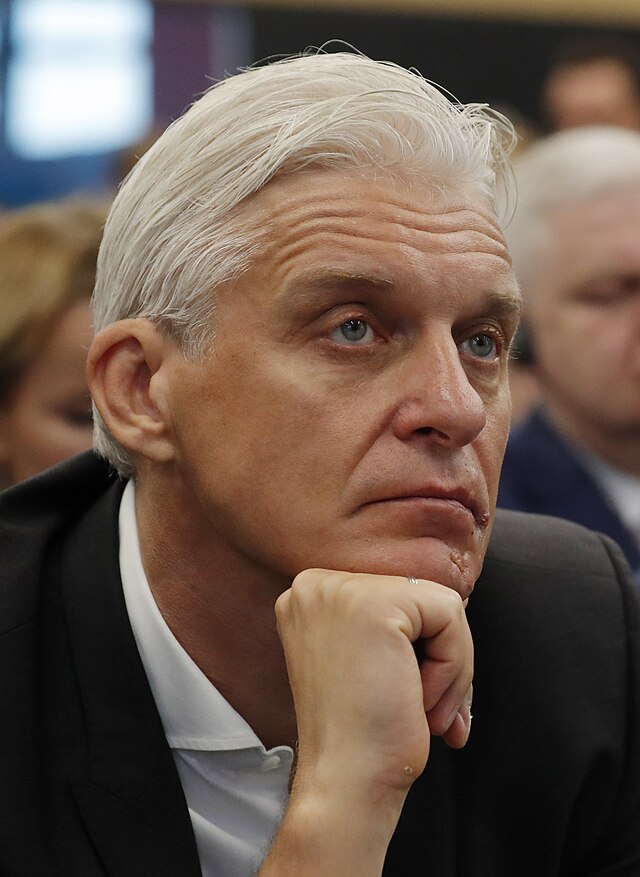
Oleg Tinkov: The Business Empire Behind Tinkoff Bank
In the balmy glow of a Caribbean sunset on November 18, 2005, Oleg Tinkov stood before a small crowd on Necker Island, Richard Branson's private paradise, pitching a bold idea for Russia's first fully online bank.[1] The air hummed with possibility; Tinkov, already a serial entrepreneur with a string of ventures under his belt, saw a digital future for finance in a country still shaking off Soviet shadows. That moment marked the spark for Tinkoff Bank, a branchless upstart that would grow into a colossus with over 20 million customers.[3]
From Electronics to Frozen Dumplings
Oleg Tinkov didn't start with banks. He built his name in the gritty retail trenches of post-perestroika Russia, launching Technoshock, a chain of electronics stores that catered to a public hungry for gadgets after decades of scarcity.[1] Picture shelves stocked with imported stereos and computers in the mid-1990s, drawing crowds in St. Petersburg and beyond. But Tinkov wasn't one to linger; he spun up Daria, factories churning out frozen pelmeni and dumplings, turning everyday staples into a branded empire that fed the nation's nostalgia for home-cooked comfort.
His appetite for diversification showed no signs of slowing. Brewing companies followed, where Tinkov bottled craft beers with a flair that hinted at his own taste for bold risks.[3] Tinkoff restaurants popped up, serving meals with the same no-nonsense efficiency as his stores. Music Shock brought rock albums to fans, and Shock Records amplified local talent, all under the Shock umbrella that screamed his unapologetic branding. It's the kind of scattershot empire-building that defined early Russian tycoons—grab opportunities, scale fast, sell high. By 2005, he'd offload his brewery to InBev, cashing in on a deal that funded his next obsession.[3] Tinkov's early runs weren't just businesses; they were proofs of concept, testing how far a Siberian-born hustler could push in a Wild East economy.
The Necker Pitch and Moscow Acquisition
That 2005 pitch on Branson's island wasn't a whim. Tinkov, fresh from his brewery windfall, eyed the financial sector as the next frontier.[1] Russia’s banks were clunky, branch-heavy relics; he envisioned something sleek, app-driven, accessible from any dial-up connection. Necker Island lent the drama—white sands, celebrity backing—but the real work started back home.
In 2006, Tinkov snapped up Himmashbank, a modest Moscow outfit, and rebranded it as Tinkoff Credit Systems, Russia's pioneer in online banking.[1] He didn't stop at the rename. That September, he inked a deal with Mastercard's president for tech support, securing the rails for a credit card rollout that would bypass the paperwork nightmare of traditional finance.[3] No marble lobbies, no long queues—just code and customer data. Tinkov's vision clicked because it matched the moment: smartphones were creeping in, and Russians, wary of state banks, craved privacy and speed. By year's end, TCS was humming, a digital disruptor in a sea of analog holdouts.
Branchless Boom and Crisis Defiance
Officially launched in 2007, Tinkoff Credit Systems operated without a single physical branch, a radical bet in a country where banking meant visiting a Soviet-era counter.[1] Tinkov leaned hard into the model, issuing credit cards that arrived by mail, approved via phone or early web portals. It felt futuristic, almost cheeky, but it worked. Customers signed up in droves, drawn by the ease and the founder's brash marketing—think TV spots with Tinkov himself, grinning like a man who'd cracked the system.
Then came 2008, the global financial meltdown that hammered Russia with oil price plunges and ruble devaluations. While competitors reeled, Tinkoff thrived. Profits jumped fiftyfold, and the bank outpaced Russian Standard in credit card issuance by 80 percent.[1] How? Lean operations, no real estate drag, and a focus on unsecured lending that bet on Russia's resilient middle class. Tinkov later called it luck mixed with smarts, but the numbers told a sharper story: in chaos, the digital player dodged the bullets that sank brick-and-mortar rivals. By riding the crisis wave, TCS didn't just survive—it surfed to dominance, proving branchless banking wasn't a gimmick but a lifeline.
IPO Glory and a Sudden Renouncement
Fast-forward to October 2013, and Tinkoff Credit Systems was ready for the world stage. On the 14th, it hit the London Stock Exchange in an IPO that raised about a billion dollars, shares opening at $17.50.[1] Traders buzzed; investors saw a Russian fintech unicorn before the term was trendy. Tinkov, ever the showman, touted the listing as validation for his island dream—online banking, scaled globally.
Three days later, on October 17, the mood shifted. At the U.S. Embassy in Moscow, Tinkov formally renounced his American citizenship, a move tied to a scheme shielding his stock gains from IRS scrutiny.[1] He'd held dual status since the '90s, but the IPO windfall—potentially hundreds of millions—prompted the cut. It was a stark reminder of the tycoon's balancing act: Russian roots, Western ambitions, and the taxman always watching. The renouncement barely dented the IPO's shine, but it whispered of the personal costs in building cross-border empires.
Rebranding, Global Ties, and Family Anchor
By 2015, Tinkoff Credit Systems had outgrown its credit-card roots. The name changed to Tinkoff Bank.[1] Customer numbers swelled past 20 million, a proof to Tinkov's knack for user-friendly disruption.[3] Behind the scenes, his network ran deep. Business dealings with heavyweights like Roman Abramovich and Viktor Vekselberg opened doors, while a friendship with Dmitry Peskov, Putin's press secretary, added Kremlin proximity.[3] These ties weren't just social; they greased wheels in a system where connections equaled currency.
Off the balance sheet, Tinkov's life steadied. In 2009, he married Rina Vosman, tying the knot amid his whirlwind expansions.[2] Three children—kept largely out of the spotlight—grounded the empire-builder. And looking ahead, Tinkov eyes fresh horizons: in 2025, he's backing Plata, a Mexican fintech startup, extending his digital gospel south of the border.[5] It's a pivot that nods to his roots—starting small, thinking borderless—while hinting at redemption after Russian market turbulence.
A Timeline of Tinkoff's Rise
| Date | Event |
|---|---|
| 2005-11-18 | Oleg Tinkov presented a proposal for his future bank on Necker Island owned by Richard Branson.[1] |
| 2006 | Tinkov acquired Himmashbank in Moscow and created Russia's first online bank, Tinkoff Credit Systems.[1][2] |
| 2006-09 | Tinkov purchased Himmashbank and renamed it, signing a contract with Mastercard president for technological help in credit card business.[3] |
| 2007 | Tinkoff Credit Systems bank was officially founded as a branchless online bank.[1][4] |
| 2008 | Despite the financial crisis, Tinkoff Bank showed a 50-fold profit increase and surpassed rival Russian Standard in credit card issuance by 80%.[1][3] |
| 2013-10-14 | Tinkoff Credit Systems (TCS) held its IPO on the London Stock Exchange, raising about $1 billion with shares initially priced at $17.50.[1][3][4] |
| 2013-10-17 | Three days after the IPO, Tinkov renounced his U.S. citizenship at the U.S. Embassy in Moscow amid a scheme to conceal stock gains from the IRS.[1][4] |
| 2015 | Tinkoff Credit Systems changed its name to Tinkoff Bank to reflect its full range of financial services.[1] |
What We Couldn't Confirm
Reports place Tinkoff Bank at 45th in assets and 33rd in equity among Russian banks as of December 1, 2016, but we lack solid verification on those rankings. Net worth estimates for Tinkov swing wildly, from Bloomberg's $8.2 billion in November 2021 to Forbes' $0.8 billion just four months later, with other figures like $4.8 billion tied to his bank stake remaining unverified. Claims of Putin administration threats to nationalize the bank after Tinkov's criticisms, or that a recent sale undervalued his stake by 97 percent—erasing nearly $9 billion—circle in media but evade confirmation. Details on ownership of the yacht La Datcha or the private jet M-TINK Dassault 8X, plus residence in London with his family, also stay in the rumor zone.
Oleg Tinkov's path from Siberian trader to fintech pioneer reshaped Russian banking, turning a Necker Island pitch into a 20-million-customer juggernaut. His ventures, from breweries to apps, show a man who spots gaps and fills them with digital grit. As he eyes Mexico next, the empire endures—proof that in finance, as in life, the boldest bets often pay off biggest.
Sources
- [1] Reported Oleg Tinkov - Wikipedia — en.wikipedia.org
- [2] Oleg Tinkov Facts for Kids — kids.kiddle.co
- [3] Oleg Tinkov - Putin's Oligarchs - Coda Story — codastory.com
- [4] OLEG TINKOV: the Fascinating Life of The Founder of Tinkoff Bank... — superyachtfan.com
- [5] Former Russian tycoon says Instagram post cost him $9 billion: His... — fortune.com
- [6] Oleg Tinkov: Rise and Fall. The History of Tinkoff (Business in a Chart) — youtube.com
- [7] Verified Founder of Russian Bank Sentenced for Felony Tax Conviction... — justice.gov
- [8] Tinkoff history: milestones in the Company's development — tinkoff-group.com
- [9] The Life and Achievements of Oleg Tinkov - Prezi — prezi.com
- [10] Oleg Tinkov "I'm Just Like Anyone Else" (published in 2010 — anisimov.biz
Frequently asked questions
Where did Oleg Tinkov pitch his idea for Russia's first fully online bank?
Oleg Tinkov pitched his idea for Russia's first fully online bank on Necker Island, Richard Branson's private paradise.
When did Oleg Tinkov pitch his idea for Tinkoff Bank?
Oleg Tinkov pitched his idea for Tinkoff Bank on November 18, 2005.
How many customers does Tinkoff Bank have?
Tinkoff Bank has over 20 million customers.
```