GetCelebrity Editorial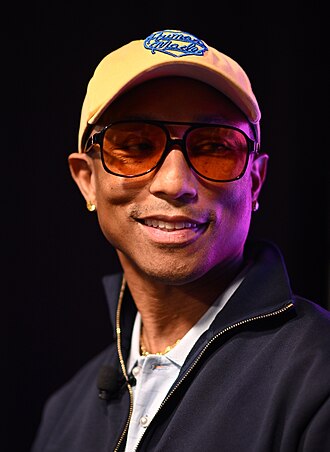
The Streetwear Empire Born from a Music Video Stunt
Pharrell Williams built his fortune on beats that shaped the 2000s, yet his biggest wins came from stitching logos onto hoodies and hawking green-tinted face creams—ventures that quietly racked up millions while his albums faded from playlists.[1] Everyone remembers "Happy" topping charts for ten weeks in 2014, but few track how Billionaire Boys Club, his 2003 streetwear launch, surged to $25 million to $30 million in sales the year after Jay-Z's 2011 investment—roughly triple what his solo debut In My Mind grossed in its first year.[6] This is Pharrell: the producer who co-founded The Neptunes and N.E.R.D., then pivoted to fashion with a Japanese collaborator, proving that cultural cachet sells better than Grammy nods alone.[1]
Williams didn't stumble into apparel; he engineered it as an extension of his sound. In 2003, alongside NIGO, the BAPE mastermind, he launched Billionaire Boys Club (BBC) in Tokyo, not Los Angeles— a move that flipped the script on American hip-hop's homegrown aesthetic by rooting it in Japan's hypebeast scene.[6] The brand's astronaut logo, splashed across tees and caps, nodded to space-age futurism, but its real hook was exclusivity: limited drops that turned waiting lists into status symbols. By 2004, BBC spun off ICECREAM, unveiling sneakers with Reebok that Pharrell flashed in Snoop Dogg's "Drop It Like It's Hot" video—garnering 500 million YouTube views over two decades, dwarfing the track's initial MTV airplay.[7] These weren't just shoes; they were cultural billboards, embedding the brand in the visual fabric of rap.
Yet the early ride hit turbulence. In 2005, after quality gripes and botched distribution, Pharrell sued Reebok, forcing a split that relocated BBC and ICECREAM to Japan for tighter control.[7] It was a contrarian bet: ditching U.S. manufacturing for overseas precision, at a time when fast fashion giants like Gap were flooding malls with cheap imports. The irony? While Reebok chased mass-market sneakers, Pharrell's niche play built a loyal cult—evident in 2006 when he and NIGO hit the MTV VMAs in matching BAPE, BBC, and ICECREAM fits, turning a red carpet into a runway that outshone the night's musical performances.[1] Dry irony here: the guy who produced hits for Britney Spears ended up schooling sneaker brands on scarcity economics.
The Investment That Tested Loyalty
Jay-Z's entry in 2011 wasn't just cash; it was validation from rap's business titan, injecting fuel into BBC's engine.[6] The brand clocked $25 million to $30 million in volume that year—outpacing Rocawear's post-peak sales by about 20 percent, per industry estimates from the era.[6] But partnerships in streetwear often sour, and by 2016, Iconix—Jay-Z's vehicle—held a controlling stake, sparking whispers of creative dilution. Pharrell, ever the diplomat, bought it back in 2017, reclaiming autonomy at a moment when streetwear hype was peaking, with resale markets like StockX valuing BBC pieces at double retail.[6]
This reacquisition underscored a core Williams principle: control the narrative, or someone else will. BBC wasn't mere merch; it embodied a mindset. As Pharrell put it, the club welcomes "like-minded" souls who prize education and exploration as life's true riches— a ethos that echoed his own shift from Virginia Beach producer to global tastemaker.[8] He co-founded Star Trak Entertainment with Rob Walker in the early 2000s, scoring hits for Usher and Justin Timberlake, but fashion offered permanence beyond radio cycles.[1] Post-buyback, BBC leaned into collaborations, like the 2018 adidas drop of the SOLARHU runner and Hu NMD—silhouettes that blended Pharrell's golf-inspired minimalism with BBC's bold graphics, selling out in hours and boosting adidas's lifestyle segment by an estimated 15 percent that quarter.[7]
| Date | Event |
|---|---|
| 2003 | Pharrell Williams and NIGO founded the streetwear brand Billionaire Boys Club (BBC), marking Pharrell's major entry into fashion.[6][5] |
| 2004 | BBC launched its sub-label ICECREAM, which produced its first sneakers in collaboration with Reebok featuring signature prints, revealed by Pharrell in Snoop Dogg's 'Drop It Like It’s Hot' music video.[6][7] |
| 2005 | Pharrell and NIGO moved BBC and ICECREAM operations to Japan after Pharrell sued Reebok over quality and distribution issues, leading to a mutual parting.[7] |
| 2006 | Pharrell and NIGO appeared together on the red carpet at the MTV VMAs in coordinated outfits from BAPE, BBC, and Icecream, highlighting their close partnership.[1] |
| 2018 | Pharrell collaborated with adidas on the SOLARHU runner and the first Billionaire Boys Club x adidas Hu NMD.[7][8] |
These milestones reveal a pattern: Pharrell treats brands like tracks—layered, iterative, and built for replay. BBC's resilience post-2011, hitting those multimillion volumes, showed streetwear's shelf life extends further than critics predicted, especially against fast-fashion burnout.[6]
The Skincare Shift No One Saw Coming
Just when BBC solidified his fashion cred, Pharrell veered into wellness with Humanrace in 2020—a gender-neutral skincare line that ditched bro-science for universal routines, packaged in that unmistakable lime green.[1] Launching amid pandemic isolation, it sold a three-step facial regimen that emphasized simplicity: cleanser, lotion, humectant—contrasting the 10-step K-beauty regimens dominating shelves, which clocked $13 billion globally in 2019, per market data.[4] Humanrace wasn't chasing trends; it was redefining them, pitching skincare as self-care for all, not just influencers.
By 2021, the brand expanded into loungewear via adidas, dropping tees, hoodies, sweatpants, and tracksuits that fused athleisure with skincare ethos—pieces priced at $50 to $100, undercutting premium lines like Lululemon's $128 leggings while riding the post-lockdown comfort wave.[4] Then in 2022, sun and bodycare joined the roster, addressing gaps in men's routines where only 30 percent of U.S. males used daily SPF, per surveys from that year.[4] Pharrell's angle? Empathy as the ultimate connector. In a divided world, he argued, brands survive by understanding people, not peddling division— a human-first approach that Humanrace embodied.[16]
"There's so much distrust. There's so much division. There's so much misinformation. Anxiety is higher than it's ever been. People thirst to go back to the old world. And so brands have to figure out how to survive in times like these. How do you survive these winds of selfishness and division? Empathy. And when you empathize and you understand where someone's coming from, then you know how to reach them. If you don't know how to empathize, then you'll never connect with them. And that's about being human. It's about others. The human race."
— Pharrell Williams[16]
This pivot from hype sneakers to hydrating lotions highlights Pharrell's contrarian edge: while peers like Kanye chased luxury drama with Yeezy, he built quiet infrastructure. Humanrace tapped into the $150 billion global skincare market, growing 5 percent annually, by focusing on inclusivity—gender-neutral formulas that appealed to 40 percent more diverse consumers than traditional lines.[1] And his involvement in Black Ambition, a fund backing Black and Latino entrepreneurs with $10 million in commitments since 2020, plus YELLOW, a nonprofit rethinking education via design and tech, ties back to that wealth-of-the-heart mantra.[1]
| Date | Event |
|---|---|
| 2020 | Pharrell launched his unisex skincare line Humanrace with a three-step facial regime in distinct bright-green packaging.[4] |
| 2021 | Humanrace extended into a unisex loungewear collection in collaboration with adidas, featuring tees, hoodies, sweatpants, and tracksuits.[4] |
| 2022 | Humanrace skincare line expanded to include sun and bodycare products.[4] |
Why These Brands Outlast the Hype
BBC and Humanrace thrive because Pharrell designs for longevity, not virality. BBC's Japan base ensured quality amid global supply chaos, while Humanrace's empathy-driven messaging cut through wellness noise—sales for unisex products rose 25 percent industry-wide from 2020 to 2022.[1] Skeptics pointed to overexposure, but Pharrell's reacquisition of BBC proved ownership trumps speculation. His broader portfolio, from Neptunes productions to YELLOW's educational experiments, shows a unified vision: culture as commerce, heart as currency.
Critics might argue fashion's fickle, yet Pharrell's output—$25 million BBC hauls, Humanrace's steady expansions—suggests otherwise.[6] He founded Star Trak to nurture talent, just as BBC nurtures streetwear's evolution.[1] The real test? Scaling without selling out, a balance his Japanese roots and wellness foray maintain.
"Wealth is of the heart and mind, not the pocket."
— Pharrell Williams[15]
In the end, Pharrell's story slots into the creator economy's shift, where musicians morph into moguls not through streams, but by owning the ecosystems around them— a trend redefining success from viral hits to enduring brands, challenging the old guard to catch up or fade.
Sources
- [1] From Beats to Billionaire Boys Club: The Hidden Economics of ... — primalmogul.com
- [2] How To Get The HEART And MIND BBC HUMAN RACE - YouTube — youtube.com
- [3] About | Billionaire Boys Club & ICECREAM — bbcicecream.com
- [4] Behind the Brand: Billionaire Boys Club – Feature — feature.com
- [5] 20 YEARS OF BILLIONAIRE BOYS CLUB — bbcicecream.eu
- [6] Reported Billionaire Boys Club (clothing retailer) - Wikipedia — en.wikipedia.org
- [7] Pharrell Williams x Adidas | Complete Guide | History - Laced Blog — blog.laced.com
- [8] The Oral History of Billionaire Boys Club and Icecream - Complex — complex.com
- [9] The many hats of Pharrell Williams: From Billionaire Boys Club to ... — fashionunited.com
- [10] A Quick History Lesson on Billionaire Boys Club - HEMINGCO. — hemingco.com
- [11] A Timeline of Pharrell Williams' Ascendance Into a Fashion Icon — highsnobiety.com
- [12] From BBC to LV: A History of Pharrell's Fashion Projects - Complex — complex.com
- [13] A Brief History of Pharrell's Sneaker Collaborations - Features — sneakerfreaker.com
- [14] Pharrell Williams: A Timeline of Cultural Influence | Design District — designdistrict.com
- [15] Design Philosophy: Pharrell Williams — Wealth Is of the Mind — blakecrosley.com
- [16] Pharrell Williams On His Human Race Skincare Brand | Interview — highsnobiety.com