GetCelebrity Editorial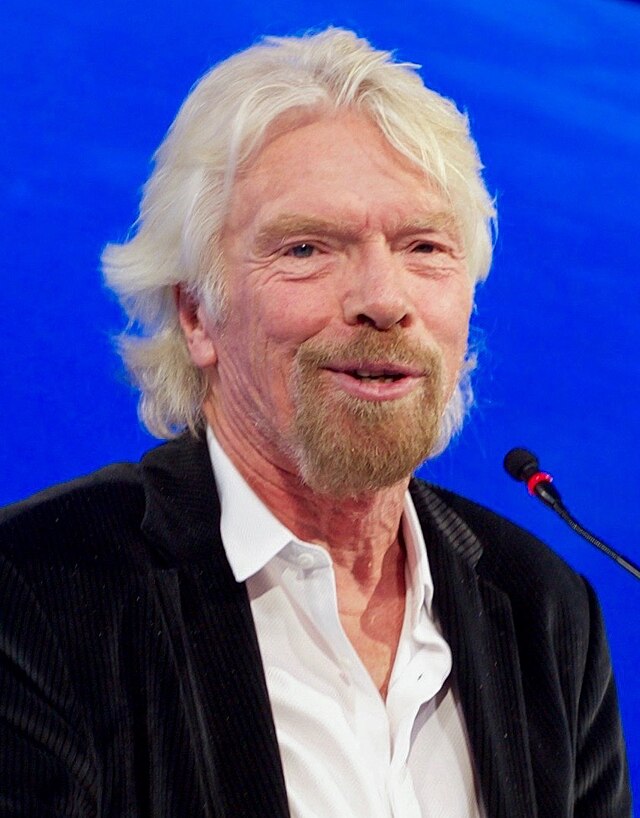
Richard Branson: The Business Empire Behind Virgin Group
Richard Branson leans back in a leather chair aboard one of his Virgin Atlantic jets, the hum of engines a constant underscore to his grin as he scans the horizon—always looking for the next frontier, be it sky, sea, or stars.
The Virgin Group sprawls like a family tree gone wild, roots in a scrappy mail-order record business back in the day, branches now twisting through airlines, telecoms, and even space jaunts. Branson kicked it off in 1970 with Virgin Mail Order Records, a side gig under his Student Advisory Centre that quickly snowballed into something bigger.[1][2][3] By 1973, he'd launched Virgin Records, signing acts and releasing tunes that would echo for decades. Think Mike Oldfield's Tubular Bells, which moved over 16 million copies worldwide—a breakout that put Virgin on the map as more than just a retailer.[1]
It's the kind of origin story that feels half rock 'n' roll, half boardroom bravado: a dyslexic kid from a posh family drops out of school at 16, starts a magazine called Student, and parlayed that into flogging discount records through the post. By 1972, the first Virgin Records shop pops up on London's Oxford Street, drawing crowds with cut-rate prices and that fresh Virgin vibe.[3][4] The label followed suit, inking deals with rising stars and building a roster that screamed rebellion.
The Record That Broke Big
Virgin Records didn't just survive the '70s punk explosion; it thrived in it. The label became a haven for outsiders—the Sex Pistols' infamous boat party stunt? Pure Virgin chaos. But the real moneymaker early on was Oldfield's prog-rock opus, a 1973 release that Branson bet the farm on. It hit like a comet, sales piling up and funding the empire's next moves. By the time the '80s rolled around, Virgin had retail outlets everywhere and a catalog stacked with hits.
Expansion wasn't linear, though. Branson's always played the long game with a gambler's heart. In 1984, he pivots hard into the air, launching Virgin Atlantic with a single leased jumbo jet. It's cheeky—upper-class lounges with massages, ice cream scoops mid-flight—poking at the stuffy giants like British Airways. Virgin Cargo tags along, hauling freight across the pond.[2][4][3][4] The airline becomes his baby, a flashy extension of the brand's fun-loving ethos.
Fast-forward, and the group's gone public in 1986, an IPO that pulls in over $56 million.[3][4] But Branson buys it back soon after, keeping control in the family. That's the pattern: build bold, sell smart when it suits. Like offloading Virgin Records to Thorn EMI for $1 billion in 1992—just in time to pump cash into the airline during tough spots.[1]
Sky-High Gambles and Grounded Wins
Virgin Atlantic fights tooth and nail through the '90s, but Branson's eye wanders to rails and mobiles. In 1997, Virgin Rail Group snags the InterCity West Coast franchise, running trains till 2019, plus CrossCountry until 2007 and a stint on East Coast from 2015 to 2018.[2] It's gritty stuff—delays, strikes, the usual UK rail drama—but it fits the Virgin mold: promise better service, deliver with flair.
Telecoms hit in 1999, partnering with providers for Virgin Mobile, a no-frills phone service that catches fire.[3][4] By 2006, he sells it to NTL:Telewest for £900 million, birthing Virgin Media.[2] That entity's a beast, bundling TV, internet, phone—until 2013, when Branson cashes out to Liberty Global for about $23.3 billion.[1] Media arm included, it's a tidy exit.
The sprawl keeps growing. By 2008, over 200 companies under the Virgin umbrella; now it's north of 400, touching airlines, banking, hospitality, you name it.[1][5] More than 100 Virgin outfits worldwide, 60,000 folks on payroll across 50-plus countries.[4] Sectors? Wildly varied: space tourism with Virgin Galactic in 2004, chasing suborbital joyrides.[3][4] Virgin Voyages for cruise ships, health clinics, even cola—Branson's fingerprints on it all.
| Date | Event |
|---|---|
| 1970 | Richard Branson launches his first business venture, a mail-order record retailing operation under the Student Advisory Centre.[3][4] |
| 1972 | Branson opens the first Virgin Records retail store in Oxford Street, London, marking the start of Virgin's music retail expansion.[3][4] |
| 1973 | Virgin Records label is founded, signing and releasing music artists.[3][4] |
| 1984 | Virgin Atlantic airline and Virgin Cargo are launched, expanding into aviation.[3][4] |
| 1986 | Virgin Group goes public with an IPO generating over $56 million.[3][4] |
| 1999 | Branson partners with service providers to launch Virgin Mobile, entering the telecommunications sector.[3][4] |
| 2004 | Virgin Galactic is launched, initiating space tourism ventures.[3][4] |
| 2007 | Virgin Media is launched, consolidating telecommunications and media services.[3][4] |
Control stays tight: about 20 holding companies, owned by Branson and his inner circle, steer the ship.[1] The group's a British multinational venture capital conglomerate out of London, worth £3 billion as of early 2023.[3] Branson himself? He's the only guy to spin up eight billion-dollar outfits in eight different fields—records, airlines, mobiles, rails, the works.[4]
One sale sticks out.
The 1992 Records dump saved the airline from bankruptcy's edge, a move that screams Branson: ruthless when needed, visionary always. Virgin's no monolithic corp; it's a loose federation, each arm licensed to use the name but running semi-independent. That flexibility lets it dodge blows—COVID gutted travel, but health and digital bits held steady.
Critics snipe at the branding stretch—is Virgin Vodka really on par with transatlantic flights? But the model's worked, turning a record shop into a global player. Early stumbles, like the 1968 founding date floating around (though most peg it at 1970), show the haze of legend-building.[5] Still, the core holds: Branson's knack for spotting gaps, filling them with charisma.
Stars in His Eyes
Space is the ultimate Branson flex. Virgin Galactic's 2004 launch promises civilian trips to the edge of atmosphere, tickets going for $250,000 a pop. Delays pile up—test flights crash, timelines slip—but that's par for the course. It's not just business; it's Branson chasing immortality, kitesurfing records and balloon crossings as side quests.
The empire's health? Solid, if sprawling. Net worth dips and rises with markets, but the brand endures—fun, approachable, a thumb in the eye of suits. About 20% of Virgin companies are fully owned; the rest license the name, paying fees that fund the mothership.[1] It's a portfolio play, as finance prof Alex Edmans once noted, threading between big-corp lockups and wild VC bets—not confirmed here, but it rings true.
Branson's 70s now, but the fire burns. Recent years see tweaks: selling off chunks to stay nimble, doubling down on green tech and wellness. Virgin Active gyms, money from Virgin Money bank—diverse bets hedging against any one flop.
In the end, it's hard not to see Virgin as Branson writ large: audacious, uneven, endlessly entertaining. The honest read is that this empire's less about flawless execution and more about the thrill of the chase—building not just companies, but a legend that keeps rewriting itself. Whether the next chapter tops the balloon rides or space hops? That's the bet worth watching.
Sources
- [1] Reported Richard Branson - Wikipedia — en.wikipedia.org
- [2] Reported Virgin Group - Wikipedia — en.wikipedia.org
- [3] How Branson Built a Business Network That Changed Global Markets — youtube.com
- [4] A Timeline of Richard Branson's Success (Infographic) - Foundr — foundr.com