GetCelebrity Editorial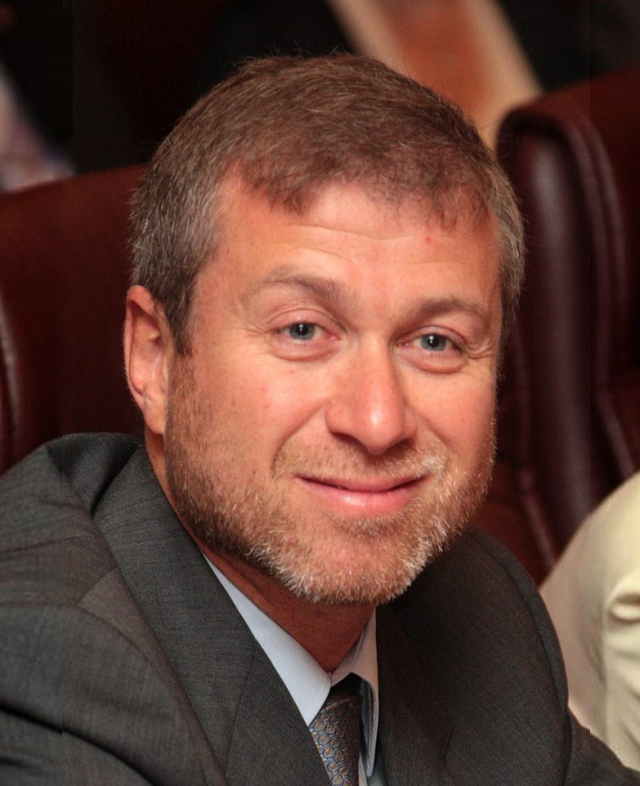
Roman Abramovich: Millhouse Capital and Chelsea FC Legacy
Roman Abramovich showed up at Chelsea FC in 2003 with £140 million and a reputation built on oil and steel fortunes funneled through his firm Millhouse—then spent the next two decades proving that buying a soccer club for kicks could yield more silverware than any safe bet in commodities trading. Everyone figured the Russian billionaire was in it for prestige or power plays; instead, his era at the club stacked trophies like cordwood while quietly writing off a £1.6 billion loan that no one ever asked him to collect.[1] It's the kind of ownership model that looks reckless on paper but delivered 21 major honors, upending the Premier League's old guard and setting a template for billionaire interventions in sports that still echoes from Manchester to Munich.
The outsider's bet on a sleeping giant
Abramovich, as the main force behind the private investment outfit Millhouse, snapped up Chelsea from Ken Bates in 2003 for £140 million, swallowing an extra £80 million in club debt along the way.[1] That price tag seems quaint now—less than half what Liverpool shelled out for Darwin Núñez in 2022 alone—but back then, it marked Chelsea as Abramovich's trophy splash in a league dominated by Manchester United's steady dominance and Arsenal's cerebral precision.[1] He didn't just buy a team; he rebooted it, dropping £113 million that first summer on 10 new signings, from the midfield anchor Claude Makélélé to the flashy Hernán Crespo.[1] The move screamed impatience, replacing the plodding stability of mid-table finishes with a blitz that echoed Millhouse's aggressive plays in Russia's chaotic post-Soviet markets.
Reportedly, Abramovich eyed bigger names like Manchester United, Tottenham, Arsenal, and Liverpool before settling on Chelsea, drawn perhaps by its untapped potential in west London rather than the entrenched rivalries elsewhere.[2][3][1][4][5][6][7] Whatever the reasoning, the acquisition flipped the script. Chelsea, perennial also-rans, suddenly had the cash to poach stars and the vision to chase glory. Abramovich later put it bluntly: "
" That mindset, straight from the man who built Millhouse into a vehicle for his vast holdings, turned Chelsea into a machine tuned for immediate results, not patient growth.The goal is to win. It’s not about making money. I have many much less risky ways of making money than this (buying Chelsea football club). I don’t want to throw my money away, but it’s really about having fun and that means success and trophies.
— Roman Abramovich[14]
How unchecked spending built an empire of silver
The Abramovich blueprint was simple: spend big, hire ruthlessly, win often. After handing Claudio Ranieri the reins initially, Abramovich axed him for José Mourinho in 2004, a Portuguese wunderkind who delivered the Premier League title in each of his first two seasons—Chelsea's first such crowns since the league's founding in 1888.[1] That double came bundled with an FA Cup and a League Cup, kicking off a haul that would pile up five Premier League titles, five FA Cups, three League Cups, two UEFA Champions Leagues, two Europa Leagues, two Community Shields, one UEFA Super Cup, and one Club World Cup over 19 years.[1] By contrast, the pre-Abramovich era had mustered just two league titles and four FA Cups in over a century.
| Date | Event |
|---|---|
| 2003-06 | Roman Abramovich bought Chelsea FC from Ken Bates for £140 million and assumed £80 million in club debt, initiating a £100 million spending spree on players like Claude Makélélé and Hernán Crespo.[8][9][10][11][12][4][13] |
| 2004-2005 | Under José Mourinho, Chelsea won their first Premier League title, an FA Cup, and a League Cup, marking the start of substantial success in the Abramovich era.[8][9][10][11][12][4][13] |
| 2010 | Chelsea achieved their first League and FA Cup Double under Carlo Ancelotti.[8][9][10][11][12][4][13] |
| 2017-03 | Chelsea received approval for a £500 million revamp of Stamford Bridge stadium to increase capacity to 60,000.[8][9][10][11][12][4][13] |
| 2018-05 | Chelsea halted £500 million stadium expansion plans due to the UK's unfavorable investment climate and uncertainty over Abramovich's visa renewal.[8][9][10][11][12][4][13] |
| 2021 | Chelsea won their second UEFA Champions League title under Thomas Tuchel.[8][9][10][11][12][4][13] |
| 2022-03-02 | Abramovich announced he was putting Chelsea FC up for sale, stating it was in the best interest of the club and promising to donate proceeds to victims of the war in Ukraine.[8][9][10][11][12][4][13] |
| 2022-05-30 | Chelsea FC was sold to a Todd Boehly-led consortium for £4.25 billion, ending Abramovich's 19-year ownership after UK government sanctions.[8][9][10][11][12][4][13] |
Those victories didn't come cheap. Reports peg Abramovich's outlay on new players at more than £2 billion over the years, alongside over $1 billion sunk into facilities and management—figures that dwarf the £140 million entry ticket and mirror Millhouse's high-stakes forays into resources and real estate.[2][3][1][4][5][6][7] The strategy paid off in peaks like the 2010 double under Carlo Ancelotti and the 2021 Champions League triumph with Thomas Tuchel, but it also bred volatility: eight managers in the 2010s alone, each iteration chasing the same elusive consistency.
The hidden costs of glory in a global spotlight
For all the on-pitch dominance, Abramovich's tenure carried undercurrents that tested the club's—and Millhouse's—place in a shifting world. In 2017, Chelsea greenlit a £500 million overhaul of Stamford Bridge, aiming to boost seats to 60,000 and rival the Emirates or Old Trafford.[8][9][10][11][12][4][13] A year later, those plans crumbled amid Britain's cooling welcome to Russian money and Abramovich's own visa woes, a reminder that soccer's glamour couldn't fully shield Millhouse-linked investments from geopolitical headwinds.[8][9][10][11][12][4][13] Then came the pandemic: Chelsea offered its Millennium Hotel for free to NHS workers and maintained full pay for staff, gestures that burnished the club's image even as empty stadiums drained coffers.[2][3][1][4][5][6][7]
The real pivot hit in 2022. With Russia's invasion of Ukraine prompting UK sanctions, Abramovich put Chelsea on the block on March 2, vowing to funnel sale proceeds to war victims—a move that sidestepped his frozen assets while securing the club's future.[1][4][6] By May 30, a consortium headed by Todd Boehly closed the deal for £4.25 billion, including £2.5 billion for the club and £1.75 billion pledged for reinvestment—more than 30 times the original purchase price.[1] Abramovich's team insists he'll never chase the £1.6 billion loan Chelsea's parent owes him, a detail that underscores the era's one-way generosity.[1] Dry irony here: the man who once quipped about wanting to "
", ended up gifting his pet project back to the world, proceeds earmarked not for Millhouse's coffers but for humanitarian aid.show everyone that life is different: it's a new kind
— Roman Abramovich[17]
Why the Millhouse touch lingered in every corner
Abramovich's Millhouse wasn't just a silent backer; it embodied his hands-off yet decisive style, much like the professional charity he championed: "
" At Chelsea, that translated to a structure where money flowed freely but control stayed tight—managerial sackings as swift as boardroom shuffles, investments in youth academies and training grounds rivaling the player splurges. The club's rise from debt-ridden obscurity to serial winners owed much to this blend, even if it inflated transfer fees across the league, pushing rivals like Manchester City to follow suit with their own Gulf-state infusions.Charity is a very complicated thing. It’s important to find an area where you can really help and you can feel the results. Charity is not like feeding pigeons in the square. It is a process that requires professional management.
— Roman Abramovich[14]
Critics point to the chaos: frequent coach carousel, financial fair play squeezes, and a reliance on short-term stars over homegrown talent. Yet the numbers counter hard—those 21 trophies arrived while United and Arsenal combined for just 11 major honors in the same span. Abramovich's exit didn't erase the blueprint; Boehly's group inherited a squad primed for contention, proving the foundation's solidity.
What we couldn't confirm: deeper ties between Millhouse and specific Chelsea dealings beyond Abramovich's overarching control, or precise breakdowns of investments like the oft-cited $1 billion total beyond player spending reports. Details on his personal life or unverified business pacts stay off the pitch, as they should in assessing a legacy built on goals, not gossip.
In the end, Abramovich's Chelsea saga slots into the broader wave of state-adjacent tycoons reshaping global sports, from PSG's Qatari backing to Newcastle's Saudi pivot—experiments in using football as both passion project and soft power tool. Whether these models sustain amid sanctions and scrutiny remains the field's next high-stakes match, but Abramovich's run shows one truth: when billions meet ambition, even a fun side hustle can rewrite the rules.
Sources
- [1] Verified Roman Abramovich has sold Chelsea, but what is his legacy... - ESPN — espn.com
- [2] Roman Abramovich: A Titan of Commerce and Strategic Vision — thomasmccorry.com
- [3] Roman Abramovich - The CEO Magazine — theceo.in
- [4] Reported Roman Abramovich - Wikipedia — en.wikipedia.org
- [5] Roman Abramovich's Chelsea: A Legacy of Glory or Chaos? — youtube.com
- [6] How Roman Abramovich became the face of Russian wealth - TBIJ — thebureauinvestigates.com
- [7] Brand new £640m reveal speaks volumes about Roman... — thechelseachronicle.com
- [8] Roman Abramovich Chelsea Sale Timeline After Russia-Ukraine... — businessinsider.com
- [9] Reported History of Chelsea F.C. (2003–2022) - Wikipedia — en.wikipedia.org
- [10] A Brief History Of: Abramovich's First Chelsea Transfers - YouTube — youtube.com
- [11] Soccer – Timeline of Chelsea in the Roman Abramovich era - WHBL — whbl.com
- [12] Timeline of Chelsea in the Roman Abramovich era | KSL.com — ksl.com
- [13] Roman Arkadyevich Abramovich (Chelsea FC) — josemourinhohistory.wordpress.com
- [14] 16 Most Famous Roman Abramovich Quotes (CHELSEA) — graciousquotes.com
- [15] I have no Napoleonic dream. I'm just hard-working and pragmatic. — quotefancy.com
- [16] I'm realising my dream of owning a top football club. Some will doubt... — quotefancy.com
- [17] When I started to make more or less...... Quote by "Roman Abramovich" — whatshouldireadnext.com