GetCelebrity Editorial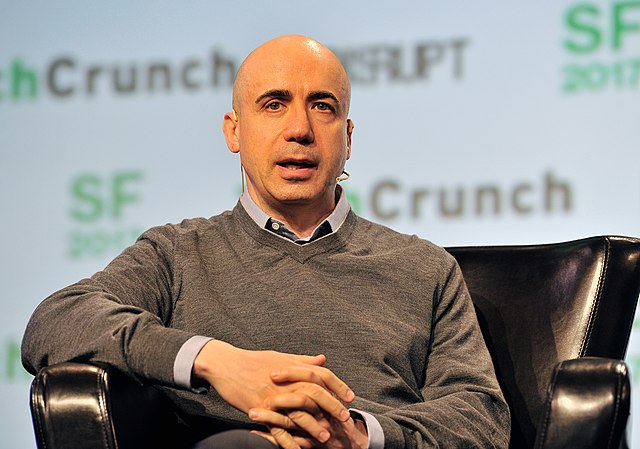
The physicist who bet on pixels while Moscow watched
Yuri Milner looks like the ultimate Silicon Valley insider: early cash in Facebook and Twitter, billions riding on internet scale. But he's a Moscow-born physicist who built Russia's top web empire, with whispers of Kremlin strings pulling his U.S. tech plays. That 2009 Facebook stake? Just $200 million for 2 percent, a steal before the 2012 IPO valued it at $104 billion total.[5] Everyone chased ad dollars; Milner chased the long game.
Born on November 11, 1961, in Moscow, Milner grew up in the Soviet shadow, far from California's code camps.[3][4] By 1985, he held an advanced degree in theoretical physics, the kind that wrestles with quarks, not quarterly reports.[9] Physics trained him to spot patterns in chaos— a skill that later turned digital wildcards into windfalls. Yet his path twisted from equations to emails, from state labs to stock exchanges. Mail.ru started as a scrappy portal in 1999, when Russia’s internet was dial-up dreams, and ballooned into Europe’s web powerhouse.[2][9] DST Global followed, not as a side hustle but a global pivot, dumping $200 million into Facebook more than two years pre-IPO.[5] The return? Hundreds of millions, plus a front-row seat to tech's borderless boom. Dry irony: the guy who cracked open U.S. social giants might owe his edge to the very regime that once jammed foreign signals.
The Soviet startup that ate Russia's web
Milner's first big swing came in an era when building online meant dodging oligarchs and blackouts. In 1999, he founded Mail.ru Group, planting a flag in post-perestroika digital dirt.[2][9] It wasn't flashy code; it was email, search, and social tools tailored for a market starved for connection. By 2001, his venture firm NetBridge merged with Port.ru, birthing Mail.ru proper, with Milner at the helm as CEO.[5][6] He steered it through Russia's rough-and-tumble internet scene, where users tripled yearly while infrastructure lagged.
Two years in, in 2003, Milner stepped down as CEO but held his shares tight, watching from the wings as the company scaled.[3] Mail.ru didn't just survive; it dominated. By 2010, it hit the London Stock Exchange with a $5.7 billion valuation—matching the combined worth of early bets like Zynga and Groupon at their peaks.[1] That IPO cash fueled expansion: ICQ chats, Odnoklassniki social networks, even games that hooked millions. September 16, 2010, marked the rename—Digital Sky Technologies folded into Mail.ru Group, blending Russian roots with global ambitions.[3]
Under Milner’s vision, Mail.ru became a one-stop digital life for 100 million users, outpacing Western rivals in raw engagement. He saw email as the gateway drug to everything else, a bet that paid when social features pulled in ad revenue later dwarfing portals.[12] But staying CEO? Not his style. He preferred the boardroom perch, shaping strategy without daily fires.
| Date | Event |
|---|---|
| 1985 | Yuri Milner graduated from university with an advanced degree in theoretical physics.[9] |
| 1999 | Yuri Milner founded Mail.ru Group, which became one of Europe's leading internet companies.[2][9] |
| 2001 | NetBridge, a venture capital firm co-founded by Milner, merged with Port.ru to form Mail.ru, with Milner serving as CEO.[5][6] |
| 2003 | Milner resigned as CEO of Mail.ru but remained a shareholder.[3] |
| 2005 | Milner founded Digital Sky Technologies (DST), an investment fund focused on Russian internet projects.[1][5] |
| 2009 | DST Global invested $200 million in Facebook for a 2 percent stake, more than two years before Facebook's IPO.[5] |
| 2010 | Mail.ru Group completed a successful initial public offering on the London Stock Exchange with a market valuation of $5.6 billion.[1] |
| 2012-03-13 | Milner stepped down as chairperson of Mail.ru Group and from the board of directors to focus exclusively on DST Global's global internet investments.[1][3] |
DST: Betting big on the next big thing
Mail.ru was home base, but DST was Milner's export machine. Launched in 2005, it zeroed in on Russian internet plays at first—think local search and e-commerce when VCs shunned the region.[1][5] Milner poured in expertise from Mail.ru's playbook: scale fast, margins later. By 2009, eyes turned West. That $200 million Facebook drop bought 2 percent, a position worth over $2 billion post-IPO—ten times the outlay, while peers like Goldman Sachs paid premiums for smaller slices.[5]
"Every year of his life Zuckerberg has been making $1 billion for investors."
— Yuri Milner[15]
Milner didn't stop there. DST snapped a 5 percent Twitter stake around the same time, riding the microblog wave to payouts in the hundreds of millions.[13] His formula? Spot platforms with network effects before they monetize. As he put it, revenues chase users, not the other way around.
"It’s not about revenues: the fundamental economics in digital business is scale and margins. The top line has become the bottom line."
— Yuri Milner[16]
These weren't lucky punts. DST's portfolio stacked early wins: Airbnb, Spotify, even Alibaba shares that ballooned with China's rise. Milner's physics bent shone through—he modeled companies like particles, predicting collisions that created value. By 2010's Mail.ru IPO, DST's rename signaled the shift: no longer just Russian skies, but global orbits.[3] The fund's returns? A reported 10x on Facebook alone, fueling further bets while traditional VCs nursed dot-com scars.
The Kremlin question mark
For all the Silicon allure, Milner's empire carries Moscow's imprint. In 2009, he and Mail.ru grabbed that Facebook slice for DST, a move that raised eyebrows when The New York Times dug in on November 5, 2017.[4] Reporters claimed strong Kremlin backing for his stakes—over 8 percent in Facebook and 5 percent in Twitter, cashed out two years before the article.[4] State-linked banks like VEB allegedly funneled funds, turning Milner into a bridge for Russian influence in U.S. tech.
Details stay murky: Was it outright direction, or just opportunistic loans in a cash-strapped era? Milner never confirmed, but the timing fits—DST's global push coincided with Putin's internet pivot. Those investments, sold by 2015, netted billions, yet left a trail of sanctions scrutiny. Twitter's 5 percent, for instance, gave Russia a window into platform dynamics during Arab Spring echoes and election whispers. Milner, ever the long-view guy, framed his bets on future worth, not today's headlines.
"It’s not how much something’s worth today, it’s what it’s worth in five or 10 years."
— Yuri Milner[17]
Skeptics point to the irony: A physicist fleeing Soviet rigidity builds tools that boost voices worldwide, only for his backers to eye control. DST's success—$15 billion under management by mid-2010s—owes partly to that state grease, letting it outbid pure-play funds on deals like Square's early round.
Exiting to expand: The 2012 pivot
March 13, 2012, Milner quit as Mail.ru chairperson and board member, freeing him for DST's world tour.[1][3] Mail.ru hummed along without him, hitting 100 million monthly users by decade's end, but his focus sharpened on global unicorns. "I’m just focused on exploring new opportunities," he said, a line that understated the shift from operator to oracle.[14]
Post-2012, DST doubled down: $500 million in Airbnb pre-IPO, turning into $4 billion plus at its 2020 debut—eight times the stake, amid a travel crash that sank others.[12] Milner's edge? Betting on resilience. He skipped the revenue obsession, chasing the "scale and margins" duo that turned Facebook's user flood into a $1 trillion tide. Twitter's sale locked in gains before ad boycotts hit, a prescient out.
Mail.ru, meanwhile, evolved into VK and beyond, but DST became the family jewel. Milner's hands-off style let teams chase outliers, from India's Flipkart to Southeast Asia's Grab. Returns piled: a 2011 Alibaba investment yielded 20x by 2014's blockbuster IPO, dwarfing Sequoia's haul on the same deal.
What the empire built—and what it signals
Milner's run from Moscow physics to DST billions flips the script on tech borders. He didn't invent social; he scaled it where others hesitated, turning $200 million Facebook bets into a model for asymmetric wins. Yet the Kremlin ties linger, a reminder that even digital empires rest on geopolitical fault lines. Whether DST's next play dodges sanctions or doubles down on AI frontiers remains the bet to watch—Milner-style, valued not today, but in a decade's glow.
This isn't just one investor's tale; it's the blueprint for how state shadows and private vision blur in global tech. As U.S.-China tensions spike, Milner's path—Russian roots funding American dreams—hints at the hybrid future where capital flows ignore flags, but influence never does. The paradox holds: the most borderless industry still bows to the oldest powers.
Sources
- [1] Yuri Milner | Breakthrough Foundation — breakthroughprize.org
- [2] Yuri Milner - Founder, DST Global - Aspen Ideas — aspenideas.org
- [3] Milner Yuri Borisovich (Bentsionovich) - TAdviser — tadviser.com
- [4] Reported Yuri Milner - Wikipedia — en.wikipedia.org
- [5] Yuri Milner | Biography & Facts | Britannica Money — britannica.com
- [6] DST Global, Yuri Milner and Russia Fact Sheet — yurimilner.com
- [7] Yuri Milner | Technology Investor & Science Philanthropist — yurimilner.com
- [8] Yuri Milner - GIC — gic.com.sg
- [9] Yuri Milner Steps Down From Mail.ru Board - TNW — thenextweb.com
- [10] Yuri Milner: Positions, Relations and Network - MarketScreener — marketscreener.com
- [11] Verified Юрий Мильнер окончательно ушел из Mail.ru Group - Ведомости — vedomosti.ru
- [12] Internet Technology - Yuri Milner — yurimilner.com
- [13] Reported Russian billionaire Yuri Milner's early backing of Facebook, Twitter... — latimes.com
- [14] Yuri Milner Quote: “I'm just focused on exploring new opportunities.” — quotefancy.com
- [15] I have this ratio that if you divide age of entrepreneur by market cap... — quotefancy.com
- [16] Yuri Milner Quote: “It's not about revenues - QuoteFancy — quotefancy.com
- [17] Yuri Milner Quotes About Today — azquotes.com
- [18] Yuri Milner quote: I don't think there's any company that has reached... — azquotes.com
Frequently asked questions
What percentage of Facebook did DST Global acquire in 2009?
DST Global acquired a 2 percent stake in Facebook in 2009.
What was Yuri Milner's educational background?
Yuri Milner held an advanced degree in theoretical physics.
In what year was Yuri Milner born?
Yuri Milner was born on November 11, 1961.
```