Philipp Kirkorov Suddenly Spoke About His Death: A Pop King's Philosophical Turn Amidst Transformation and New Roles

Philipp Kirkorov, a name synonymous with Russian pop music and flamboyant theatricality, has once again captured headlines, not just for his enduring career or recent physical transformation, but for a rather unexpected philosophical contemplation. Known for his often guarded demeanor, particularly regarding his personal appearance, Kirkorov has undergone a notable shift. Following a highly publicized metamorphosis, he now openly and even eagerly discusses his physical form. However, some of his recent revelations have stirred a mix of intrigue and, for some, a touch of apprehension.

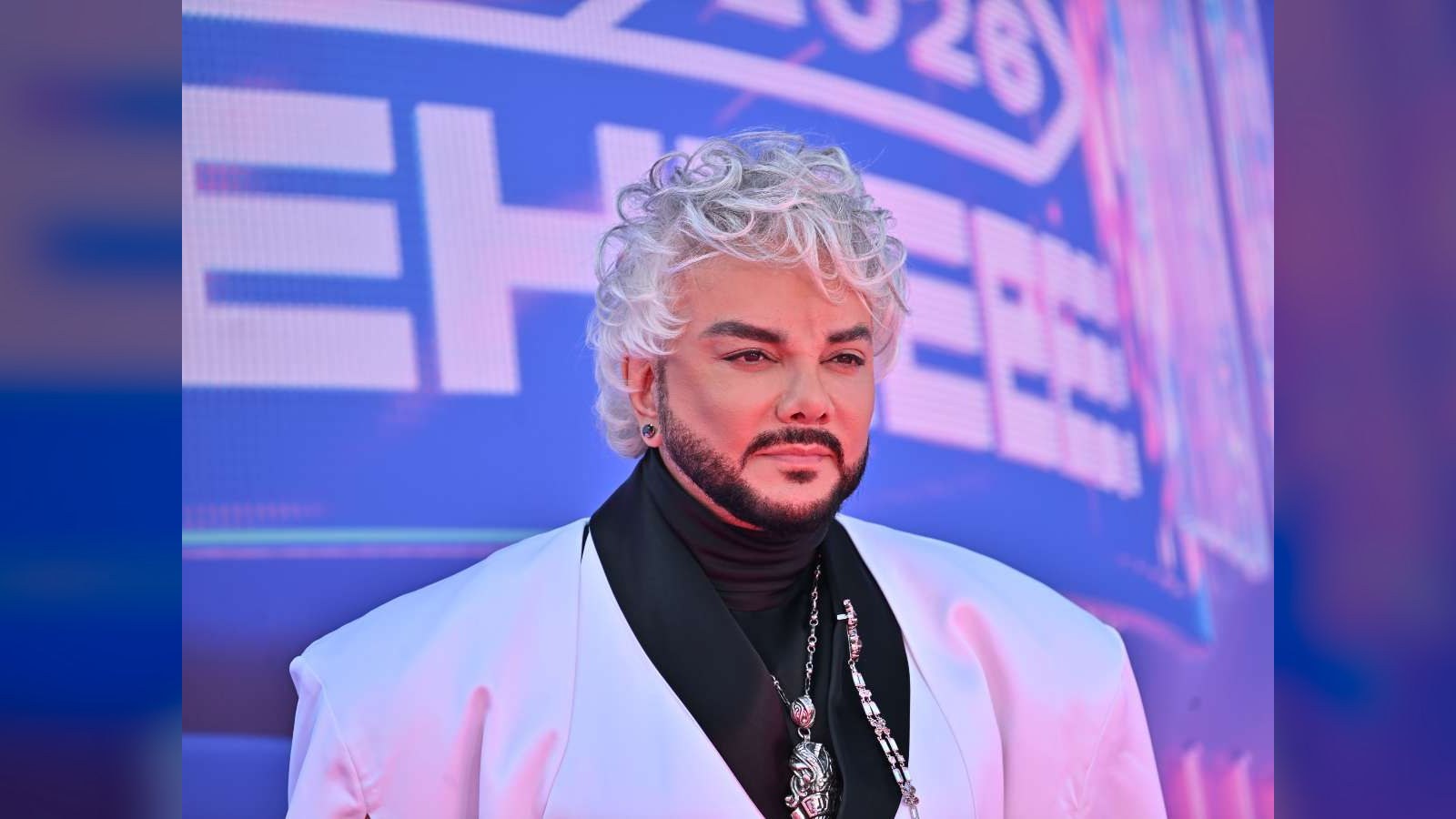
The latest instance of Kirkorov's candidness occurred during the "Stars of Russian Radio in Zavidovo" festival, an annual event that draws a diverse array of musical talent. Held on July 25 and 26 at the picturesque "Zavidovo" resort, this year's festival featured a lineup spanning different generations of Russian artists, including Anna Nemchenko, VENERA, "5UTRA", HANNA, SEREBRO, MARFA, and ZAUR & MEIRINKITO. Amidst this constellation of stars, Philipp Kirkorov emerged as one of the undeniable main attractions.

The pop king, as he is affectionately known, arrived at the resort in an exceptionally buoyant mood. This cheerful disposition was evident in his interactions with the press, a noticeable departure from his sometimes more reserved or even brusque public persona. Journalists, well-acquainted with Kirkorov's varying moods, observed his smiling and communicative approach as a pleasant surprise. This surge of positive energy was speculated to stem from a recent trip to Cappadocia, a region in Turkey famous for its unique "fairy chimney" rock formations and hot air balloons. It was there that Kirkorov had been engaged in the production of a new music video, a creative endeavor that often invigorates artists.

Against the backdrop of Kirkorov's notoriously demanding and packed schedule, a perennial question from the media arises: how does he manage to maintain such an impressive physical form? His answer, delivered with characteristic wit and a touch of discipline, illuminated his current lifestyle choices. "Why should I gain weight? I haven't eaten pastries for a long time. I rarely allow myself so-called 'food zigzags'. Plus, love and the desire to keep oneself in good shape are important," Philipp Bedrosovich, using his patronymic, thoughtfully responded. This statement highlights a concerted effort towards health and fitness, a commitment that has clearly paid dividends in his transformed physique.

However, it was Kirkorov's subsequent remark that truly captured attention and sparked discussion. In a surprising turn, the pop king unexpectedly broached the subject of his own death. This revelation, naturally, sent a momentary ripple of concern through his devoted fanbase. Fortunately, for the myriad of admirers who have followed his illustrious career for decades, this discussion was purely in the context of an upcoming professional engagement. Kirkorov was not making a morbid personal announcement, but rather offering a glimpse into his latest artistic undertaking.

Soon, audiences will have the opportunity to see Philipp Kirkorov in a new and intriguing role: portraying Koschei the Immortal. This iconic character hails from Slavic folklore, a formidable sorcerer and antagonist, often depicted as an ancient, emaciated figure with magical powers, whose death is hidden in a magical needle, inside an egg, inside a duck, inside a hare, inside an iron chest, buried under an oak tree on Buyan Island. Kirkorov's interpretation, however, promises to delve deeper than the conventional villain trope.

He articulated his nuanced perception of Koschei, emphasizing the character's complexity. "This is a tragic figure of our epic. Not a monster and not a villain! I want to show his true essence," Kirkorov stated, keen to redefine popular conceptions. This desire to explore the pathos and true nature of a legendary character aligns with Kirkorov's own history of theatrical and often dramatic performances, where he rarely shies away from pushing boundaries and offering multifaceted portrayals.

Perhaps the most striking aspect of this revelation was Kirkorov's personal connection to the role. He drew an explicit and profound parallel between himself and Koschei. "I myself am that very Koschei, only not immortal. I am mortal, unfortunately, but I feel a karmic connection with this hero," he candidly shared. This acknowledgment of his own mortality, juxtaposed with the character's immortality, creates a powerful sense of self-reflection. It suggests that Kirkorov sees reflections of his own journey, struggles, and perhaps even his public persona, within the ancient mythological figure.

The comparison extended to physical attributes as well, underscoring his rigorous health regimen. "He is even as thin as I am — I am also practically a skeleton," Kirkorov remarked, with a touch of self-deprecating humor. This statement, while perhaps an exaggeration for dramatic effect, nonetheless highlights the extent of his physical transformation and his commitment to maintaining a svelte figure. The image of a "skeleton" links directly to the traditional depiction of Koschei, a gaunt, almost fleshless being.

Beyond the physical, Kirkorov also found common ground with Koschei's perceived vanity and affections. "He is also sweet, also loves himself and cute dolls nearby," the artist concluded, adding another layer of personal identification. This final comment offers a glimpse into Kirkorov's own playful self-awareness, acknowledging aspects of his public persona – his love for opulence, grand gestures, and perhaps the "dolls" symbolizing his adoration of beauty and performance – and finding surprising echoes in the ancient villain.

Philipp Kirkorov, born on April 30, 1967, in Varna, Bulgaria, is a Russian pop superstar with a career spanning over three decades. His father, Bedros Kirkorov, was a well-known Bulgarian singer. Philipp quickly rose to fame in the late 1980s and early 1990s, becoming one of the most prominent figures in the Russian music scene. He is renowned for his powerful vocals, elaborate stage shows, dazzling costumes, and a penchant for spectacle. Throughout his career, he has represented Russia twice at the Eurovision Song Contest (as a performer in 1995 and as a songwriter/producer for other artists multiple times), toured extensively, and released numerous chart-topping albums and singles. Beyond music, Kirkorov has also ventured into acting, appearing in films and television productions, often playing larger-than-life characters that align with his public image.

His recent "transformation" has been a significant topic of discussion in celebrity circles. While the exact details remain private, it is widely believed to involve cosmetic procedures and a strict fitness regimen, leading to a noticeably leaner and more refined appearance. This public embrace of his altered form, and his willingness now to discuss it openly, marks a distinct evolution in his personal brand. Where once he might have deflected questions about his looks, he now engages with them, often framing them within the context of self-improvement and artistic necessity.

The "Stars of Russian Radio in Zavidovo" festival serves as an important platform for both established and emerging artists in Russia. Such events provide opportunities for musicians to connect with their audience outside of traditional concert venues, offering a more relaxed setting often conducive to candid interviews and fan engagement. Kirkorov's presence as a headliner underscores his continued relevance and star power within the industry, even as new generations of artists rise to prominence. His cheerful demeanor at this particular event, contrasting with his occasionally reported irritability with the press, highlights the impact of positive professional experiences, such as the Cappadocia music video shoot, on his public interactions.

Kirkorov's detailed explanation of his dietary habits—foregoing pastries and limiting "food zigzags"—illustrates the discipline required to maintain his current physique. This level of dedication is not uncommon among public figures, but his willingness to articulate it openly adds to the narrative of his transformation. The emphasis on "love and the desire to keep oneself in good shape" points to both personal motivation and the demands of his profession, where maintaining a strong visual presence is often paramount.

The role of Koschei the Immortal is a fascinating choice for Kirkorov. Koschei is a deeply ingrained figure in Slavic mythology and Russian fairy tales, representing themes of immortality, greed, and malevolence, yet often with an underlying tragic dimension. By choosing to interpret Koschei not merely as a "monster and not a villain" but as a "tragic figure," Kirkorov is offering a more sophisticated portrayal. This approach suggests an artistic ambition to explore the psychological depth of the character, moving beyond a one-dimensional antagonist. It aligns with a broader trend in modern storytelling to humanize even the most formidable mythical figures, revealing their motivations and inner conflicts.

His declaration of a "karmic connection" with Koschei is particularly revealing. It suggests a profound identification that goes beyond superficial similarities. This "karmic connection" could imply that Kirkorov sees parallels in Koschei's struggle for eternal relevance or his often isolated and singular existence. For a pop icon who has spent decades in the spotlight, navigating fame, expectation, and the passage of time, such an identification with a figure striving against mortality holds significant metaphorical weight.

The remark about being "practically a skeleton" further plays into the classical image of Koschei, who is often depicted as exceptionally gaunt. While likely hyperbolic, it underscores Kirkorov's commitment to shedding excess weight and maintaining a lean physique, aligning his physical form with the historical depiction of the character. This attention to physical detail for a role is a testament to his dedication as an artist.

Finally, Kirkorov's observation that Koschei "is also sweet, also loves himself and cute dolls nearby" adds an unexpected layer of commonality. This injects a touch of humor and self-awareness into his interpretation. The "loves himself" part is an element frequently attributed to Kirkorov's public persona, often in jest. The "cute dolls nearby" could be interpreted on multiple levels – perhaps literally, given Koschei's association with beautiful maidens he often captures, or metaphorically, referring to the trappings of fame and luxury that appeal to both a pop king and a fantastical sorcerer. This lighthearted acknowledgment bridges the gap between the ancient myth and contemporary celebrity, making the character more relatable through Kirkorov's own self-perception.

In essence, Philipp Kirkorov's recent comments represent more than just a promotional soundbite for a new acting role. They offer a rare glimpse into the mind of a celebrity undergoing a personal and professional evolution. His transformation has not only been physical but appears to have ignited a period of introspection, leading him to openly discuss themes of mortality, identity, and the complexities of human (and mythological) nature. By drawing such a personal link to Koschei the Immortal, Kirkorov elevates his upcoming role from a mere acting gig to a deeply personal exploration, signaling a new, more philosophical chapter for the enduring pop king.